What Home Depot’s Next-Day Delivery Push Means for 3PL Operations
Delivery expectations are rising across logistics, even for bulky freight. Here’s what actually needs to change on the floor to keep up.
Published:
May 7, 2026
.webp)
TABLE OF CONTENTS
Not long ago, a two-day delivery window was considered reasonable — I've seen it firsthand, from working on the warehouse floor through to partnering with hundreds of logistics operators across the industry. Customers were satisfied as long as the freight arrived intact and roughly on time. That's no longer the case.
Today, that same customer wants to know where their order is, when exactly it will arrive, and they expect to be told if anything changes before they have to ask. The question has shifted from "how fast can you deliver?" to "how reliable are you?" For 3PL operators, that means tighter dispatch, consistent scanning, and visibility that reflects what's actually happening in the operation — not what the system hopes is happening. Speed still matters, but consistency and clarity are now what customers will judge you on, and ultimately, what will be the difference between winning and losing business.
— In Summary / TL;DR
- Large B2C retailers like Home Depot are resetting expectations across all freight types.
- Customers expect real-time visibility + accurate ETAs as standard.
- Visibility only works if your data is clean + consistent.
- Reliable, predictable operators are the ones winning.
- CartonCloud's WMS + TMS give you the tools to easily meet customer expectations with real-time tracking and status updates from the warehouse to final delivery.
A Shift in Delivery Expectations Is Already Here
Recently, Home Depot hit the headlines by announcing their push for same-day and next-day delivery for bulky goods.
We’re not talking about small parcels. We’re talking about lumber, flooring, and large-format freight — the kind of deliveries that historically gave operators more flexibility in delivery windows, tracking, and execution. Now, delivery expectations have been flipped on its head.
What’s changed is not just the promise of faster delivery, but the way it’s being supported. Large operators are investing in purpose-built distribution sites, automation to improve pick speed and cycle times, and network design that enables them to deliver these services consistently. The focus is not on speed as a one-off capability, but on making that speed repeatable across the network.
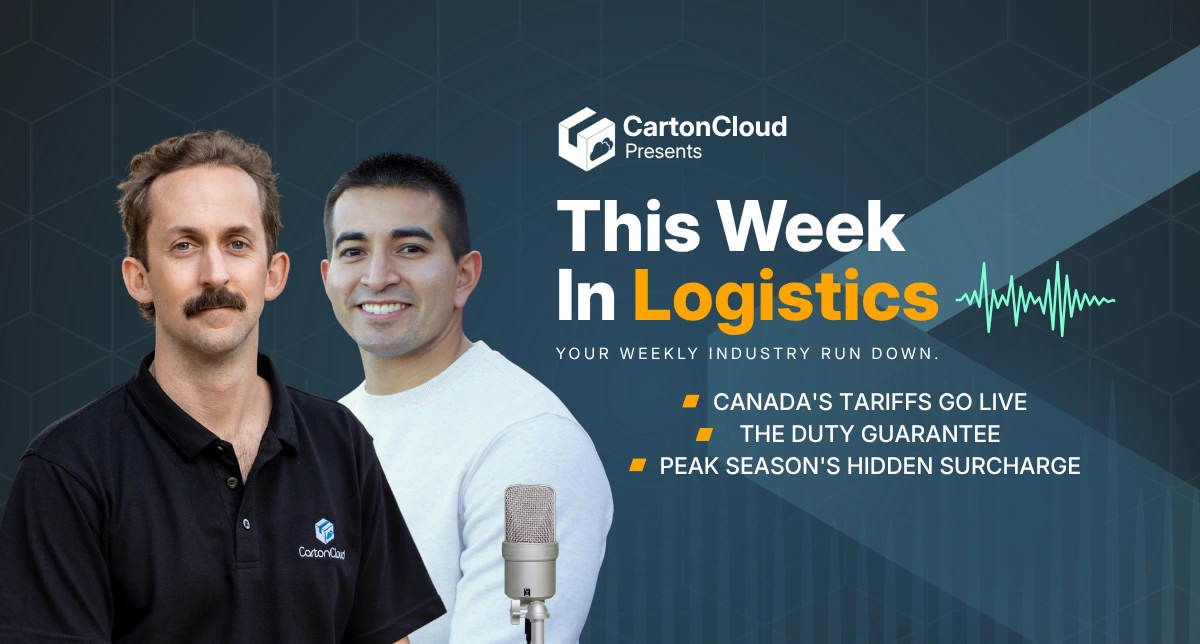
We go deeper into how this is playing out across the industry in This Week in Logistics.
That consistency is what sets the baseline across the market.
What’s Driving This Shift (From an Operator’s View)
From what I’m seeing across operations, there are three main things driving this shift:
- Enterprise investment: At the top end of the market, investment in infrastructure is accelerating. Retailers are now building out networks with better routing, more strategic fulfilment locations, and real-time delivery visibility that reflects what’s actually happening on the ground. They’re structural changes that make faster, more consistent deliveries possible at scale.
- Behaviour shift: At the same time, behaviour has shifted. E-commerce B2C standards are influencing deliveries for B2B, making fast, trackable deliveries standard across the board.
- Operational tech: On the ground, tools like barcode scanning, mobile workflows, and live tracking make real-time visibility accessible to both SMBs and large enterprise operations.
What Do Customers Actually Expect From 3PL Providers?
An interesting shift in recent months is; speed no longer defines the customer experience anymore. What matters now is how predictable the whole process is.
Customers want to know: Can they rely on the ETA you gave them? Can they see what’s happening without having to call? Does the job land the way it was promised?
To meet that standard, there are a few fundamentals that need to be done right, every time:
- Accurate ETAs: Not rough windows, but delivery times you can consistently hit.
- Real-time tracking: Visibility that reflects what’s actually happening on the road.
- Clear communication: If something changes, the customer needs to know before they ask.
- Proof of delivery: Clean, consistent, and easy to verify.
- Consistency: The same experience, regardless of the job, the driver, or the day.
Get these right, and the experience holds together because customers aren’t just paying for delivery anymore; they’re paying for confidence that the job will go to plan.
Why Delivery Visibility Matters More Than Speed
Speed will get you noticed - but if a parcel arrives at an inconvenient time, with no warning, you’re going to be noticed for the wrong reasons. Delivery visibility, however, is what keeps customers loyal. Seeing, or even being able to select their delivery window, and remaining true to this timeline is a goldmine for building customer return business.
At its core, delivery visibility is simple. It means customers want to know:
- Where is the job?
- When is it going to arrive?
- What will happen if something goes off plan?
The goal here is all about eliminating the need to chase updates. When you can clearly and consistently communicate what’s actually happening on the ground in real-time, you gain a real competitive advantage.
What Is Delivery Visibility in Real Terms?
Delivery visibility is your ability to see what’s happening with a job from the moment it leaves the warehouse through to final delivery, without relying on phone calls or guesswork.
That means having access to:
Where 3PL Operations Actually Break Down
This is where I see most operations struggle, and it’s rarely one big issue. It’s a series of small gaps that show up every day, such as:
- Manual dispatch: jobs being built or adjusted on the fly, leading to mistakes and delays.
- Poor scan compliance: missed or inconsistent scans, which breaks your tracking data.
- No real-time visibility: teams relying on calls or guesswork instead of live updates.
- Disconnected systems: warehouse and transport not aligned, so data doesn’t match.
- Reactive communication: customers only hear about issues after they’ve already felt them.
If your dispatch accuracy is inconsistent or your scan compliance is patchy, you’re not just dealing with internal inefficiencies. You’re feeding bad data into everything downstream, impacting the overall customer experience.
What Good Looks Like on the Ground
Improving delivery performance doesn’t come down to big infrastructure or expensive changes. In most cases, it comes back to how well the operation is executed day to day
If I look at what actually moves the needle, it’s a handful of things done properly and consistently:
- Scan compliance across every stage. If it’s not scanned, it didn’t happen. From inbound through to delivery, every scan feeds your visibility. Miss a step, and everything downstream becomes less reliable.
- Real-time tracking and updates. Customers don’t need more speed, they need clarity. When tracking reflects what’s actually happening, you remove the need for follow-ups and reduce pressure on your team.
- Dispatch accuracy. This is still the foundation. If the wrong freight goes out, or the job isn’t set up properly, you spend the rest of the day recovering. Getting dispatch right fixes a lot of problems before they start.
- Consistent proof of delivery (POD). PODs aren't just admin. It closes the loop. Done properly, it reduces disputes, speeds up invoicing, and gives customers confidence that the job was completed as expected.
- Exception visibility. Delays are normal. What matters is how early you catch them and how clearly you communicate them. If the customer knows before they have to ask, the experience holds together.
What Is Proof of Delivery (POD) in Logistics?
A Proof of delivery (POD) is a record confirming that goods have been successfully delivered.
On the ground, it’s your final checkpoint. The moment where the job moves from “in progress” to “closed.”
A solid POD should include:
- Signature: confirmation from the receiver.
- Timestamp: when the delivery actually happened.
- Photos: evidence of where and how the goods were left.
PODs ensure you’re not arguing about whether something was delivered. You’re not chasing drivers for details after the fact. You’ve got a clear record of what happened, meaning:
- Fewer disputes: you’ve got proof if something gets questioned.
- Better transparency: everyone can see the job was completed properly.
- Faster invoicing: no delays waiting on confirmation.
How Logistics Systems Support Better Delivery Performance
As expectations rise, the pressure shifts to your systems.
Most issues I see come from disconnected workflows, manual steps, and gaps between warehouse and transport. That’s where accuracy drops and things become reactive.
Good systems fix that by making execution easier.
At a minimum, you need tools that:
- Connect warehouse + transport so jobs flow cleanly.
- Provide real-time visibility based on actual events.
- Reduce manual work to limit errors.
- Maintain accuracy at scale.
CartonCloud's WMS connects directly with your transport operations — so your warehouse status flows through automatically as jobs move. That includes integrations like Shopify, which push fulfilment status and tracking details back to the store the moment an order is picked and packed, with no manual steps needed.
Pair that with the TMS, and you've got everything in one place — from pick to delivery, with real-time tracking, customer visibility, and driver apps with ePOD, giving you control end-to-end.
What This Means for 3PLs Going Forward
Delivery expectations aren’t easing off. If anything, they’re getting tighter as larger operators keep investing in speed, automation, and visibility.
For most 3PLs, the goal isn’t to match that scale. The goal is to match the experience.
That comes down to how well you execute day to day. Hitting your windows. Keeping customers informed. Closing the loop properly on every job.
The operators who do well are the ones who can deliver consistently, communicate clearly, and run a tight operation customers can rely on.
FAQ
Q: What do customers expect from 3PL providers today?
A: Customers expect accurate delivery windows, real-time tracking, clear updates, and reliable proof of delivery across every job.
Q: Why is delivery visibility important in logistics?
A: Delivery visibility is important because it reduces uncertainty. When customers can see what’s happening, they don’t need to chase updates or question delivery performance.
Q: What causes poor delivery visibility?
A: Poor delivery visibility is caused by missed scans, manual processes, and disconnected systems. The issue is usually operational, not technical.
Q: How can logistics companies improve delivery visibility?
A: Logistics companies can improve visibility by implementing real-time tracking, improving scan compliance, integrating systems, and providing proactive status updates.
Q: What is real-time tracking in logistics?
A: Real-time tracking allows customers and operators to monitor the location and status of shipments live throughout the delivery process.
Q: How are delivery expectations changing in logistics?
A: Delivery expectations are increasing due to faster delivery services, better technology, and enterprise players setting higher standards for visibility and reliability.
Q: What is exception visibility in logistics?
A: Exception visibility refers to the ability to identify, track, and communicate delivery issues or delays in real time.
Q: What is the difference between delivery speed and delivery reliability?
A: Delivery speed focuses on how fast goods arrive, while delivery reliability focuses on consistency, accuracy, and meeting promised delivery times.
Explore the resource hub
Tips, tools, downloadable guides and stories from logistics teams who are working smarter.
This Week in Logistics: A Cost Rule Peak — Canada's Tariffs Go Live, FedEx Guarantees Your Duties, and Peak Season Surcharges Land
What's the Best WMS for Small 3PLs That Need an Easy Setup?

CartonCloud vs Extensiv: Which Platform Delivers More for 3PLs?
Get a Free, Honest Read on Your Operation, in About Two Minutes
How to Implement a WMS in Your Small 3PL Business: A Practical Guide
.webp)
This Week in Logistics: Multiple Warehouses, Multiple States, One Standard — How HD Warehousing Does It, With Special Guest Chad Hildebrandt, Owner & COO
August 2026: New Feature Round-Up
Warehouse Software for Cold Storage, Food, and Temperature-Controlled Logistics
This Week in Logistics: Season 2 Returns — US-Canada Tariffs, Oil Volatility, and Panama Canal Cuts All at Once
.webp)
How Do You Know You've Outgrown Basic Warehouse Systems? 7 Signs for Growing US 3PLs
.webp)
CartonCloud Named a 2026 "Great Supply Chain Partner" by SupplyChainBrain
.webp)
Dock Management: How We Built Visibility Into Every Delivery
.webp)
July 2026 — New Feature Round-up

What US 3PL Operators Really Say About Switching From Slow, Complex WMS Alternatives
CartonCloud vs Competitors: An Honest Comparison from an Implementation Specialist
.webp)
Running Multiple Sites from One WMS System: How HD Warehousing Scaled Without the Complexity
.webp)
This Week in Logistics: The Operator Playbook
Deposco Alternatives: What Growing 3PLs Should Consider
CartonCloud Feature Spotlight: April-June 2026
.webp)
3PL Software Pricing: What You're Actually Paying For (And How to Compare It)