This Week in Logistics: The Invoice Has Arrived — Surcharges, Selective Trade + the Race for Faster Execution
For the past few weeks, we’ve been tracking the "triple threat" of logistics: margin pressure, policy friction, and tightening capacity. Up until now, these were strategic talking points. This Week in Logistics, they became line items.From freight surcharges to harder execution decisions on the warehouse floor, the theoretical has become literal. In short: The invoice has arrived.
Published:
March 27, 2026
TABLE OF CONTENTS
For the past few weeks, we’ve been tracking the "triple threat" of logistics: margin pressure, policy friction, and tightening capacity. Up until now, these were strategic talking points. This Week in Logistics, they became line items.
From freight surcharges to harder execution decisions on the warehouse floor, the theoretical has become literal. In short: The invoice has arrived.
TL;DR: Join me for Episode 5 of This Week in Logistics as we break down how cost pressure has officially landed in day-to-day operations — from live surcharge pass-through across freight networks and more selective cross-border trade conditions, to the shift toward faster, more flexible execution.
Listen to the full podcast below!
The Stories Moving Logistics This Week
This week’s developments aren’t isolated — they’re all connected signals.
Container rates are rising as carriers push emergency bunker surcharges
Container rates edged up again this week, with the Drewry World Container Index rising to 2%. Carriers are now also layering in emergency bunker surcharges, meaning cost pressure is hitting faster through accessorials than through base rates — making true landed cost harder to track and recover.
Fuel surcharges are spreading across networks
Australia Post has just lifted fuel surcharges for some of its business customers. Meanwhile, Air Canada Cargo has introduced a brand new air freight surcharge tied to unrest in the Middle East. The signal here is clear: cost volatility is no longer contained to one mode — it’s spreading across parcel, air, and domestic freight simultaneously.
Gateway investment meets record volumes
This week, we saw a clear signal in how infrastructure and trade are evolving together. DP World opened a new freight forwarding office in Montreal, directly tied to Quebec’s long-term role as a strategic gateway. At the same time, the Port of Vancouver reported record container and cargo volumes. Trade isn’t slowing down — but it is shifting, with freight increasingly flowing through corridors that offer stronger integration, access, and long-term reliability.
Cross-border trade is getting more specific
The US and Mexico have begun progressing technical discussions ahead of the USMCA Joint Review coming up in July. This is a clear step toward tighter trade enforcement. Requirements around origin, compliance, and sourcing are becoming more detailed — pushing trade complexity from policy into daily execution.
Automation shifting toward speed + flexibility
DHL’s Supply Chain announced that their new robotics integrations can now deploy connections up to 12x faster than custom coding. This highlights where the real technology race is heading. It’s no longer about who has the most automation; it’s about who can deploy, connect, and adapt it fastest inside live operations.
Each of these points to the same shift: cost, policy, and execution are now tightly coupled in daily operations. Let’s dive deeper below.
Logistics Fun Fact of the Week
In logistics, we usually talk about capacity in pallet positions or square meters. But the world’s largest "warehouse" (by volume) operates on a different physics engine.
The Boeing Everett Factory in Washington State isn't just a building; it’s a 13.3-million-cubic-meter ecosystem. To put that in perspective, you could fit the entirety of Disneyland inside its walls and still have room for the parking lot!
At one point, the building was so large it actually started forming its own internal weather system, complete with rain clouds, before a specialised air circulation system was installed. 🌦️Now, how cool is that?
All in all, it’s a good reminder that in logistics, scale always sounds neat on paper — but in reality, it’s something you have to engineer around.
Cost pass-through has gone live across multiple modes
Let’s start with the clearest operating lesson this week: surcharge season has arrived.
Base rates are moving slowly, but the real pressure is coming through surcharges — across ocean, air, and parcel. Costs are hitting at different speeds, in different places, and on different cadences.
That’s where margin risk builds.
A clean rate increase is easy to manage. What’s harder is when costs shift unevenly — and your pricing can’t keep up. This is where finance teams still see a “profitable lane” on paper, while operations can feel the margin leaking in real time.
Fuel is no longer just a cost — it’s a network risk.
New Zealand’s response to fuel this week is worth paying attention to. By widening fuel specifications and releasing emergency supply measures, the government is treating fuel as a continuity issue, not just a pricing issue.
That’s a strong signal to operators: fuel is no longer a stable input — it’s a variable that can directly impact your ability to execute.
What this means for your operation:
Your profitability reviews need to move closer to real execution cost, not just planned cost. That means looking at:
- Freight bought
- Surcharge exposure
- Handling + accessorials
- Premium recovery
- Delivery exceptions
And just as importantly — timing matters.
If your customer pricing cadence is slower than your carrier pass-through cadence, your margin gets squeezed immediately.
North American trade is getting more selective
The second major theme this week: trade isn’t getting simpler — it’s getting more specific.
The US and Mexico are now deep into technical discussions ahead of the USMCA review, with a clear focus on increasing regional production and limiting non-market inputs. This isn’t high-level policy anymore — it’s flowing directly into day-to-day operations.
“Nearshoring” is no longer a broad strategy. It’s becoming operational detail:
- Rules of origin
- Compliance requirements
- Customs scrutiny
That means your corridor design — and your customer commitments — need to be backed by tighter, real-time data.
The new standard: Customers don’t just want capacity. They want operators who can interpret the corridor — across compliance, routing, and execution.
If you’re moving freight across the US, Canada, and Mexico, you need to answer three questions:
- Where is it really from?
- What rules does it trigger?
- How quickly can we reroute?
That’s the new standard of cross-border discipline.
Faster tech orchestration
The final theme this week: automation is no longer about what you buy — it’s about how fast you can deploy and adapt it.
For years, automation meant long, expensive integration cycles. Custom builds, heavy IT lift, and 12–18 month timelines just to get a single system live.
DHL’s announcement this week signals a clear shift away from that model.
They’ve moved to a plug-and-play integration approach, allowing robotics to be deployed up to 12x faster — across a network already running thousands of collaborative robots.
The industry is now moving away from:
- Large, fully automated “lights out” warehouses
- Heavy custom-coded integrations
And toward:
- Modular, point solutions
- Fast, flexible deployment
- Systems that can be reconfigured as operations change
Why does this matter?
The biggest failure point in automation isn’t the hardware — it’s the integration layer.
If it takes months to connect a new tool, update workflows, or adjust pricing logic, you’re already behind. The real issue in 2026 is time to value — and how quickly you can reconfigure when conditions change.
You now need to ask yourself:
- Can our systems absorb it quickly?
- Can we change it just as fast?
Because the real competitive advantage now isn’t the automation you own — it’s how fast your software can integrate and adapt it.
The Operator Playbook for This Week
1. Reprice your network on total cost — not averages
This week’s surcharge movements across ocean, air, parcel, and domestic freight are a clear warning. Cost is no longer moving in a single line — it’s hitting in layers.
Review where fuel, emergency, and accessorial costs are moving faster than your customer pricing allows.
If your repricing cycle is monthly, but your cost pass-through is weekly, you’ve got a gap — and that gap is margin.
2. Treat cross-border as a control tower problem
With USMCA discussions moving into technical detail, now is the time to get precise.
Map out your:
- Customer exposure
- SKU origin
- Lane sensitivity to rules of origin
Don’t wait for policy changes to surface the risk. You need to know where your exposure sits before it becomes a problem.
3. Optimise for integration speed — not just capability
The lesson from DHL this week is simple: speed of deployment matters more than the tool itself.
Before adding any new technology, ask:
- How long will this take to integrate?
- How easily can we change it later?
If the answer is measured in months, rethink it.
Because right now, speed of connection is more valuable than theoretical capability.
What We’re Watching Next Week
Looking ahead, there are two key signals to watch.
- First, whether bunker and fuel surcharges continue to expand across more carriers and modes — or start to stabilise. That will tell us how sustained this cost pressure really is.
- Second, watch for any additional detail coming out of the US–Mexico technical discussions. The more specific that language gets, the more directly it will impact cross-border execution.
Both will give an early read on how quickly this week’s pressure continues to build.
Want to know more?
Listen to Episode 5 of This Week in Logistics on Spotify or Apple to hear the complete breakdown.
See you next week!
Post by Shaun Hagen, CEO CartonCloud.
Explore the resource hub
Tips, tools, downloadable guides and stories from logistics teams who are working smarter.
This Week in Logistics: A Cost Rule Peak — Canada's Tariffs Go Live, FedEx Guarantees Your Duties, and Peak Season Surcharges Land
What's the Best WMS for Small 3PLs That Need an Easy Setup?

CartonCloud vs Extensiv: Which Platform Delivers More for 3PLs?

Get a Free, Honest Read on Your Operation, in About Two Minutes

How to Implement a WMS in Your Small 3PL Business: A Practical Guide
.webp)
This Week in Logistics: Multiple Warehouses, Multiple States, One Standard — How HD Warehousing Does It, With Special Guest Chad Hildebrandt, Owner & COO

August 2026: New Feature Round-Up
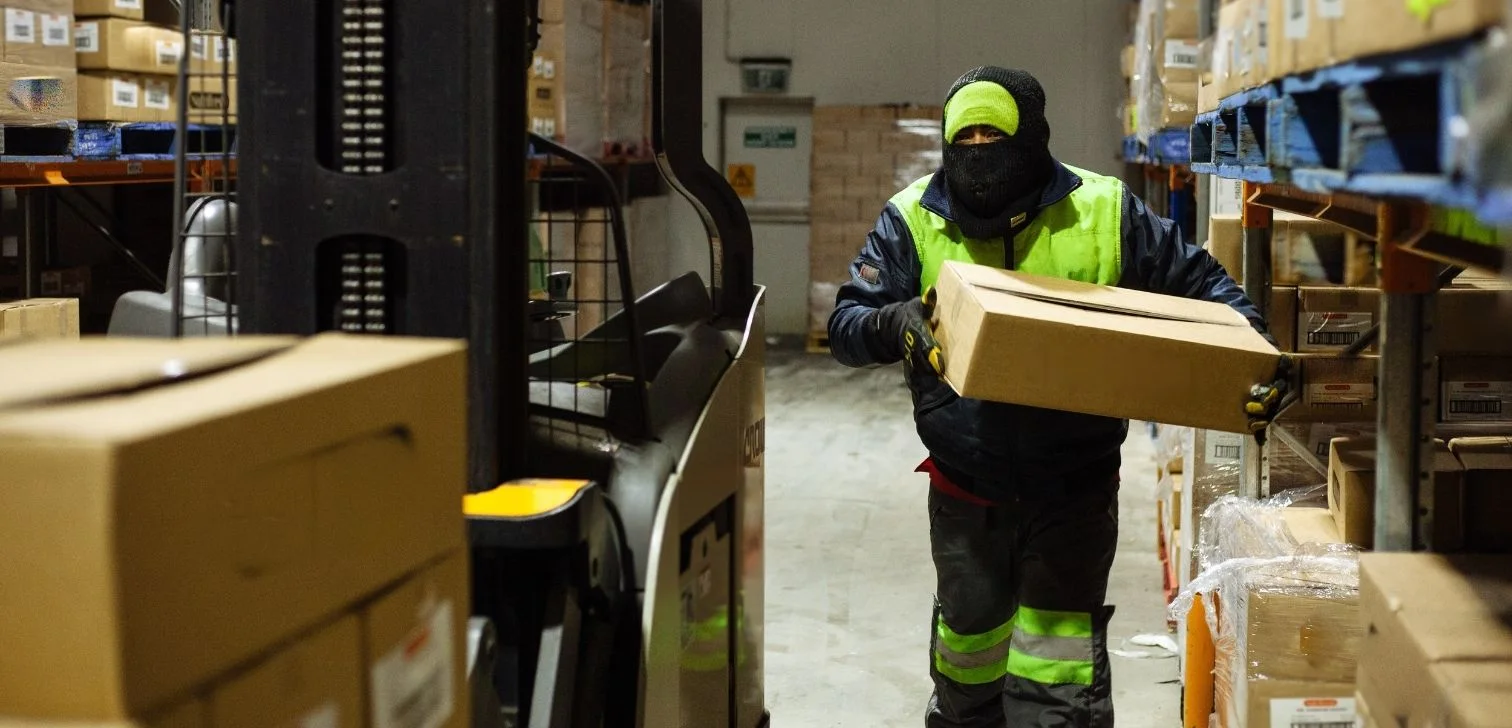
Warehouse Software for Cold Storage, Food, and Temperature-Controlled Logistics
This Week in Logistics: Season 2 Returns — US-Canada Tariffs, Oil Volatility, and Panama Canal Cuts All at Once
.webp)
How Do You Know You've Outgrown Basic Warehouse Systems? 7 Signs for Growing US 3PLs
.webp)
CartonCloud Named a 2026 "Great Supply Chain Partner" by SupplyChainBrain
.webp)
Dock Management: How We Built Visibility Into Every Delivery
.webp)
July 2026 — New Feature Round-up

What US 3PL Operators Really Say About Switching From Slow, Complex WMS Alternatives

CartonCloud vs Competitors: An Honest Comparison from an Implementation Specialist
.webp)
Running Multiple Sites from One WMS System: How HD Warehousing Scaled Without the Complexity
.webp)
This Week in Logistics: The Operator Playbook

Deposco Alternatives: What Growing 3PLs Should Consider

CartonCloud Feature Spotlight: April-June 2026
.webp)
3PL Software Pricing: What You're Actually Paying For (And How to Compare It)