If You’re Running a Logistics Business, You’re Also the Chief Change Officer
I recently spoke with Employment Hero about this idea while discussing why business leaders need to start thinking like Chief Change Officers in the age of AI and automation. The reality is that the people closest to the work often don’t have the time (or authority) to redesign these processes themselves. That’s why meaningful change usually starts with leadership taking the first step.
Published:
March 20, 2026

TABLE OF CONTENTS
Spend a few days inside almost any logistics operation and you’ll start to notice a pattern.
Orders are being entered manually. Someone is chasing delivery updates for a customer. Invoices are waiting to be processed days — sometimes weeks — after the job is done. None of these tasks are unusual. In fact, they’re incredibly common across logistics businesses of all sizes.
The problem isn’t that teams are doing anything wrong. It’s that many logistics operations are still built around processes designed years ago. Meanwhile, technology, automation, and customer expectations have accelerated rapidly — and the systems behind many operations simply haven’t kept up.
So how do you move from manual processes to a logistics operation powered by automation?
I recently spoke with Employment Hero about this idea while discussing why business leaders need to start thinking like Chief Change Officers in the age of AI and automation. The reality is that the people closest to the work often don’t have the time (or authority) to redesign these processes themselves. That’s why meaningful change usually starts with leadership taking the first step.
For most small and medium logistics businesses, the answer isn’t hiring a new transformation team or innovation department. It starts with the owner.
TL;DR: If you want to improve your operations, start by becoming the Chief Change Officer for your business. Below, I’ll walk through how to identify operational bottlenecks and share some of the lessons I’ve learned building logistics software at CartonCloud.
What Is a Chief Change Officer + Why It Matters for Logistics Businesses
Before we dive into how to identify and fix operational bottlenecks in your business, let’s take a step back and talk about what a Chief Change Officer actually is.
In large organisations, a Chief Change Officer is responsible for driving transformation across the company. Their role is to look at how things are currently being done, identify inefficiencies, and lead improvements — whether that means introducing new technology, redesigning workflows, or helping teams adopt better ways of working.
However in most logistics businesses, there isn’t a formal role like this. Instead, that responsibility usually sits with the business owner or leadership team.
Start by experiencing the problem firsthand
One of the most effective ways to identify opportunities for automation is surprisingly simple: spend time doing the work yourself!
If you’re running a logistics company, step into the day-to-day processes your team deals with. That might mean responding to customer enquiries, entering orders into your system, checking delivery paperwork, or generating invoices. When you take the time to experience these tasks firsthand, the friction points in your operation quickly become clear.
After a few days, you’ll likely start noticing the same kinds of questions popping up.
- Why are we entering the same information across multiple systems?
- Why does this process take so long to complete?
- And perhaps most importantly — why are we still doing this manually?
Questions like these help to highlight where the gaps exist and point you toward the areas that need improvement most.
Ask how you could eliminate the task entirely
Once you’ve experienced the friction firsthand, the next step is to challenge the process itself. Instead of asking how you might improve it slightly, try asking a more powerful question: how could we make sure we never have to do this manually again?
Approaching it this way shifts the focus from small fixes to real operational change.
Today, finding answers to that question is easier than ever. You can describe the problem to an AI tool and quickly receive a range of potential solutions. Some may point you toward software platforms that automate the task entirely. Others might suggest integrations between systems, or new workflows that remove unnecessary steps altogether.
In many cases, the technology needed to solve common logistics admin bottlenecks already exists. The key is recognising the opportunity — and being open to using the tools available to simplify the process.
AI doesn’t have to be complicated
When people hear about AI in logistics, they often picture fully automated warehouses or advanced robotics systems taking over entire operations. But in reality, many of the most useful applications are far simpler — and far more accessible for everyday logistics businesses.
AI can already help teams summarise reports, analyse customer enquiries, identify patterns in operational data, or even suggest ways to improve existing workflows. Used well, it can help teams process information faster, reduce manual admin, and make better decisions.
The key thing to remember is that you don’t need to automate everything overnight.
A good place to start is by focusing on the single most frustrating or time-consuming task in your business. Solve that problem first, and you’ll often uncover other opportunities to simplify and improve your operations along the way.
Final advice for logistics leaders
Becoming the Chief Change Officer for your business isn’t about launching a huge transformation project — it starts with small, practical improvements.
Here’s a simple approach to get started:
- Spend time doing the work yourself.
Step into the day-to-day tasks your team handles, whether that’s entering orders, responding to customer enquiries, managing delivery paperwork, or generating invoices. - Identify the biggest manual bottleneck.
Look for the tasks that are repetitive, time-consuming, or involve entering the same information across multiple systems. - Challenge the process.
Ask how that workflow could be redesigned so that it never needs to be done manually again. Often the solution might involve automation, better integrations between systems, or a new workflow. - Focus on one improvement at a time.
You don’t need to overhaul your entire operation overnight. Start with the biggest pain point and solve that first.
Over time, the small improvements you implement will compound — helping you build a logistics operation that is faster, more efficient, and far easier to scale.
If you’re ready to start exploring ways to automate, book a free demo with our team to see how CartonCloud can help streamline your logistics workflows, reduce your manual admin, and get more time back in the day.
Explore the resource hub
Tips, tools, downloadable guides and stories from logistics teams who are working smarter.

Get a Free, Honest Read on Your Operation, in About Two Minutes
How to Implement a WMS in Your Small 3PL Business: A Practical Guide
.webp)
This Week in Logistics: Multiple Warehouses, Multiple States, One Standard — How HD Warehousing Does It, With Special Guest Chad Hildebrandt, Owner & COO
August 2026: New Feature Round-Up
Warehouse Software for Cold Storage, Food, and Temperature-Controlled Logistics
This Week in Logistics: Season 2 Returns — US-Canada Tariffs, Oil Volatility, and Panama Canal Cuts All at Once
.webp)
How Do You Know You've Outgrown Basic Warehouse Systems? 7 Signs for Growing US 3PLs
.webp)
CartonCloud Named a 2026 "Great Supply Chain Partner" by SupplyChainBrain
.webp)
Dock Management: How We Built Visibility Into Every Delivery
What's the Best WMS for Small 3PLs That Need an Easy Setup?
.webp)
July 2026 — New Feature Round-up

What US 3PL Operators Really Say About Switching From Slow, Complex WMS Alternatives

CartonCloud vs Competitors: An Honest Comparison from an Implementation Specialist
.webp)
Running Multiple Sites from One WMS System: How HD Warehousing Scaled Without the Complexity
.webp)
This Week in Logistics: The Operator Playbook
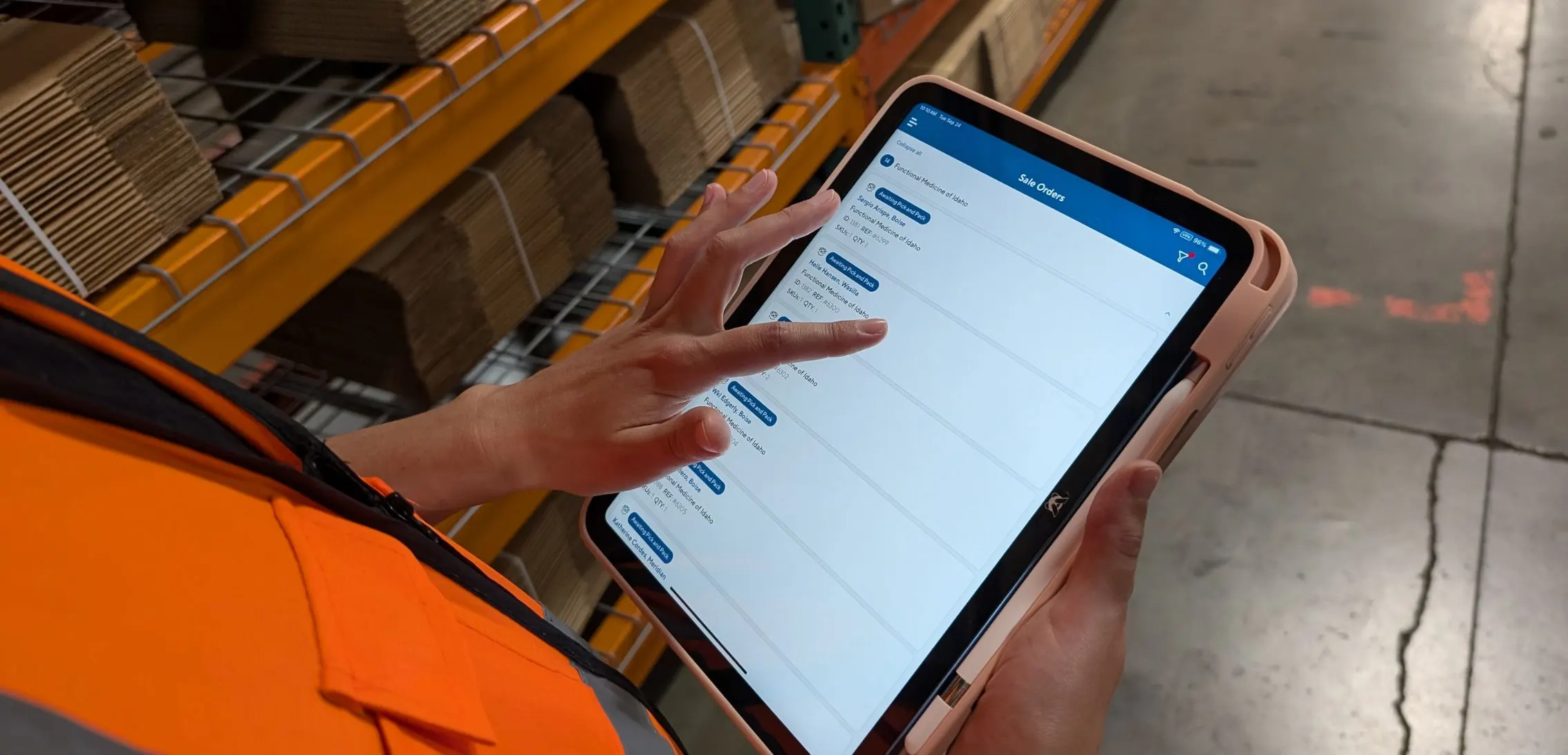
Deposco Alternatives: What Growing 3PLs Should Consider
CartonCloud Feature Spotlight: April-June 2026
.webp)
3PL Software Pricing: What You're Actually Paying For (And How to Compare It)

Inside CartonCloud: A Top-Rated 3PL Logistics Software Platform

3PL Software Find the Best Fit for Your Business