How to Implement a WMS in Your Small 3PL Business: A Practical Guide
For small and growing 3PLs, implementing a WMS doesn't have to be complicated. Here's how to approach it in three practical steps — and what to get right before you start.
Published:
September 10, 2026

TABLE OF CONTENTS
Implementing a warehouse management system in a small or growing 3PL comes down to three things: being clear on where you want to take your operation, understanding your inventory requirements before you evaluate software, and choosing a partner with enough logistics experience to support you properly once you're live. Get those three right and the implementation itself is straightforward.
TL;DR — The short version
Three steps to implementing a WMS in a small 3PL:
- Set attainable warehouse goals — know where your operation needs to be in three to five years before you choose software to get you there.
- Define your inventory data flows: Map out units of measure, scanning protocols, batch/expiry rules, and automated customer integrations upfront.
- Find a software partner with real logistics experience — implementation support and ongoing development matter as much as the features.
I'm Olivia Trankina, North American Customer Operations Manager at CartonCloud. My background is in operations and process improvement, implementing logistics software across complex workflows and fixing the places where operations break down quietly.
The 3PLs I see nail their go-lives share a few simple things: they have a clear vision of where they're going, they truly understand their day-to-day inventory and workflows, and they’ve got a software partner who really gets the big picture.
Here is how to get your team set up for success — and how our CartonCloud team makes the roll-out simple.
Why Do Small 3PLs Need a WMS to Grow?
The economics of a growing 3PL are straightforward in theory: bring in more clients, process more orders, generate more revenue. In practice, growth on a manual system quickly becomes a liability. Every new client adds more pick tickets, more invoicing, more stock to track, more customer queries to field. Without a system that scales with volume, growth means adding headcount just to maintain the same level of accuracy — and margins can start compressing exactly when they should be improving.
The right cloud-based warehouse management system can change that equation. Automated workflows mean new volume doesn't proportionally increase admin. Integrations with customer ordering systems mean orders flow in without manual entry. Automated billing means every chargeable event is captured without someone chasing pick tickets at the end of the week.
For small 3PLs specifically, the ability to look and operate like a larger player — offering clients real-time stock visibility, same-day dispatch, and accurate invoicing — is one of the most important competitive advantages a WMS provides. You don't have to be big to operate with that level of execution. You just need the right system.
Step 1: Set Attainable Warehouse Goals
Before you evaluate a single WMS platform, spend time mapping where you want your operation to be in the next three to five years. This isn't about predicting the future — it's about making sure the software you choose can support where you're heading, not just where you are today.
The questions worth working through:
- What type of clients profiles do you want to attract? E-commerce brands have different requirements from FMCG distributors or pharmaceutical 3PLs. Your scanning requirements, API configurations, and compliance reporting depend entirely on your target client base. I always give operators the same piece of friendly advice: define your ideal customer first, and then work backwards to find the technical WMS features required to serve them.
- What workflows do you actually need to run? Map how orders, picking, and billing move through your operation today, then look for a system that can be configured around those workflows.
- Do you plan to offer transport alongside warehousing? If there's any chance you'll manage deliveries in the future — even through third-party couriers — look for a platform with a connected Transport Management System now.
- What does your ideal customer onboarding look like? Some 3PLs I've seen use their WMS as a client acquisition tool — being able to offer seamless integrations with a client's Shopify store, or same-day dispatch with automated proof of delivery, becomes a genuine point of difference when you're pitching for new business.
Step 2: Define Your Inventory Identification Needs
Before you can choose the right WMS, you need to understand exactly what you're tracking, how you're tracking it, and what your clients will need you to report back to them.
Work through these questions to help break down these requirements for your current and target client base:
Units of measure
- Will you be working with pallets, cartons, inner packs, and individual units — and do you need to receive in one unit and bill in another?
- Do different clients have different UOM requirements within the same facility?
In a 3PL environment, this matters more than it sounds. A single client might receive product by the pallet, store it by the carton, and pick it individually. Your automated billing needs to handle all three simultaneously and accurately, or you'll be reconciling manually every billing period.
Scanning and product identification
- Do you need to scan individual SKUs, serial numbers, or pallet IDs?
- Do your clients require SSCC label scanning or GS1 compliance?
- Will you need to capture and track batch codes, manufacturing codes, or expiry dates?
For operations handling food + beverage, pharmaceutical, or any perishable product, lot, batch, serial, and expiry tracking isn't optional — it's the core of your stock control. The system needs to enforce FIFO and FEFO automatically, directing pickers to the right batch based on date. If you're relying on staff to remember that rule under pressure, it will eventually fail.
Storage environments
- Do you operate in multiple environments — cool store and ambient, small bin, racked, and bulk?
- Do different storage types attract different charges per client?
- Will you ever need to manage stock across multiple warehouses?
Customer integrations
- Are your clients already running their own systems —Shopify, MYOB, NetSuite, SAP — that need to connect to yours?
- Do orders need to flow from their platform directly to your pickers' screens, with stock updates flowing back automatically?
This last point is increasingly a baseline expectation rather than a premium offering. Matthew Norton at TNS Logistics describes what client integrations made possible for their growth:
"Using CartonCloud has given us the ability to reach international markets. We now have a client that's based in Canada — through easy integrations we're able to receive orders live from overseas at any time, which ensures that we're still getting same-day dispatch."
Understanding these requirements before you evaluate software means you walk into every demo knowing exactly what to test — and you won't commit to a platform that can't do the one thing your most important client needs.
Step 3: Find a Software Partner With Real Logistics Experience
The right software partner isn't just a vendor who sells you a license. They're a team that understands how a warehouse actually runs, who can configure the system correctly from day one, and who will still be available and improving the platform two years after go-live. The logistics industry moves, your clients' requirements change, and your operation evolves. You need a partner whose development roadmap reflects where the industry is heading — not one who built a product five years ago and has been maintaining it ever since.
Here's what to look for:
- Logistics-first product design. The best WMS platforms are built by people who've stood on a warehouse floor. When I talk to operators who've been through multiple software transitions, the thing they cite most consistently as the reason a system worked — or didn't — was whether the design reflected how a warehouse actually operates day-to-day.
- Fast implementation with hands-on support. For a small 3PL, weeks-long implementation projects with hefty consulting fees are a serious barrier. Look for a vendor who can get you live in days, with an implementation team that helps configure the system to your specific operation rather than leaving you to figure it out from documentation.
- Continuous development. A cloud-based WMS should be getting better over time — not just patched. Ask vendors about their release cadence, how customer feedback shapes their roadmap, and what significant features have shipped in the last six months. A platform that's actively improving means your operation benefits from new capabilities without having to switch systems every few years.
- Responsive, knowledgeable support. When a workflow problem comes up on a Friday afternoon — a client integration failing, a billing configuration that isn't calculating correctly, a new product type that needs a custom attribute — you need a support team who understands the operational context, not just the software. Ask vendors specifically: who picks up the phone, what's their logistics background, and what does escalation look like?
Cass Strunk, Founder of Core Logistics Services, describes what support with CartonCloud team is like:
"I feel like the team at CartonCloud is really the third person that works here in the warehouse. They may not physically be here, but anytime I have a problem, I contact them and they get back to me right away. Anytime there's a problem with technical things, with someone's store, with a connection, or if I'm onboarding someone or there's a shipping issue, I reach out to CartonCloud and they're able to just guide me in the right direction or help me solve the problem right away."
How Our Team Implements Your WMS (The CartonCloud Way)
When you partner with us, we don’t just send you a login link and a pile of software manuals and expect you to figure it out yourself. Because we’ve been in your shoes, we know that a smooth go-live depends on getting the operational logic right before you scan a single box. Our onboarding team handles your implementation through a structured, logistics-first process:
- Operational Scoping and Layout Mapping: We start by talking through your physical warehouse layout, your unique client mix, and your specific storage zones (whether that’s ambient, cool store, or bulk floor space) to map them into the WMS.
- Rate Card and UOM Configuration: Our team deep-dives into your client agreements to configure your automated billing engine. We help you set up complex units of measure and multi-client rate structures so every single handling and storage charge triggers automatically from day one.
- Integration Testing: We handle the technical heavy lifting of connecting the WMS to your clients’ e-commerce stores (like Shopify) and your accounting platform (like Xero or MYOB), running production-ready tests to ensure data flows cleanly before you go live.
- Hands-On Guided Training: We run straightforward walkthroughs with your team, ensuring your floor staff can confidently navigate the mobile scanning app with a minimal learning curve.
If you'd like to see how CartonCloud works for an operation like yours, book a free demo with our team.
FAQ
Q: How long does it take to implement a WMS in a small warehouse?
A: A cloud-based WMS designed for small 3PLs should go live in weeks, not months. The key factor is vendor support quality during implementation — hands-on configuration assistance from a team with logistics experience shortens the timeline significantly.
Q: What should a small 3PL define before choosing a WMS?
A: Before evaluating platforms, define your target client types and their inventory requirements — units of measure, scanning needs, batch and expiry tracking, and integration requirements. Also clarify your growth targets and whether you'll manage transport alongside warehousing. These requirements determine which WMS features are non-negotiable for your operation.
Q: What integrations does a small 3PL WMS need?
A: The most important integrations for a growing 3PL are eCommerce platforms — Shopify, WooCommerce, Amazon — for automated order intake, and accounting software — Xero, MYOB, QuickBooks — for direct invoice generation. These two connections eliminate the manual data transfer points that consume the most admin time in a small operation.
Q: How does a WMS help a small 3PL compete with larger operators?
A: A WMS gives small 3PLs the same operational capabilities as larger competitors — real-time client visibility through a customer portal, automated billing, same-day dispatch with electronic proof of delivery, and seamless eCommerce integrations. These capabilities let a small operator offer a professional, technology-forward service that retains clients and wins new business on quality rather than price alone.
Q: What does CartonCloud's implementation process look like for a small 3PL?
A: CartonCloud's implementation team configures the system to match your specific operation before go-live — rate cards, workflows, integrations, and floor layout. The support team has logistics backgrounds, so questions that come up after go-live are answered by people who understand warehouse operations, not just software.
Updated September 2026.
Explore the resource hub
Tips, tools, downloadable guides and stories from logistics teams who are working smarter.

This Week in Logistics: A Cost Rule Peak — Canada's Tariffs Go Live, FedEx Guarantees Your Duties, and Peak Season Surcharges Land

What's the Best WMS for Small 3PLs That Need an Easy Setup?

CartonCloud vs Extensiv: Which Platform Delivers More for 3PLs?

Get a Free, Honest Read on Your Operation, in About Two Minutes
.webp)
This Week in Logistics: Multiple Warehouses, Multiple States, One Standard — How HD Warehousing Does It, With Special Guest Chad Hildebrandt, Owner & COO
August 2026: New Feature Round-Up
Warehouse Software for Cold Storage, Food, and Temperature-Controlled Logistics
This Week in Logistics: Season 2 Returns — US-Canada Tariffs, Oil Volatility, and Panama Canal Cuts All at Once
.webp)
How Do You Know You've Outgrown Basic Warehouse Systems? 7 Signs for Growing US 3PLs
.webp)
CartonCloud Named a 2026 "Great Supply Chain Partner" by SupplyChainBrain
.webp)
Dock Management: How We Built Visibility Into Every Delivery
.webp)
July 2026 — New Feature Round-up

What US 3PL Operators Really Say About Switching From Slow, Complex WMS Alternatives

CartonCloud vs Competitors: An Honest Comparison from an Implementation Specialist
.webp)
Running Multiple Sites from One WMS System: How HD Warehousing Scaled Without the Complexity
.webp)
This Week in Logistics: The Operator Playbook
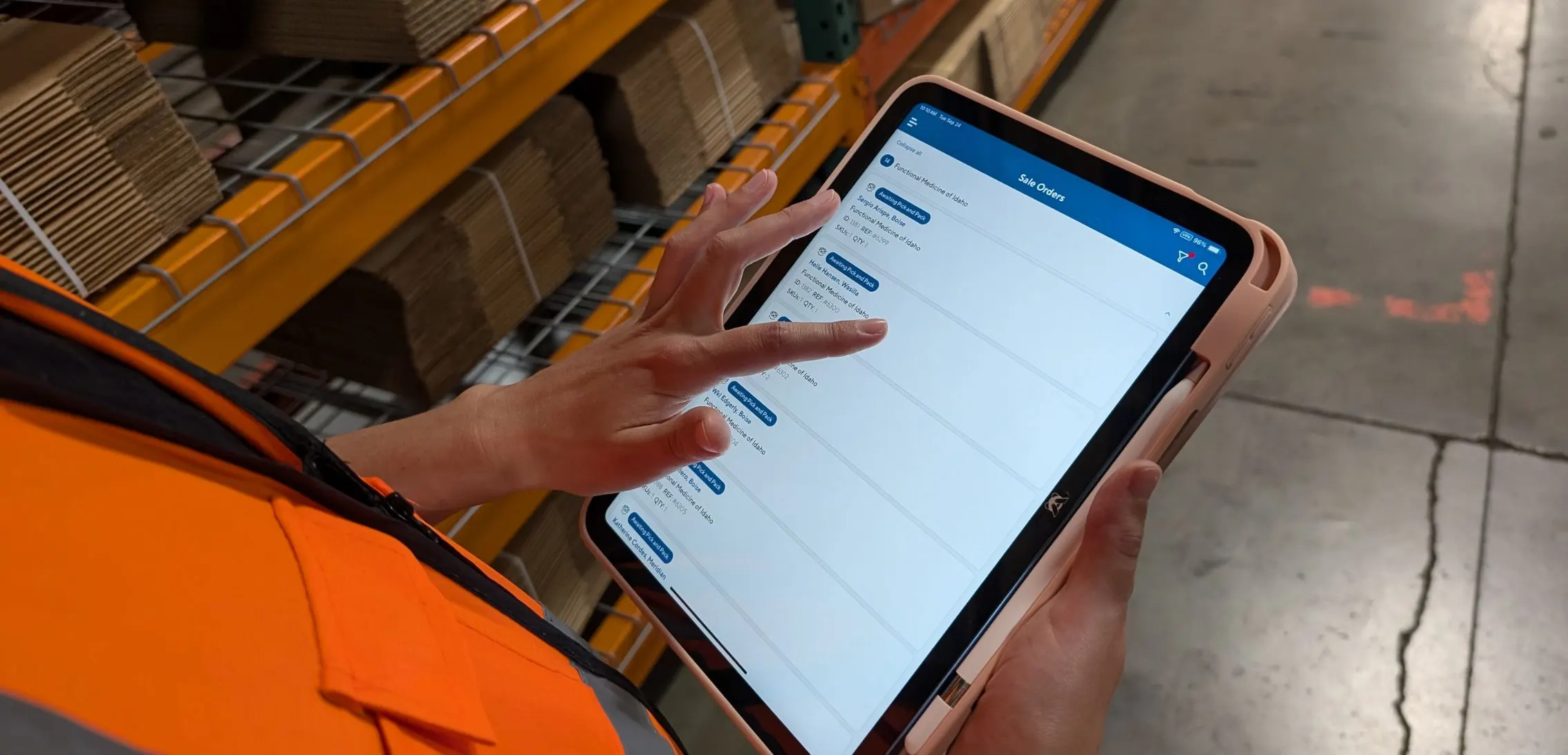
Deposco Alternatives: What Growing 3PLs Should Consider
CartonCloud Feature Spotlight: April-June 2026
.webp)
3PL Software Pricing: What You're Actually Paying For (And How to Compare It)

Inside CartonCloud: A Top-Rated 3PL Logistics Software Platform