What Warehouse Management Systems Work Best for Multi-Client 3PL Operations?
Running multiple clients under one roof takes more than a basic WMS. Here is a helpful checklist to help you evaluate whether a platform can actually handle multi-client billing, reporting, and workflows at scale.
Published:
October 14, 2026

TABLE OF CONTENTS
Anyone running a multi-client warehouse knows the feeling:
- Client A wants photo proof for every shipment.
- Client B has custom storage tiers.
- and Client C brought their own billing structure.
In the 3PL world, no two accounts are ever quite alike. Here is a complete checklist to help you evaluate whether a WMS platform can truly handle things like multi-client billing, reporting, and self-serve client portals all under one system, so you can better support your clients needs.
— TL;DR — The short version
- Client separation comes built in, not bolted on: A true multi-client WMS keeps every account separate right from the start, so your clients' inventory, data, and permissions stay cleanly isolated without your team having to manage complex workarounds by hand.
- Invoicing that takes care of itself: Custom rate cards live in the system, so billable hours never go missing in spreadsheets.
- Workflow flexibility for every account: Easily accommodate unique packaging or wrapping per client without forcing a one-size-fits-all workflow on your warehouse.
- Scale across warehouse sites effortlessly: 3PL operators like HD Warehousing manage diverse verticals (chemicals, alcohol, toys, solar panels) across multiple facilities from a single dashboard with total transparency.
I'm Elyse Ingham, Product and Lifecycle Marketing Manager at CartonCloud. A big part of my role is making sure our users get the value they actually signed up for — and for 3PLs juggling multiple clients, that value only shows up if the system was designed for that complexity, not adapted to it after the fact.
Here's what 3PL teams should look for in a WMS to run multi-client operations well. Let's get into it.
Why Does Generic WMS Break Down for Multi-Client Operations?
To understand why so many 3PLs run into a wall, it helps to look at how basic warehouse software is built in the first place.
Most basic WMS platforms rely on one core assumption: one business, one inventory, one set of rules. That works fine when you're working with one client. But the moment you add a second or third client, you're forced to start manually tweaking every rule in the system just to make it fit your day-to-day reality.
In a growing 3PL, that friction usually shows up first in three key areas:
- Billing gets manual fast: When rate cards live in external spreadsheets instead of your WMS system, someone on your team has to manually track who gets charged for what.
- Inventory blurs together: Without hard digital guardrails, stock from different accounts can get mixed up in reporting or out on the physical floor.
- Workflows lose flexibility: One client needs extra verification steps built into picking, another just wants standard pick and ship, and a generic system often forces both down the same process.
What Does a Multi-Client WMS Actually Need?
When evaluating a WMS for your 3PL, keep an eye out for these five core capabilities. Think of them as your personal baseline: if a platform is missing more than one, you will likely spend more time working around your software than growing your business.
- ✓ Per-client billing and rate cards: Charges calculate automatically based on each client's agreed rates, not a shared default that someone has to manually adjust before invoicing.
- ✓ Separate inventory and reporting: Every client's stock, orders, and reports stay separate by default, with no risk of cross-client visibility.
- ✓ Client-specific workflows and permissions: Pick, pack, and reporting rules can differ by client without custom development needed for each one.
- ✓ Self-serve client portals: Clients can check stock, orders, and PODs themselves, instead of calling or emailing your team for updates.
- ✓ Scalable onboarding: Bringing on a new account means setting up their rates, workflows, and portal access seamlessly — without changing your existing setups.
What This Looks Like in Practice
HD Warehousing runs a public 3PL in Idaho Falls serving chemical manufacturers, alcohol distributors, and toy companies side by side, all from one CartonCloud dashboard. For clients who need their own dedicated site, like a 650,000-square-foot solar panel operation in Denton, Texas, HD runs that the same way, with the same visibility, from the same system.
No two clients run the same way, either — one wants specific packaging, another has distinct shipping preferences, and the platform handles those variations naturally without requiring a custom software build for each account.
"For each client, we have very specific needs that they have — how they want their packaging done, how they want them wrapped, stickers, different things like that, how they want the product shipped out. CartonCloud allows us to do that."
"We're able to go to that client and say all of your operations live in one WMS. And for them to switch from one warehouse to another is just a simple click of the button." — Chad Hildebrandt, Owner and COO, HD Warehousing.
Here's how each checklist item plays out for an operation like HD's:
- Per-client billing and rate cards: Chemical, alcohol, and toy clients running through the same Idaho Falls site each get billed off their own rate card. Charges are calculated automatically from barcode scans rather than a shared spreadsheet adjusted by hand.
- Segregated inventory and reporting: HD's warehouse teams only see the purchase orders and sales orders for the site they're working in, so the Denton, Texas solar panel account and the Idaho Falls public 3PL clients never show up in each other's data.
- Client-specific workflows and permissions: Packaging, wrapping, and shipping preferences run as their own workflow per client, without HD building custom software for every account.
- Self-serve client portals: HD's clients log into their own portal to check stock and orders themselves, instead of calling the office.
- Scalable onboarding: Opening a new site, or moving a client between warehouses, is a dropdown menu and a few clicks, not a reconfiguration project.
"When we started looking for a WMS system, one of the boxes that had to be checked off was the ability for a customer to access the portal and have transparency into their inventory. It's them being able to see everything of theirs at a glance, whenever they want."
"So as far as what the customer can see through the portal, they can see everything. They can see their levels, expiration dates if they have them, lot numbers." — Jen Dixon, Owner and CEO, HD Warehousing.
Next Step
If you're evaluating a WMS for multi-client operations, the checklist above is a good place to start any demo you sit through. Ask the vendor to walk through exactly how a new client gets set up, and how billing separation works on day one. If you'd like to see that process in CartonCloud, book a free demo today.
FAQ
Q: What makes a WMS suitable for multi-client 3PL operations?
A: A WMS suitable for multi-client 3PL operations combines automatic per-client billing and rate cards, segregated inventory and reporting, and workflows that can be configured per customer without custom development. Self-serve client portals round this out, giving each client visibility into their own stock and orders without extra admin work from your team.
Q: Can generic WMS platforms handle multi-client 3PL work?
A: Some generic WMS platforms can handle multi-client work with heavy configuration, but most are built for single-owner warehouses first, so multi-client separation gets added on rather than built in. That usually shows up as billing complexity and reporting gaps once client count grows past a handful.
Q: How does billing work differently for multi-client 3PL software?
A: Multi-client 3PL software applies rate cards automatically per client based on captured warehouse activity, instead of relying on manual lookups. A 3PL running ten different billing arrangements doesn't need ten separate manual processes; charges calculate the same way every time, tied to what actually happened on the floor.
Q: Does adding a new client mean reconfiguring the whole system?
A: Adding a new client to a purpose-built multi-client WMS does not require reconfiguring the whole system. New clients get their own rate cards, workflows, and portal access set up independently, so existing customers' operations and billing continue running exactly as before.
Q: What's the difference between multi-client and multi-warehouse WMS features?
A: Multi-warehouse features manage multiple physical sites, while multi-client features manage multiple customers (sometimes called multi-tenant WMS), each with separate billing, data, and permissions, often within the same site. Most 3PLs running client work eventually need both, since growth tends to add clients and locations at the same time.
Explore the resource hub
Tips, tools, downloadable guides and stories from logistics teams who are working smarter.

This Week in Logistics: Inside the 2026 CartonCloud Logistics Index

How to Automate Warehouse Invoicing, Rate Cards, and Reporting
WMS vs TMS: What Growing 3PLs Actually Need

5 Signs Your 3PL Needs a Warehouse Management System
What Is Directed Putaway (and Does Your Warehouse Need It)?

This Week In Logistics: When the System Says Forty and the Shelf Says Twelve — How to Close the Inventory Gap, With Special Guest Gaubrielle Pritchard, Director of Product and Customer Marketing, Cin7
The CartonCloud Logistics Index 2026: See where your operation stands

Running WMS and TMS Across Multiple Sites in Australia: The Questions We Answered at MegaTrans 2026
CartonCloud Feature Spotlight: July–September 2026
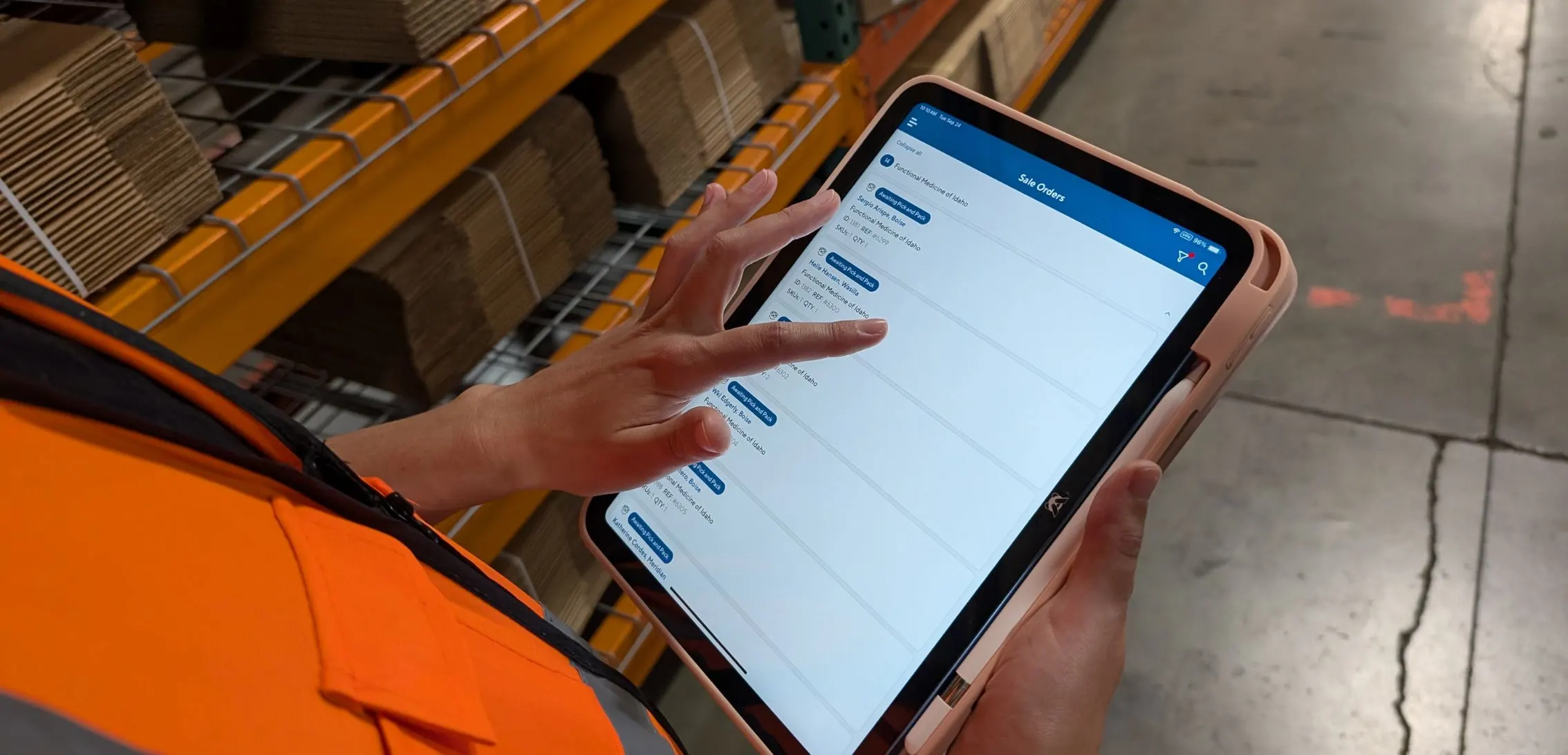
Deposco Alternatives: What Growing 3PLs Should Consider
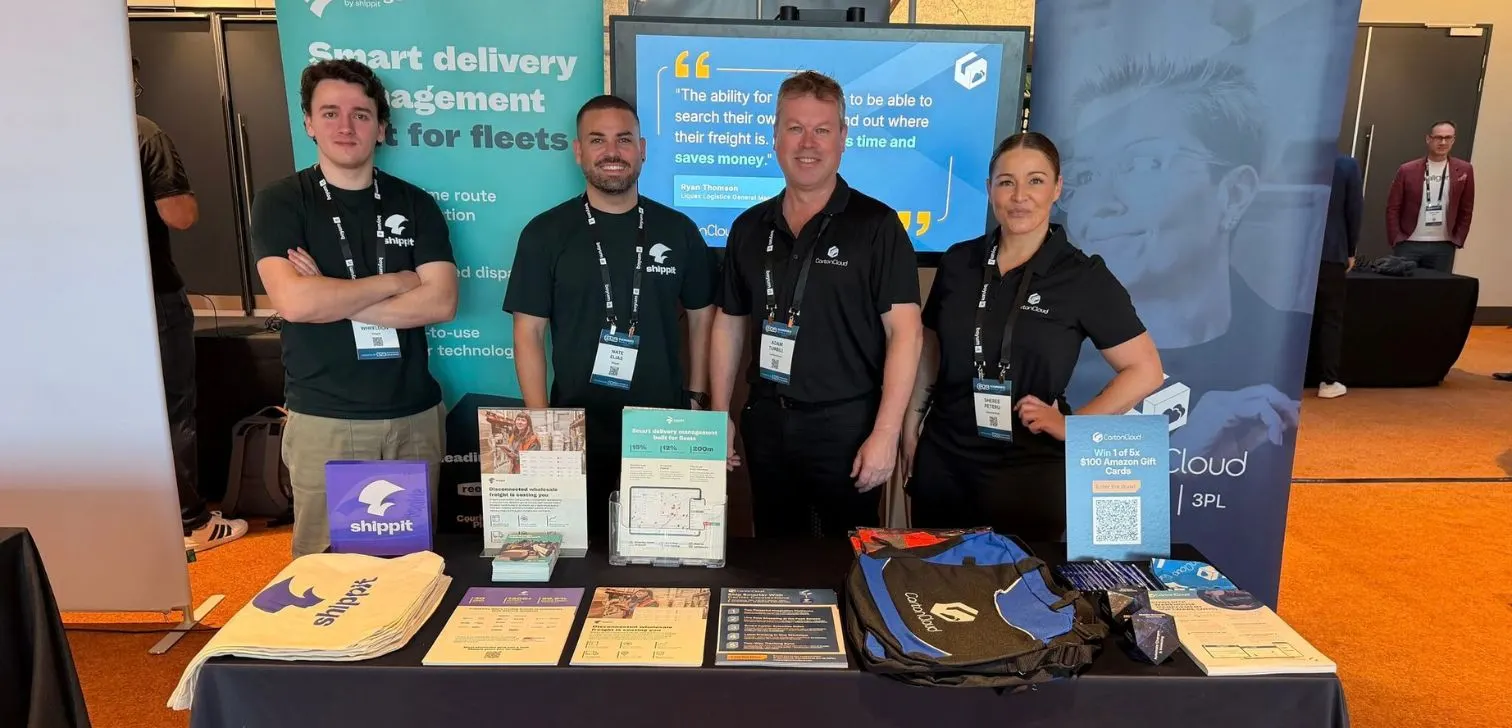
What We Heard at B2B World APAC: Large Brands Want Delivery Visibility, Not Just Warehouse Visibility
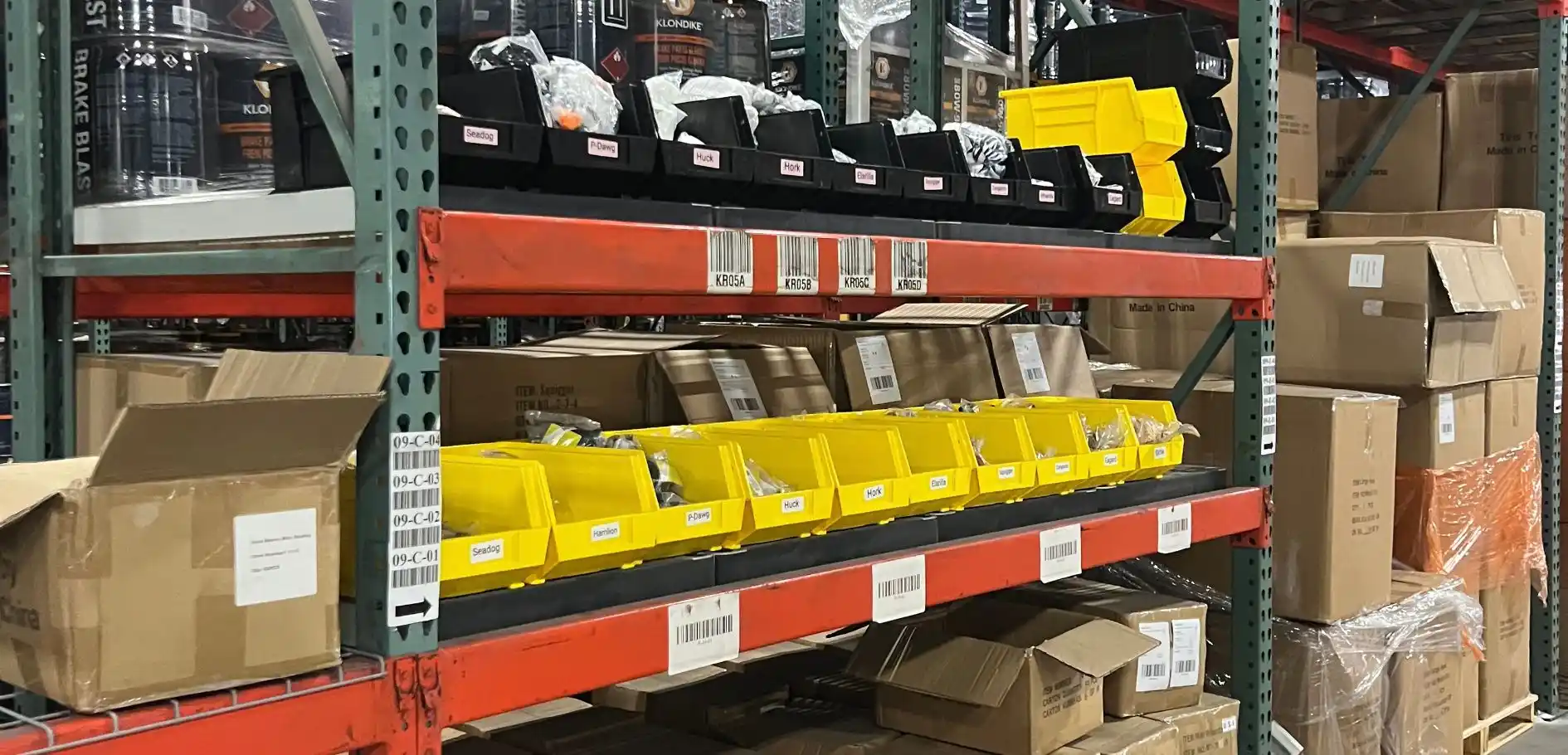
The Fastest WMS to Implement for E-Commerce Fulfillment 3PLs in the USA

This Week in Logistics: A Cost Rule Peak — Canada's Tariffs Go Live, FedEx Guarantees Your Duties, and Peak Season Surcharges Land

What's the Best WMS for Small 3PLs That Need an Easy Setup?

CartonCloud vs Extensiv: Which Platform Delivers More for 3PLs?

Get a Free, Honest Read on Your Operation, in About Two Minutes

How to Implement a WMS in Your Small 3PL Business: A Practical Guide
This Week in Logistics: Multiple Warehouses, Multiple States, One Standard — How HD Warehousing Does It, With Special Guest Chad Hildebrandt, Owner & COO
August 2026: New Feature Round-Up

Warehouse Software for Cold Storage, Food, and Temperature-Controlled Logistics