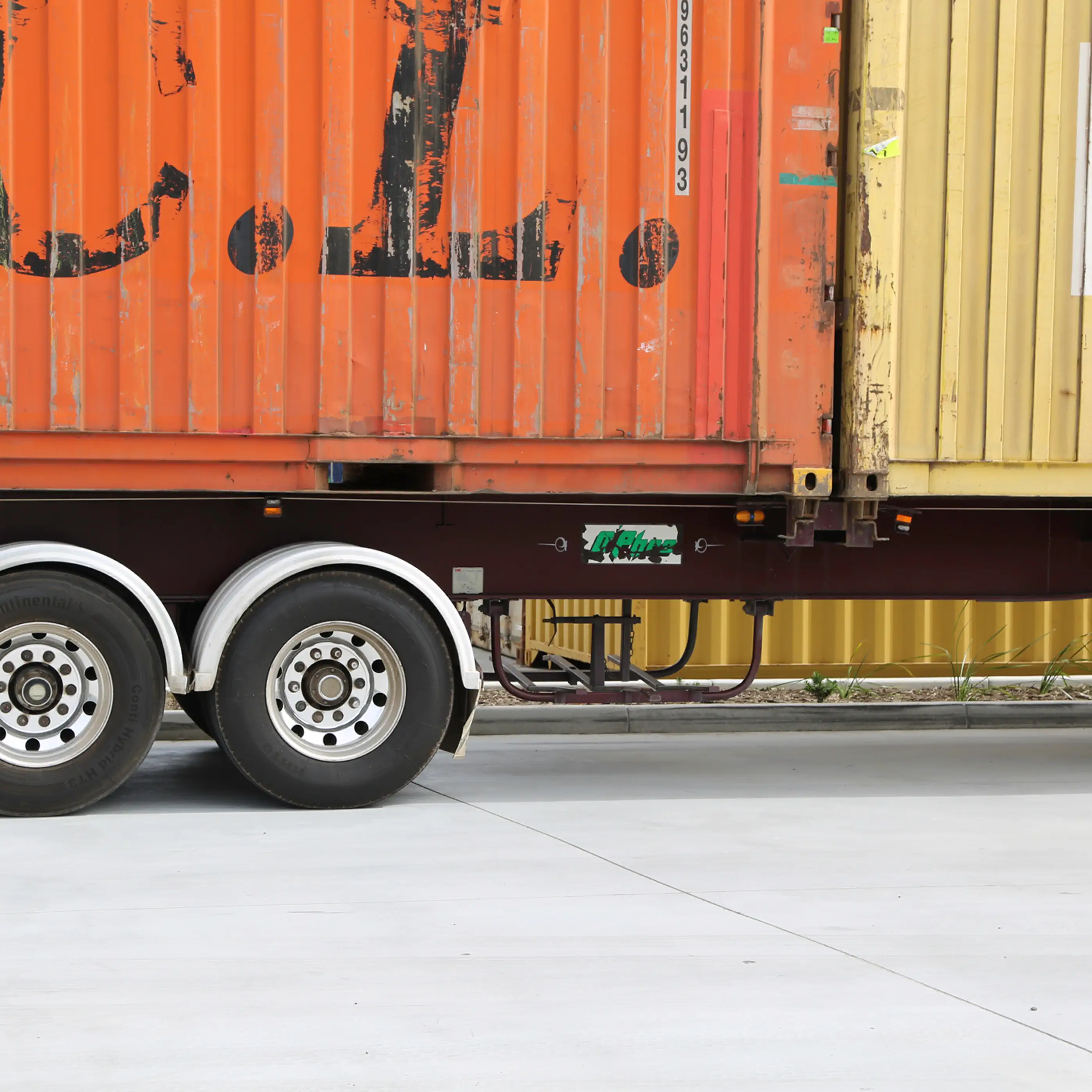
This Week in Logistics: The Breakthrough Arrived — But the Network's Flexibility Hasn't Come Back With It
This Week In Logistics, CartonCloud CEO Shaun Hagen covers the fuel crisis update with US-Iran framework deal in action, Amazon's LTL expansion, and what the logistics news headlines mean for your operation right now.
Published:
June 18, 2026

TABLE OF CONTENTS
This Week In Logistics, the fuel crisis talks of a deal are promising, but for operators right now — the advice remains the same; keep your rates adjustable, and keep customers informed.
In other news, automated freight takes a leap forward with newly announced funding for Einride's driverless vehicles — and Amazon continues to shake up the LTL market with their recent announcement. Check out the news and what matters to you this week.
TL;DR — The short version
- On fuel prices → the Iran Deal is Signed, But Relief is Delayed: While the US-Iran framework agreement is in the works, don't expect immediate relief at the pump. Mine clearance, ship redeployments, and the slow rebuilding of maritime insurance networks mean fuel costs will remain bloated for months and your rates aren’t changing just yet.
- On LTL market → Amazon Moves into B2B Freight: Amazon has expanded its logistics empire to offer door-to-door freight services directly to 3PL warehouses and retail storefronts, meaning 3PLs now need a stronger value proposition to answer the ultimate question: "Why should we choose you instead?" in order to compete.
- On driverless vehicle tech → Autonomous Freight Goes Mainstream: Following Einride’s public shares jumping more than 100% on day one, self-driving freight has officially shifted from tech speculation to market reality. Fleet operators who identify which shippers will adopt this tech first will capture the early-mover advantage.
- On US coastal shipping → The Jones Act is Under Fire: A well-funded, six-figure lobbying campaign is actively pushing for the permanent repeal of the Jones Act. If your supply chain relies on US coastal shipping lanes, this has officially graduated from background industry noise to a critical watch list priority.
- On managing delays → The Bottleneck Moves Inland: The global port crisis has subsided, but the supply chain headache has simply migrated. Driven by rail disruptions, trucking shortages, and arrival schedules, the primary logistical bottleneck is now happening inside your own domestic operations rather than at the marine terminal.
- The Operator Playbook: Don't unwind your fuel disciplines on the Iran announcement. Sharpen your "why use us" answer as Amazon and Einride raise the competitive bar. Watch the Jones Act repeal campaign if you run US coastal lanes. And shift your planning focus inland — that's where the bottleneck is now.
I'm Shaun Hagen, CEO of CartonCloud and host of our weekly podcast This Week In Logistics (TWIL). Each week, we take the headlines and trends shaping the logistics industry to deliver your go-to for real operator news — and what you can do to stay ahead.
This week the story we've been waiting for since February finally arrived. The fuel crisis breakthrough has arrived. The Strait of Hormuz is scheduled to reopen as US and Iran reach a framework deal, which saw Brent drop nearly 4%.
But don't mistake falling oil prices for an easier market. The real "so what" for operators right now is that the competitive baseline just shifted. While we've been watching the pumps, major tech-driven players have been capitalising on freight flexibility and autonomous scaling to aggressively target mid-market lanes. If you aren't actively sharpening your value proposition and tech stack today, you risk being priced out by an increasingly automated, asset-light industry. A lot moved in a short window — and not all of it in the same direction.
And sometimes, the most important logistics story is the one that shows up parked in the middle of Manhattan with no one inside it.
The biggest takeaway remains— as I said in This Week in Logistics Episode 13: hope is a good sign, but it's not a plan. The network's flexibility has not come back with the deal, and the operators who recognise that difference are the ones who will come out of this period ahead.
Operator playbook: what to do in the next seven days
- Do not unwind your fuel discipline on the Iran announcement. The deal is not signed. The strait is not open. Update your range to $75–$95 and keep fortnightly adjustments in place. Maintain two-directional pricing.
- Sharpen your "why use us" answer. Amazon went door-to-door. Einride is now publicly traded. Customers have more options than they had six weeks ago. Operators who can articulate their on-time rate, exception resolution time, onboarding speed, and the specific kinds of complexity they handle better than a standardised platform — those are the operators who will stay in the conversation.
- Watch the structural watch list. Four signals most likely to materially change the operating environment over the next 90 days:
- The Iran deal signing in Geneva — does it happen, and does Lebanon hold?
- The Jones Act repeal campaign — how is it received in Congress?
- The Australian fuel excise expiry on 1 July
- The continued expansion of Amazon Supply Chain Services
Let’s dive deeper into the headlines shaping logistics this week.
What happened this week
The Iran framework deal + why you shouldn't relax yet
After more than 100 days, Pakistan-mediated talks produced a 14-point memorandum of understanding between the United States and Iran. The deal includes ending the war, extending the ceasefire for 60 days, opening the Strait of Hormuz from 19 June after a Geneva signing, lifting the US blockade on Iranian ports, addressing Iran's nuclear stockpile within 60 days, and unfreezing half of $24 billion in frozen Iranian assets.
Markets responded fast. Brent crude (the global oil benchmark) dropped 4% to $83.88 — a two-month low. The S&P 500 jumped 1.9%.
But here's why you should not relax yet:
- The deal is not signed. Iran's foreign ministry has noted the agreement still has elements being finalised. The 14 points include withdrawal of US forces from certain regional bases, which Israel may not agree to.
- Lebanon remains the key variable. Israeli strikes have continued there, and most analysts are watching Lebanon as the most likely way the deal could collapse before Friday.
- The physical reopening takes time. The MOU gives 30 days for mine clearance alone. After that, hundreds of tankers and container ships sitting in safe ports need to be inspected, crewed, and redeployed. Insurance companies need to rewrite the risk models that currently make Strait voyages expensive or uninsurable.
What the reopening timeline actually looks like:
- Signing: Scheduled for Geneva on 19 June — but not confirmed yet, and Lebanon remains a variable
- Mine clearance: 30 days minimum from signing
- Ship redeployment: Hundreds of vessels sitting in safe ports need to be inspected, crewed, and repositioned
- Insurance: Markets need to rebuild the confidence and risk models to underwrite strait voyages again
- Ports: Scheduling needs to rebuild around new arrival patterns
Here's how the Brent crude planning range (the global benchmark for oil pricing) has shifted across the last few weeks:
- Late May: $85–$105
- Early June: $85–$105
- Mid June: $75–$95 with downside protection
The operator takeaway: update your Brent range to $75–$95 with downside protection. Keep fortnightly fuel adjustments in place. Build pricing that adjusts in both directions with a credible mechanism to recover costs quickly if Lebanon escalates. Do not unwind your surcharge structures on the announcement.
As I said in Episode 13 — and it remains true this week — hope is a good sign, but it's not a plan.
The future of freight is being capitalised in real time
Two of the most disruptive ideas in freight — Amazon as a third-party logistics platform, and autonomous driverless freight — both took a major step forward on the same day, 10 June.
Amazon goes door to door
Amazon expanded its LTL service from inbound-only to all destinations. That means door-to-door pallet delivery to third-party warehouses, distribution centres, and retail stores — a meaningful escalation of the Amazon Supply Chain Services story we've been tracking since Episode 11.
The scale is currently limited by the number of cross-dock terminals Amazon operates for heavy freight, but the direction is clear: they will keep building. Going from inbound-only to full door-to-door in six weeks is a major signal.
Operators Takeaway: Mid-market LTL operators and 3PLs need a clear answer to where they win — complexity, regional knowledge, flexibility, service depth — because the standardised platform is now in the market and customers are starting to ask about it.
Einride lists on Nasdaq — autonomous freight goes public
On the same day, Einride raised $333 million in fresh capital through its Nasdaq listing under ticker ENRD — and that money has one job: scaling their cab-less, driverless eBot fleets across the US, Europe, and Middle East. The Swedish autonomous and electric freight company entered public markets with a pipeline of more than $800 million in long-term recurring revenue contracts, a pre-money valuation of approximately $1.35 billion, and a customer list that includes Amazon, PepsiCo, GE Appliances, and European supermarket giant Lidl. Shares jumped more than 100% on day one, triggering multiple volatility halts.
Until now, autonomous freight was mostly a venture-backed story. That changed this week. It is now a public-markets story with the capital, the contracts, and the customer logos to move fast.
Operators Takeaway: The practical question for operators is no longer if autonomous freight will affect your business — it's when, on which lanes, and which customers will be the first to demand it.
Effective capacity, inland coordination, + the Jones Act question
The fulfilment bottleneck has moved inland
C.H. Robinson's June freight market update reframed the North American picture. The headline is no longer port congestion — ports are broadly workable. Now, it’s all about everything that happens after freight leaves the terminal.
Rail disruptions, trucking constraints, uneven container arrivals, and schedule changes are where the friction is building. As Rob Hango-Zada from Shippit highlighted in This Week in Logistics Episode 14, the fulfilment bottleneck is often internal — carriers deliver in two days, but the retailer quotes five to seven. C.H. Robinson is now seeing the same pattern at network scale.
Warehousing, drayage, intermodal coordination, and customer communication are now more important than securing freight space.
Operators Takeaway: For operators running cross-border lanes, the trend is consistent: the industry is being measured in real time, and operators who can explain what their numbers show win conversations.
The Jones Act question
Running alongside this is a policy shift that could structurally change US coastal shipping economics. On 11 June, Americans for Prosperity — backed by conservative industrialist Charles Koch — launched a six-figure campaign urging Congress to permanently repeal the Jones Act. The Jones Act is the century-old law requiring ships carrying cargo between US ports to be US-built, US-owned, US-crewed, and US-flagged.
Why does this matter to logistics operators? Permanent repeal would open Gulf-to-East-Coast fuel routes, Hawaii, Puerto Rico, and Alaska trades to foreign-flag competition. For global carriers already operating international routes into US ports, it creates a direct path into the domestic coastal market. For US coastal operators, it means competing on merit against a much larger pool of vessels. Maritime labour unions are pushing back hard on national security and jobs grounds, and Congress is the deciding vote.
Operators Takeaway: For operators with US coastal shipping exposure, this is now a serious watch list item.
What's shifting in Australia right now
Chinese electric vehicle maker BYD completed their maiden voyage to the Port of Melbourne on 3 June. BYD now operates its own ships. When customers own the freight, the logistics provider's value shifts from transportation to specialised services: yard management, last-mile distribution, value-added work at port.
Operators Takeaway: With the Federal Government's fuel excise reduction expiring on 1 July, Australian domestic transport costs are heading up in the second half of the year. If you have Australian customers, have the conversation now — not when the invoices land.
What to watch this week
- The Geneva signing ceremony on 19 June. Does the deal get signed, and does Lebanon hold?
- Einride's stock performance over the next two weeks as a leading indicator of public market appetite for autonomous freight.
- The Jones Act repeal campaign — how Congress and maritime labour respond.
- Australia's RTCCO compliance scrutiny as the fortnightly fuel adjustment cadence matures ahead of the 1 July excise expiry.
If you'd like to see how CartonCloud helps 3PLs and transport operators stay on top of costs, compliance, and capacity in a market like this one, book a free demo.
FAQ
Q: Should I unwind my fuel surcharges now that the Iran deal has been announced?
A: Unwinding fuel surcharges on the announcement alone is not recommended. The deal has not been signed yet, the Strait of Hormuz is not yet open, and mine clearance alone takes 30 days after signing. Update your Brent crude planning range to $75–$95 and keep fortnightly adjustment mechanisms in place until the strait is physically reopened and insurance markets have rebuilt confidence.
Q: What does Amazon's LTL expansion mean for 3PLs and transport operators?
A: Amazon's LTL expansion to all destinations means the company is now offering door-to-door pallet delivery to third-party warehouses, distribution centres, and retail stores — not just inbound freight. Mid-market operators need to be able to clearly articulate where they win: complexity, regional knowledge, flexibility, and service depth that a standardised platform cannot replicate.
Q: What is Einride and why does its IPO matter for freight operators?
A: Einride is a Swedish autonomous and electric freight company that listed on Nasdaq on 10 June under the ticker ENRD, raising $333 million in fresh capital with shares jumping more than 100% on day one. Its IPO matters because autonomous freight has moved from venture-backed pilots to public-market scale, with an $800 million-plus long-term contract pipeline and customers including Amazon, PepsiCo, and Lidl. The question for operators is no longer if autonomous freight will affect their lanes — it's when.
Q: What is the Jones Act and why is permanent repeal now being discussed?
A: The Jones Act is a century-old US law requiring ships carrying cargo between US ports to be US-built, US-owned, US-crewed, and US-flagged. Trump temporarily suspended it in March during the Iran crisis. A six-figure ad campaign from the Koch-backed Americans for Prosperity is now pushing for permanent repeal, which would allow foreign-flag vessels on US coastal routes and reshape freight economics on Gulf-to-East-Coast, Hawaii, Puerto Rico, and Alaska lanes.
Q: Why has the freight bottleneck moved inland?
A: C.H. Robinson's June update shows that port congestion is no longer the primary constraint — ports are broadly workable. The friction has shifted to inland coordination: rail disruptions, trucking constraints, uneven container arrivals, and scheduling changes after freight leaves the terminal. Warehousing, drayage, and customer communication are now the key variables in effective capacity.
Q: What should Australian operators do before 1 July?
A: Australian operators should be communicating fuel cost increases to customers now, before the Federal Government's temporary fuel excise reduction expires on 1 July. The RTCCO already requires fortnightly fuel adjustments. With the excise reduction expiring and baseline fuel costs remaining elevated, domestic transport costs will rise in the second half of the year. Having that conversation with customers ahead of time — not when the invoices land — is the move.
Explore the resource hub
Tips, tools, downloadable guides and stories from logistics teams who are working smarter.

Get a Free, Honest Read on Your Operation, in About Two Minutes

How to Implement a WMS in Your Small 3PL Business: A Practical Guide
.webp)
This Week in Logistics: Multiple Warehouses, Multiple States, One Standard — How HD Warehousing Does It, With Special Guest Chad Hildebrandt, Owner & COO
August 2026: New Feature Round-Up
Warehouse Software for Cold Storage, Food, and Temperature-Controlled Logistics
This Week in Logistics: Season 2 Returns — US-Canada Tariffs, Oil Volatility, and Panama Canal Cuts All at Once
.webp)
How Do You Know You've Outgrown Basic Warehouse Systems? 7 Signs for Growing US 3PLs
.webp)
CartonCloud Named a 2026 "Great Supply Chain Partner" by SupplyChainBrain
.webp)
Dock Management: How We Built Visibility Into Every Delivery
What's the Best WMS for Small 3PLs That Need an Easy Setup?
.webp)
July 2026 — New Feature Round-up

What US 3PL Operators Really Say About Switching From Slow, Complex WMS Alternatives

CartonCloud vs Competitors: An Honest Comparison from an Implementation Specialist
.webp)
Running Multiple Sites from One WMS System: How HD Warehousing Scaled Without the Complexity
.webp)
This Week in Logistics: The Operator Playbook
Deposco Alternatives: What Growing 3PLs Should Consider
CartonCloud Feature Spotlight: April-June 2026
.webp)
3PL Software Pricing: What You're Actually Paying For (And How to Compare It)

Inside CartonCloud: A Top-Rated 3PL Logistics Software Platform

3PL Software Find the Best Fit for Your Business