What AI Actually Changes in 3PL Operations (And What's Just Hype)
The AI conversation in logistics is moving fast. Here's what's actually delivering value inside a 3PL and WMS right now — and what the architecture underneath it needs to look like.
Published:
June 30, 2026
.webp)
TABLE OF CONTENTS
AI in 3PL operations is delivering real value in two places right now. The first is the invisible layer — configuring system settings from a handful of prompts, drafting support replies, and flagging exceptions so staff only act when something needs attention, increasing onboarding speed and decreasing admin work. The second is structural: connected data and a strong open API are what let AI work across your entire operation instead of sitting inside a single system — and that architecture decision matters more than any individual AI feature.
TL;DR — The short version
- Speed up onboarding without the documentation dive: AI configures product settings to match your workflow from the start, cutting the setup time that slows most new implementations down.
- The right architecture unlocks AI across your entire stack: connected data and an open API mean AI agents can reach across warehouse, transport, and billing — not just the system they live in. What you choose now shapes what's possible later.
- Don't wait on your vendor for everything: AI has made it fast to build bespoke add-ons against a strong API — so operators can solve specific workflow problems without a lengthy development queue.
I'm Vincent Fletcher, Co-founder and Chief Product Officer at CartonCloud. We built CartonCloud out of a real refrigerated 3PL business — we ran the operation, hit the walls, and built software to automate our way around them. Our core mission is to continue to bring powerful, easy to use logistics software to users across the United States, Canada, Australia and New Zealand, to help them scale their operations.
AI is the most interesting thing I've seen in software in a long time. It can also be the most over-claimed. I want to give you a straight read of where it's actually delivering value inside a WMS and 3PL operation right now — and what the architecture underneath it needs to look like if you want it to do anything useful.
What does AI actually change in 3PL operations today?
Nowadays, there’s a growing gap between how AI in logistics gets talked about and where it's actually delivering. There is definitely real value being delivered with AI for the logistics space right now, but you’ll most likely find it in places that don't make for a great product demo reel, but in the practical tools that solve real day-to-day problems for a 3PL operation.
CartonCloud CEO Shaun Hagen, put it simply at Manifest 2026: "AI is a tool. You have to solve a real-world problem with it."
That framing cuts through a lot of the noise. The operators and software teams actually getting value from AI right now aren't the ones chasing the most impressive use case — they're the ones identifying a specific operational problem and asking whether AI is the right tool for it.
At CartonCloud, we've approached it the same way we generally approach our software: internally first, then into the product.
Where AI can already deliver real value inside a WMS
One of the strongest use cases we're currently exploring is simplifying user experience — be that through AI configuring system settings to accelerate onboarding, reporting or troubleshooting questions.
What makes it a genuinely good use case is where it sits in the process. AI handles configuration — getting the right setup in place quickly, tailored to your operation — so teams spend less time on implementation and more time running the warehouse. Once that setup is done, the workflow runs as standard procedural code. AI never touches live warehouse operations, so there's no latency introduced and nothing unpredictable in the critical path.
Why AI hype outruns AI reality — the 80/20 problem
There’s a big question many 3PL operators are starting to ask and it’s this: Should I invest in a new AI tool, or build it myself?
Now, AI coding tools like Lovable, Replit, or similar — will get you to roughly 80% of a working product almost for free. For a single business solving one specific workflow, that option may actually be viable. If it breaks, you can call the person who built it and they fix it.
The problem is that last 20%. Taking something from the initial AI-generated output to production-ready code — that’s reliable across hundreds of different businesses, while covering the edge cases that only show up at scale — that gap is where roughly 80% of the actual effort lives.
As I said at Manifest: "It's still surprising how much extra work that 20% takes."
For CartonCloud, we won't ship something flaky. We're a 3PL software platform serving 600+ operators. If something breaks, it's not one warehouse — it's hundreds. The design process for anything we put into the product is significantly broader than what you need when you're solving for one use case in one warehouse.
So the framing I'd offer: AI has made it genuinely fast to build something for your specific situation. It hasn't changed the work required to make something reliable at scale. Those are different jobs.
How should a 3PL choose an AI-ready logistics platform?
This is essentially the backbone question, and it matters more than any individual AI feature.
Here's the thing we keep coming back to. The operators who'll get the most value from AI — now and over the next few years — are the ones whose data is connected and whose systems have a strong open API.
That's what lets AI work across your operation instead of in a silo. An AI tool that can only see one system's data can only do one system's job. An AI agent that can reach across warehouse operations, transport, billing, and customer data can actually surface something useful.
Shaun framed the architecture point clearly at Manifest.
"Making sure we have a modern, AI-forward architecture is just as important as any individual AI feature in the product. That's what allows us to become part of our customers' broader AI strategy — so they can choose how they want to use AI in their business, and we can work with that seamlessly,"— Shaun Hagen, CaronCloud CEO
If you're evaluating a logistics platform right now with AI in mind, here's what I'd actually look at:
- Connected data: does the platform give you one source of truth across warehouse, transport, and billing — or are you still reconciling across separate systems?
- Open API: can you extend the platform for your specific workflows, now or in the future?
- AI-forward architecture: is the platform building AI in as a core capability, or bolting on an AI badge to existing features?
For operators evaluating build vs buy on specific workflows: buy the backbone, build the edges. The backbone needs to be reliable across hundreds of use cases. The edges — your specific bespoke workflows — can be built fast with AI coding tools against a strong API.
For a deeper look at how CartonCloud's platform is built for this, see CartonCloud's open API and integration library.
What this means for operators right now
A few practical takeaways from where we are in 2026:
- Don't wait for a perfect AI strategy. The operators getting value right now started with a specific problem and a specific tool — they didn't start with an AI roadmap. Pick one pain point and test whether AI solves it.
- Check your data foundation first. AI amplifies what you already have. If your operational data is fragmented across systems, connected AI agents can't do much. Getting to a single source of truth is step one.
- Build vs buy, per job. For core operations that need to be reliable across your business, invest in software that's already done the 80-to-100% of the work. For bespoke workflows that are unique to your operation, the AI coding tools make it genuinely fast to build against a strong API.
- Look at the architecture, not just the feature list. An AI-ready platform gives you a connected data backbone that your own AI tools and your vendor's AI features can both build on.
To see how CartonCloud's WMS and TMS platform is built for this, book a free demo with our team.
FAQ
Q: How is AI used in 3PL operations today?
A: AI in 3PL operations is mostly behind the scenes: configuring system settings, drafting support replies, automating billing and replenishment, and flagging exceptions so staff only act when something needs attention. The biggest gains are in admin and onboarding speed, not in replacing warehouse work itself.
Q: What can AI actually do inside a WMS?
A: Inside a WMS, AI can configure complex settings from a few prompts, suggest exception fixes, and speed up onboarding by handling setup that once meant digging through documentation. It works on the configuration side, so it never introduces lag into live order picking.
Q: Will AI replace warehouse staff or slow down picking?
A: No. Practical AI in logistics today runs on the configuration and admin side, not during live picking, so it adds no lag to order processing. It removes repetitive admin and setup work rather than warehouse roles, letting the same team handle higher order volumes without adding headcount.
Q: Should a 3PL build its own AI tools or buy software with AI built in?
A: Both, however for different jobs. AI low/no code tools make it fast to build a bespoke workflow for one operation, and that's fine if it occasionally breaks. Core operations need software that's reliable across hundreds of businesses — the last 20% of production hardening takes most of the effort. Buy the backbone; build the edges.
Q: What should a 3PL look for in an AI-ready logistics platform?
A: Look for connected, single-source-of-truth data and a strong open API — that's what lets AI work across your systems instead of in silos. A platform that's AI-forward in its architecture becomes the backbone of your AI strategy, letting you add your own tools as your needs change and your vendor's AI features as they ship.
Explore the resource hub
Tips, tools, downloadable guides and stories from logistics teams who are working smarter.
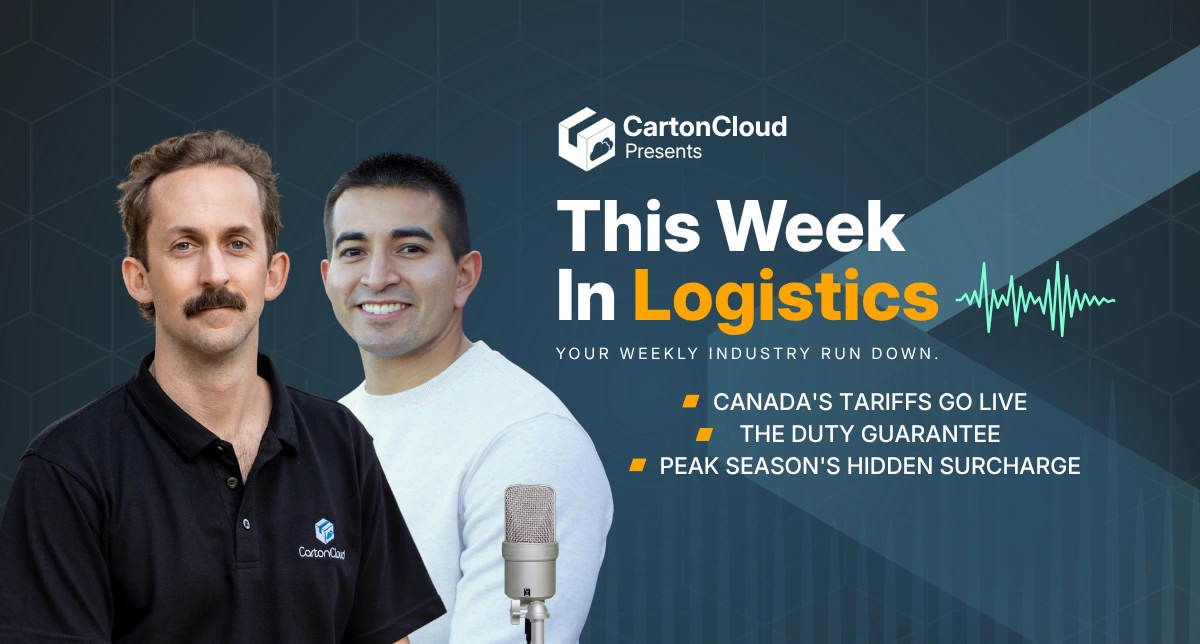
This Week in Logistics: A Cost Rule Peak — Canada's Tariffs Go Live, FedEx Guarantees Your Duties, and Peak Season Surcharges Land
What's the Best WMS for Small 3PLs That Need an Easy Setup?

CartonCloud vs Extensiv: Which Platform Delivers More for 3PLs?

Get a Free, Honest Read on Your Operation, in About Two Minutes

How to Implement a WMS in Your Small 3PL Business: A Practical Guide
.webp)
This Week in Logistics: Multiple Warehouses, Multiple States, One Standard — How HD Warehousing Does It, With Special Guest Chad Hildebrandt, Owner & COO

August 2026: New Feature Round-Up
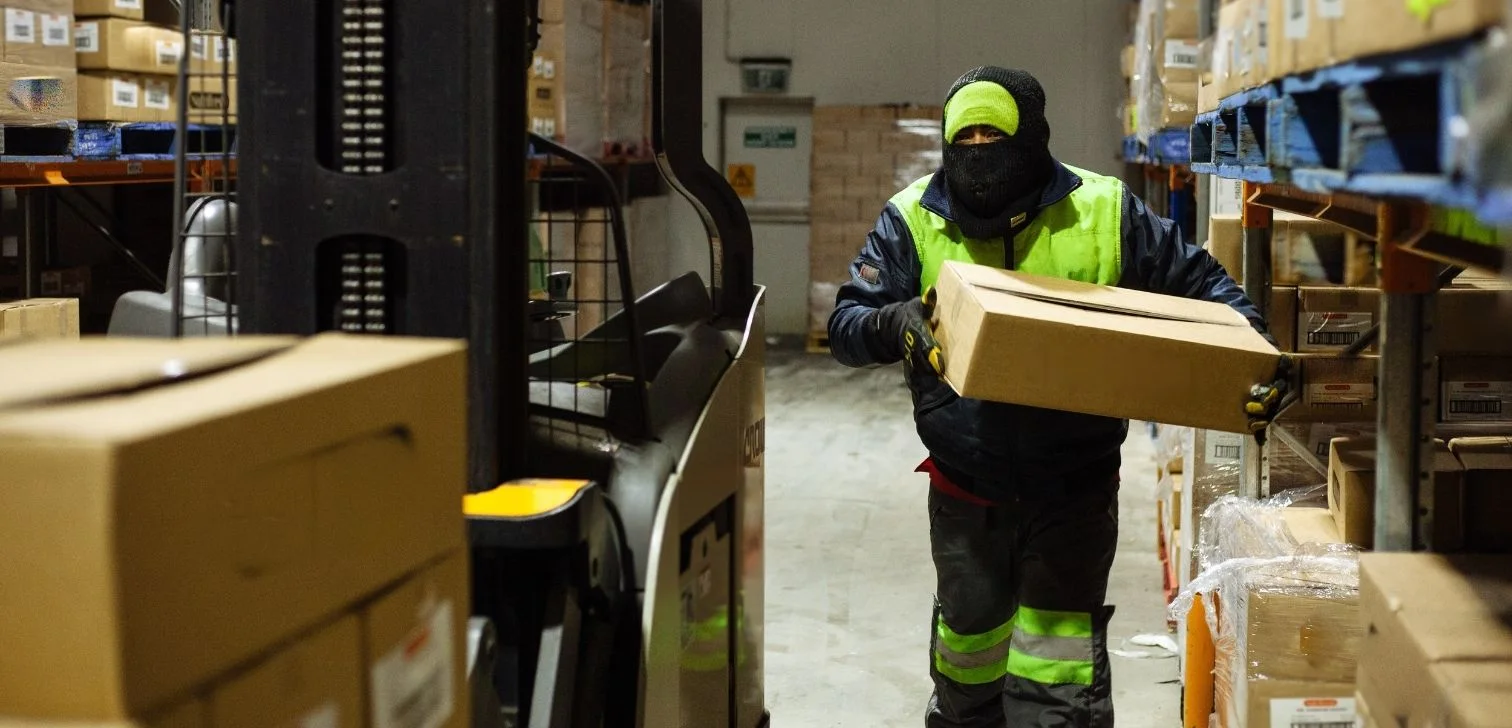
Warehouse Software for Cold Storage, Food, and Temperature-Controlled Logistics
This Week in Logistics: Season 2 Returns — US-Canada Tariffs, Oil Volatility, and Panama Canal Cuts All at Once
.webp)
How Do You Know You've Outgrown Basic Warehouse Systems? 7 Signs for Growing US 3PLs
.webp)
CartonCloud Named a 2026 "Great Supply Chain Partner" by SupplyChainBrain
.webp)
Dock Management: How We Built Visibility Into Every Delivery
.webp)
July 2026 — New Feature Round-up

What US 3PL Operators Really Say About Switching From Slow, Complex WMS Alternatives
CartonCloud vs Competitors: An Honest Comparison from an Implementation Specialist
.webp)
Running Multiple Sites from One WMS System: How HD Warehousing Scaled Without the Complexity
.webp)
This Week in Logistics: The Operator Playbook
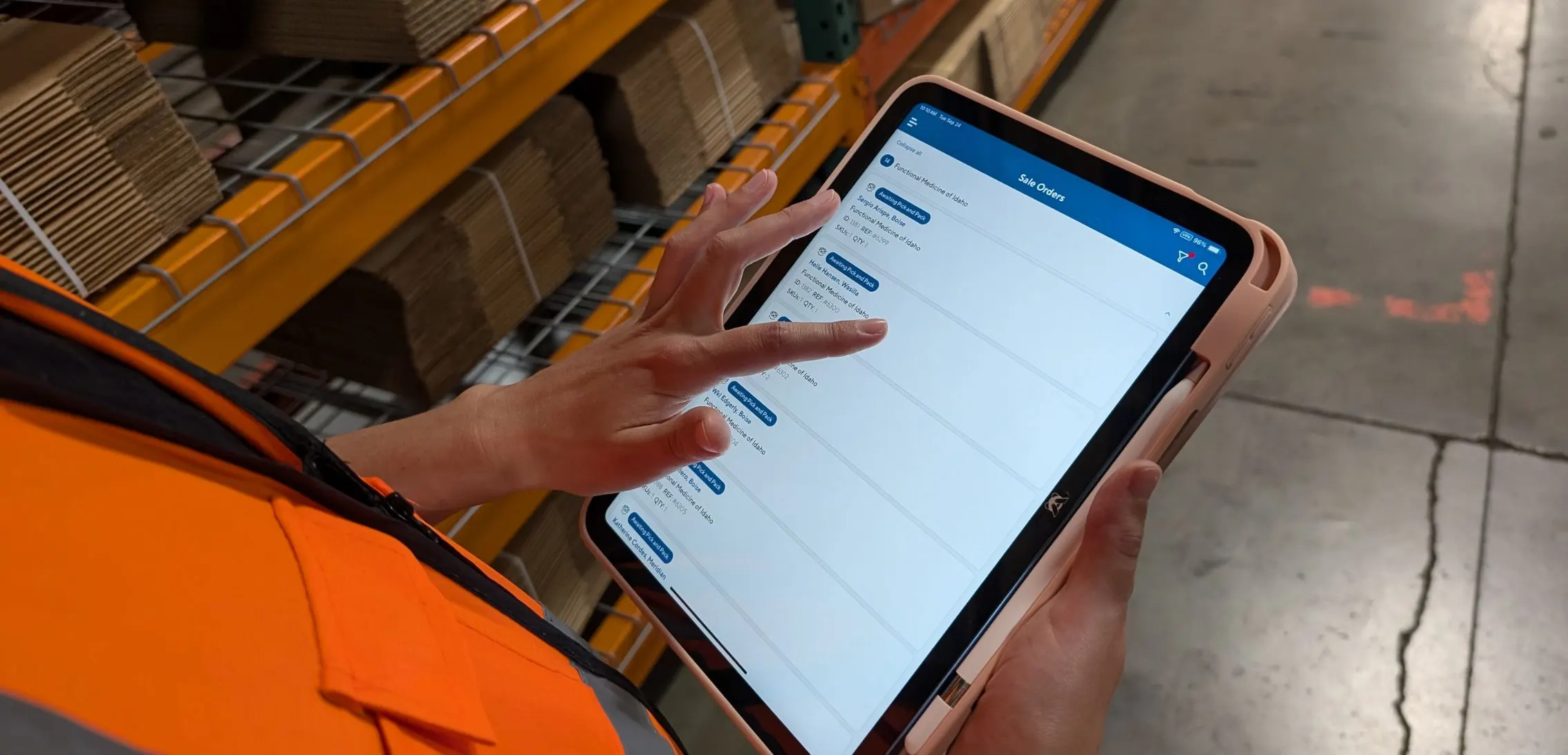
Deposco Alternatives: What Growing 3PLs Should Consider
CartonCloud Feature Spotlight: April-June 2026
.webp)
3PL Software Pricing: What You're Actually Paying For (And How to Compare It)