This Week in Logistics: Disruption, Rail Momentum + the Rising Standard for Visibility
Security disruptions in Mexico. Rail expansion momentum in the US and Australia. Rising last-mile visibility standards in retail. Welcome to This Week In Logistics.
Published:
March 5, 2026

TABLE OF CONTENTS
Security disruptions in Mexico. Rail expansion momentum in the US and Australia. Rising last-mile visibility standards in retail. Welcome to This Week In Logistics.
Resilience isn't just a buzzword this week. It’s a mandatory operational playbook.
Over the last 72 hours we’ve seen the geopolitical conflict in the Middle East threatening the Strait of Hormuz, security unrest disrupting freight nodes in Mexico, a continued push toward rail intermodal across several major markets, and rising expectations around delivery visibility in retail.
Each of these signals are reshaping how operators need to think about disruption, capacity, and service standards in 2026.
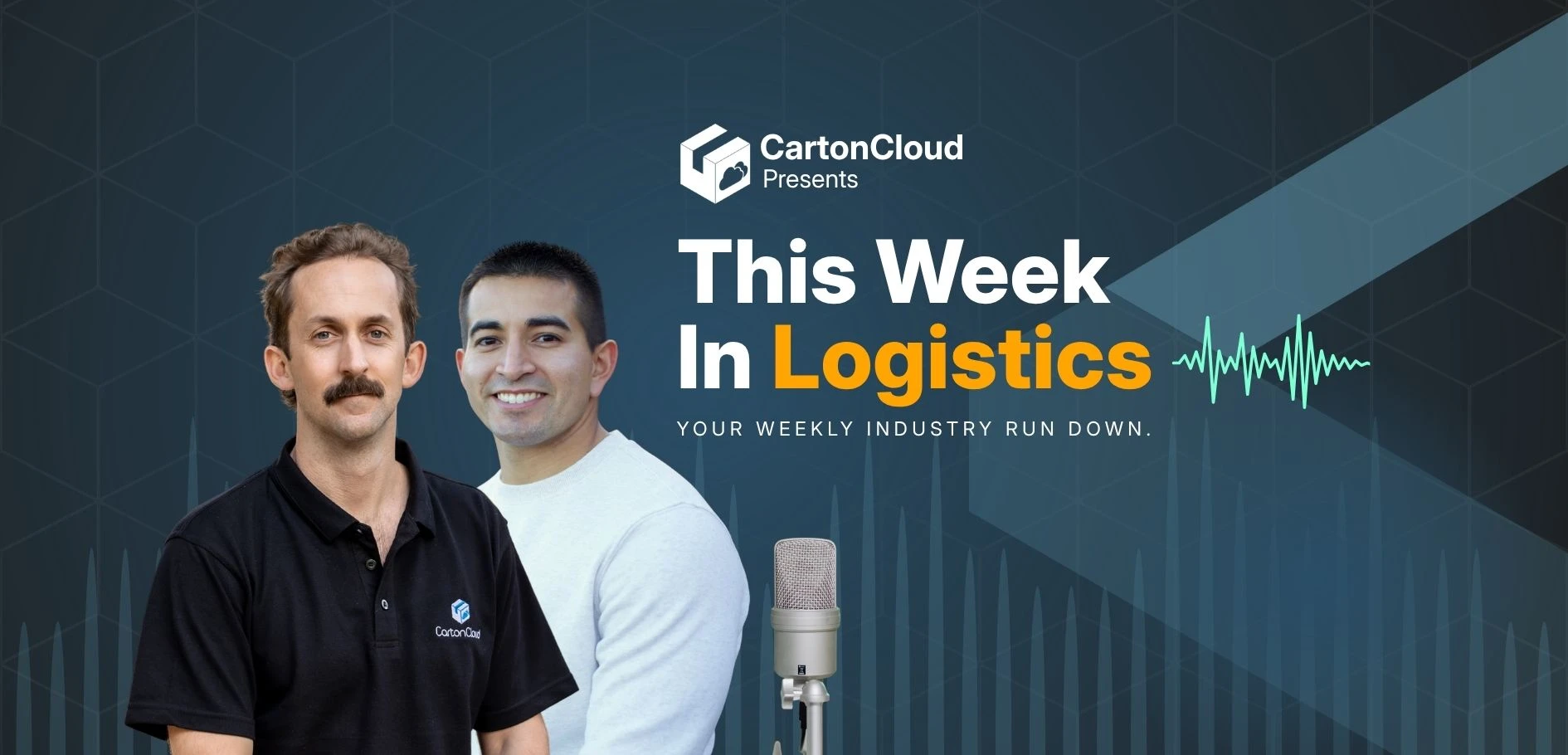
TL;DR: Join me for Episode 2 of This Week in Logistics as we break down what actually happened this week — why it matters for operators — and what you should be doing right now to stay ahead.
Listen to the full podcast below!
The Global Logistics Headlines Impacting the Industry Right Now
Let’s start with a quick run-through of the stories that are moving the needle for logistics operations worldwide.
- First, the escalation in the Middle East.
Following U.S. and Israeli strikes over Iran, the situation in the Persian Gulf has deteriorated quickly. Iran’s Revolutionary Guards have threatened commercial shipping moving through the Strait of Hormuz — a critical global checkpoint responsible for roughly 20% of the world’s petroleum flows.
- Second, security unrest in western Mexico has disrupted freight flows around key logistics hubs including Guadalajara and Manzanillo. Operators are being forced into emergency reroutes to protect both drivers and freight.
- Third, rail intermodal adoption is accelerating globally.
In the United States, Norfolk Southern and CMA CGM announced a new intermodal service designed to shift long-haul highway freight onto rail.
Meanwhile in Australia, the Inland Rail project reached a milestone enabling expanded double-stack freight capability, and across the Tasman Sea, KiwiRail just reported a $73.4 million half-year surplus.
- And finally, retail expectations continue to rise.
Home Depot recently launched real-time tracking for large item deliveries using driver handheld devices — a seemingly small update that signals a much bigger shift in service expectations.
If you zoom out, these stories cluster into three themes:
- Global disruption.
- Modal shift.
- Rising service expectations.
Let’s unpack what that actually means for operators below.
Global Disruption: When a Critical Logistics Node Goes Offline
Right now the Strait of Hormuz is effectively at risk of closure for commercial shipping.
For context, roughly one-fifth of global petroleum supply moves through that single corridor.
Combine that with ongoing attacks in the Red Sea affecting Suez Canal traffic — which handles roughly 30% of global container flows — and the global maritime system is facing another serious stress test.
The response has been immediate:
- Ships are being turned back.
- Insurance coverage is being canceled.
- Spot freight rates are spiking.
This week we also saw security unrest in western Mexico disrupt logistics flows around key freight hubs like Guadalajara and the port of Manzanillo. Operators in the region have been forced into emergency reroutes to protect both drivers and freight as certain roads and corridors temporarily became unsafe.
While the scale is different, the operational challenge is the same: a critical freight node has gone offline.
When that happens — whether due to security unrest, weather, labour action, or infrastructure failure — the difference between scrambling and stabilizing comes down to preparation.
Ask yourself;
- If one of your top three freight nodes went offline tomorrow — who decides the reroutes?
- Which alternate carriers are already vetted and approved?
- What does your first communication to customers look like?
Having a clear playbook in place gives you the clarity you need to respond quickly and protect your margins when conditions change.
Rail Is Gaining Momentum
While disruption dominates the headlines, another quieter trend is gaining momentum — rail.
Across several markets we’re seeing clear signals that long-haul freight conversion to intermodal is accelerating.
In the United States, rail currently moves about 10.6% of total freight tonnage, but intermodal container traffic already represents more than 47% of the rail freight market.
The new Norfolk Southern and CMA CGM service is targeting a specific opportunity — shifting long-haul highway freight onto rail.
As trucking capacity tightens and emissions regulations increase, that opportunity is likely to grow.
In Australia, rail currently carries about 49% of domestic freight tonnage, though most of that volume is bulk commodities like iron ore and coal.
Containerized rail freight remains much smaller (around 9% of the market ), but the Inland Rail project aims to lower corridor costs and push rail’s share of inter-capital freight to 55% by 2030.
Across the Tasman in New Zealand, road transport still dominates more than 90% of freight tonnage, but KiwiRail moves roughly 16–18% of the country’s exports and is strengthening financially.
What does all of this mean for operators? Intermodal should no longer be treated as a fallback. It should be modeled deliberately.
Look at your top ten long-haul lanes, and ask yourself:
- Which are viable for rail?
- Have you modeled cost against transit variability?
- Have you assessed reliability tradeoffs?
- Have you proactively presented modal options to customers?
As rail services become more structured and reliable, shippers will increasingly expect operators to provide options, not just capacity.
Retail Expectations: Predictability Is The New Differentiator
The final trend to watch is happening in last-mile delivery.
Home Depot’s rollout of real-time tracking for large deliveries might seem like a small feature update, however it signals a deeper shift in logistics expectations.
Retail no longer competes on speed alone; it competes on predictability.
This is what we call the B2C bleed-over effect.
The same seamless tracking experience you expect when ordering a $50 t-shirt online is quickly becoming the baseline standard across the broader supply chain.
Recent industry research shows 80% of B2B buyers now expect B2C-quality digital experiences, and more than 60% prefer self-service purchasing and tracking rather than calling a sales representative or dispatch office.
In other words, customers want visibility. They want status updates. They want a truck on a map.
Those expectations don’t stop at the final mile. They cascade upstream through the entire supply chain.
Today, customers increasingly expect the following as standard:
- Clear ETAs
- Live tracking
- Accurate notifications
- Fast exception resolution
If your warehouse accuracy is inconsistent, or your scan compliance is weak, those gaps will show up quickly in SLA negotiations.
Real visibility isn’t created by dashboards alone. It’s built through disciplined operations — clean scan events, consistent processes, and exception workflows that trigger action automatically.
When your data is reliable, the visibility takes care of itself.
The Operator Playbook This Week
While none of us can control geopolitical conflict or national infrastructure policy, we can control how our operations respond.
Resilience isn’t about predicting the future.
It’s about controlling what happens inside your four walls.
Here’s the three-part operator playbook for the week.
1. Control your routing
- Build outage standard operating procedures.
- Document exactly who decides reroutes, which backup carriers are pre-approved, and what your first communication to customers looks like.
The speed of your response will determine how well you navigate the next disruption.
2. Control your capacity
- Identify intermodal opportunities now.
- Look at your top ten long-haul highway lanes and model their suitability for rail.
Don’t wait for fuel spikes or capacity shortages before exploring alternatives.
3. Control your data
- Audit your scan discipline.
- Pull the last 30 days of dispatch data and look for inconsistent timestamps, delayed milestones, or gaps in event reporting.
Fixing your data hygiene now can prevent larger visibility gaps later.
Looking Ahead
Over the next week, the biggest signal to watch will be the situation in the Persian Gulf.
Whether commercial shipping continues through the Strait of Hormuz — or stalls — will determine how quickly energy prices and freight costs ripple across the global economy.
We’ll also be watching how quickly ocean freight rate increases begin showing up in domestic freight markets and inflation indicators, as those are the signals that shape the next phase of the supply chain cycle.
Want to know more?
Listen to Episode 2 of This Week in Logistics here to hear the complete discussion, and join me next week as we continue exploring the signals shaping logistics in 2026.
See you in the next one!
Post by Shaun Hagen, CEO CartonCloud.
Explore the resource hub
Tips, tools, downloadable guides and stories from logistics teams who are working smarter.

How to Automate Warehouse Invoicing, Rate Cards, and Reporting
WMS vs TMS: What Growing 3PLs Actually Need

5 Signs Your 3PL Needs a Warehouse Management System
This Week In Logistics: When the System Says Forty and the Shelf Says Twelve — How to Close the Inventory Gap, With Special Guest Gaubrielle Pritchard, Director of Product and Customer Marketing, Cin7
.webp)
The CartonCloud Logistics Index 2026: See where your operation stands

Running WMS and TMS Across Multiple Sites in Australia: The Questions We Answered at MegaTrans 2026
CartonCloud Feature Spotlight: July–September 2026
Deposco Alternatives: What Growing 3PLs Should Consider
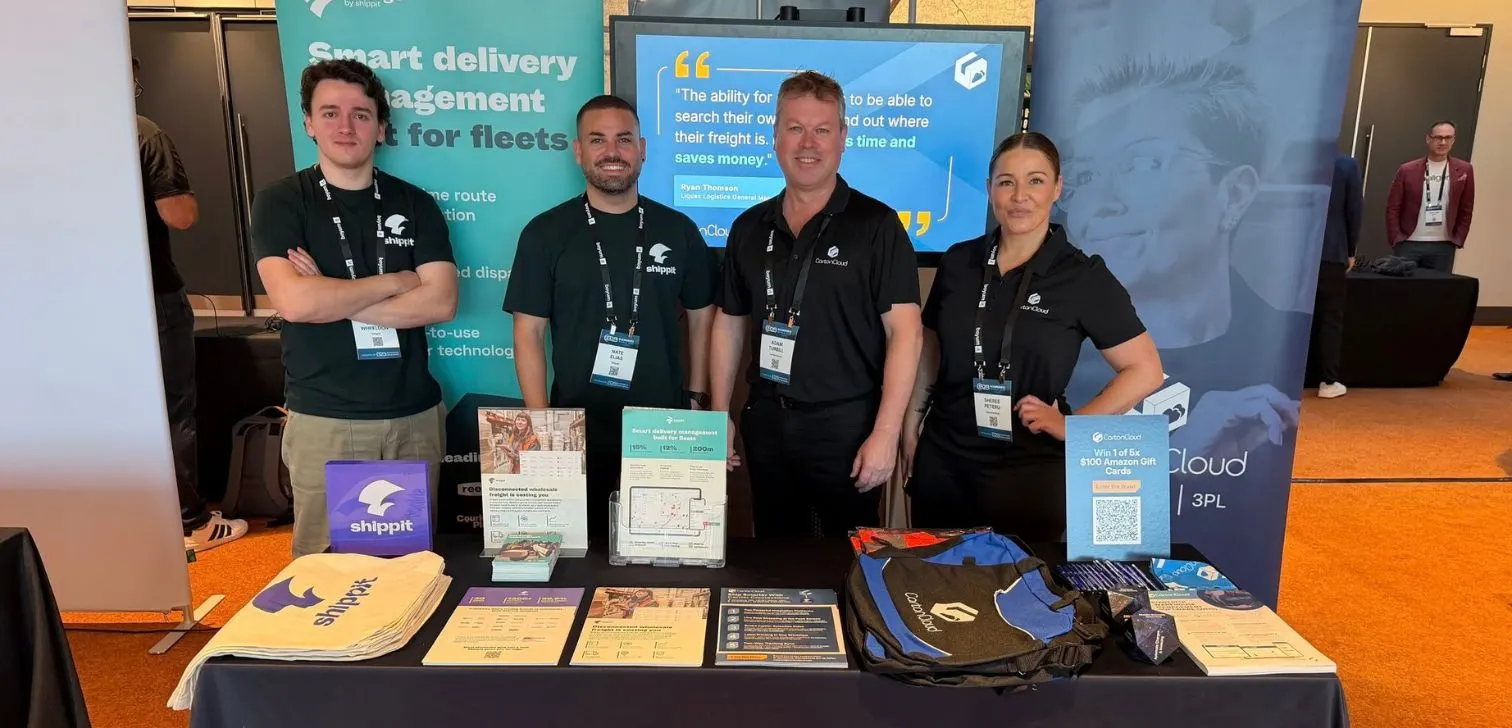
What We Heard at B2B World APAC: Large Brands Want Delivery Visibility, Not Just Warehouse Visibility
The Fastest WMS to Implement for E-Commerce Fulfillment 3PLs in the USA

This Week in Logistics: A Cost Rule Peak — Canada's Tariffs Go Live, FedEx Guarantees Your Duties, and Peak Season Surcharges Land
What's the Best WMS for Small 3PLs That Need an Easy Setup?

CartonCloud vs Extensiv: Which Platform Delivers More for 3PLs?
Get a Free, Honest Read on Your Operation, in About Two Minutes

How to Implement a WMS in Your Small 3PL Business: A Practical Guide
.webp)
This Week in Logistics: Multiple Warehouses, Multiple States, One Standard — How HD Warehousing Does It, With Special Guest Chad Hildebrandt, Owner & COO
August 2026: New Feature Round-Up
Warehouse Software for Cold Storage, Food, and Temperature-Controlled Logistics
This Week in Logistics: Season 2 Returns — US-Canada Tariffs, Oil Volatility, and Panama Canal Cuts All at Once
.webp)
How Do You Know You've Outgrown Basic Warehouse Systems? 7 Signs for Growing US 3PLs