How Do You Know You've Outgrown Basic Warehouse Systems? 7 Signs for Growing US 3PLs
If your software is the reason you can't take the next client, you've already outgrown it. Here are 7 signs, backed by three real operators who hit the ceiling, switched, and grew.
Published:
August 20, 2026
.webp)
TABLE OF CONTENTS
There are some common moments that many growing 3PL hits when they start out on spreadsheets or entry-level software. You know you’ve outgrown your old system the second your people have to put in more manual admin work to fix what your software should automate.
Whether it's rekeying orders between tools, sprinting onto the floor for manual recounts because you can't trust your data, playing phone tag because clients can't see their own stock, or turning down new accounts because onboarding takes too long — the symptoms are always the same. These are the growing pains you can avoid with a WMS built for growing 3PLs.
If the software is the actual ceiling capping your volume, rather than your actual warehouse footprint or your team, it's time to step up your WMS to a scalable system like CartonCloud.
— TL;DR — The short version
- Spot the signs that you’ve outgrown your warehouse system: If client onboarding takes weeks, invoices take days, and inventory counts require a double-check, your basic tools are costing you money.
- The risk of waiting: the longer you stay on tools you've outgrown, the more likely a preventable error costs you a client
- The solution — and the real-world proof: Three real-world 3PLs recognized these signs, stepped up to a purpose-built WMS, and eliminated the friction.
- The next step (it’s easier than you think): Look for a platform that prioritizes rapid onboarding, high usability, and a single system for warehouse, transport, and billing.
There’s a thin line between running a scaling 3PL and treading water just to keep spreadsheets from falling apart. I’m Ryan Hwang, Head of Sales for CartonCloud in North America.
Below are 7 clear signs your current system is capping your growth — plus 3 real stories of operators who made the switch and scaled.
What counts as a "basic" warehouse system + why 3PLs often start there
Most of the 3PL owners I chat with started exactly where you'd expect: spreadsheets, or a generic, entry-level inventory tool. Some even signed up for a basic 3PL platform that claimed to do it all but then fell short when put to the test of daily operational needs, costing them more in lost time and revenue.
At low volumes, a spreadsheet or basic software might get you covered on most fronts, but it won’t hold up to new client needs, scalability, or updated technical requirements. Once you start to grow and pick up new clients, the friction with these basic warehouse systems can show up fast.
How do you know if you’ve outgrown your current warehouse or 3PL system? I’ve put together a quick list below to help you spot-check and see whether your entry-level tools are really working for your operation.
7 signs you've outgrown spreadsheets + entry-level tools
If you’re answering yes to one or more of these questions, it’s a good sign you’ve already outgrown your current system.
- Rekeying: Is your team manually typing the exact same order or stock update into two or more systems?
- Stock you can't trust: Do you find yourself doing a manual warehouse recount just because nobody trusts the numbers on the screen?
- No client visibility: Are clients constantly calling or emailing your team for inventory status updates?
- Slow, error-prone invoicing: Are you taking days to pull together invoicing (and your customers are still finding errors or disputing)?
- Onboarding drag: Does bringing on a brand-new client take weeks of custom configuration, rather than minutes?
- No audit trail: Are you struggling to track who moved what, when they did it, or why an error occurred?
- Volume capped by tools, not space: Are you finding that your actual warehouse floor has plenty of space, but your software can't handle the transaction velocity required to fill it?
If so, you may have outgrown your systems already — and be in the need of a new solution that will grow and scale with you. You’re not alone.
Below, I’ll walk through 3 different examples of 3PL warehouses who spotted these signs early, and how they made the switch to CartonCloud to keep on growing.
B2C Logistics outgrew a generic 3PL system at 40 clients, then turned a loss into a profit
B2C Logistics is a textbook case of two signs from the list above: rekeying and volume capped by tools, not space.
B2C Logistics runs warehousing across food and dry goods for supermarkets, consumer electronics, and cosmetics clients.
They started on a fairly well-known 3PL system — but it was generic, not really built for what they needed, and dealing with a vendor outside their operating hours meant the customer service side fell short too.
At the same time, the business was evolving fast. They suddenly had 40 clients, including supermarket accounts, and were picking and packing 16 hours a day while needing accuracy as close to 100% as they could get. They had several of the pain points listed above — their team was manually inputting sales orders and purchase orders and couldn't keep up with order volume, customer needs, or invoicing.
They found CartonCloud while searching for modern software their warehouse staff could actually use.
“[CartonCloud] was absolutely the solution in terms of technology and usability for our people in our warehouse." — Bruce Walkley, General Manager, B2C Logistics.
Automation and electronic integration for sales and purchase orders replaced the manual entry that had been holding them back, and picking got more efficient along with it.
What stands out about this story is the bottom-line outcome: a reduction of four full-time equivalents in headcount, overhead down by as much as 20%, and accuracy "massively improved."
"We've turned an unprofitable operation into a profitable one." — Bruce Walkley, General Manager, B2C Logistics.
Drink Distribution needed a system that gave their producers full visibility from warehouse to doorstep
The next example connects two signs: no audit trail, and no client visibility.
Drink Distribution is a small-batch delivery service on Vancouver Island, BC, for wine, beer, cider, and alcohol producers.
Producers sending stock to Drink Distribution used to have no way to track what happened to it once it left their hands. Now, every stage of the journey is recorded and visible.
"They can see when it comes into the warehouse. They can see when the product gets picked. They can see when it gets packed. They can see when it gets on the truck and they can see exactly when it was signed for.
We chose CartonCloud, which allowed us to manage the warehouse and our transportation from our warehouse, last mile delivery, right to the end user." — Dave Dallin, General Manager, Drink Distribution.
Bringing new producers and new staff on board is just as fast. Onboarding is a walkthrough across three stages: sales orders, purchase orders, and viewing warehouse stock online.
"I sat through many onboarding sessions. Everyone loves it. Everyone seems to think it's quite simple to use. It's a 15-minute walkthrough." — Kierden Buchanan, Delivery Specialist, Drink Distribution.
What stands out here is how those two things connect: onboarding that takes minutes, not weeks, is what lets a lean team also handle batch tracking, expiry dates, and full shipment visibility without adding headcount. For growing 3PLs and distributors moving perishable or batch-tracked goods, that combination is usually what decides whether they get to the next stage of growth.
Specialised Logistics Australia outgrew a no-visibility system, then scaled to 50 clients with self-serve access
The last example is a different sign from the other two: no client visibility.
Specialised Logistics Australia (SLA) has been running Brisbane warehousing and transport for 25 years, growing from one truck and one customer to 10 vehicles, 50 clients, 10 transport companies, and a 3,000 sqm warehouse importing and distributing for overseas brands.
"Under the old system the customer had no access to the stock. If [clients] wanted to know the quantities, the status of a delivery, they would have to call up our operations people, who would then have to go into the system and then advise them over the phone as to the movement, or by email." — Tim Nichols, Owner, SLA.
Moving to CartonCloud changed that.
"Under [CartonCloud] the customer actually has access into our stock holdings online. They can go in anytime they like, view their stock holdings, and even place their own sale orders or purchase orders, and plan movements of their stock directly themselves without our people being involved." — Tim Nichols, Owner, SLA.
The payoff was two-sided. Customers got their time back because they could check stock and place orders themselves instead of waiting on a phone call, which saved SLA money on admin along the way. On SLA's end, the win was just as real: their team stopped fielding status calls and started spending that time planning stock movements instead.
What these three growing 3PLs had in common + what you should look for in choosing the right WMS for you
Working with new CartonCloud customers across North America, I see this trend time and time again: the system became the ceiling → the switch removed it → growth followed.
B2C Logistics was capped by manual data entry. Bennett Logistics was capped by missing functionality. SLA was capped by a total lack of client visibility. All three are on the other side of it now, having made the switch to CartonCloud.
If you're evaluating switching WMS software, this is why hundreds of logistics operators in North America are making the switch to CartonCloud:
- Ease of use: Your floor staff and office admins should be comfortable and fully productive within days, not months.
- Fast onboarding: You should be able to configure and launch a new client account in hours, not weeks.
- One system for warehouse, transport, + billing: Your warehouse management, transport, and invoicing data must live in one single system to completely eliminate duplicate data entry.
- Real integrations: The software must connect seamlessly with your clients' e-commerce stores (Shopify, WooCommerce) and your accounting platforms (QuickBooks, Xero).
- No lock-in: Avoid vendors that penalize your growth with hidden transaction fees or massive cost spikes as you scale.
If you're a smaller or mid-size US operator weighing this decision, I'd also point you to Best 3PL Software for Small to Mid-Sized Logistics Providers in USA for more helpful info.
What to do next
If any of those 7 warning signs hit a little too close to home, don't sweat it, most growing 3PLs have been exactly where you are. Come talk to me and my team and we'll walk through where you're at and what switching actually looks like for an operation your size. Book a free demo.
FAQ
Q: How do you know when you've outgrown basic warehouse systems?
A: You've outgrown basic systems when manual workarounds start causing real problems: untrustworthy stock counts, slow invoicing, errors that reach clients, and onboarding that takes weeks. If your tools, not your warehouse space or team, are capping how much you can take on, it is time.
Q: Can a small 3PL run on spreadsheets, and when does that stop working?
A: A small 3PL can run on spreadsheets early, when volume is low and clients are few. It stops working once you add clients with different rate cards and reporting needs. That is when rekeying, version errors, and invoice disputes start costing more than software would.
Q: We're a growing 3PL still on spreadsheets or a generic tool. What's the risk of waiting to switch?
A: Waiting too long usually means losing a client to an error or burning out your team. B2C Logistics was picking 16 hours a day and inputting orders by hand before switching; afterward they cut overhead by around 20 percent and turned a loss into a profit. The hidden cost is the wait.
Q: What should a first-time WMS buyer look for so they don't pick something they'll outgrow again?
A: Look for ease of use, fast onboarding, and one system that covers warehouse, transport, and billing. Avoid tools that lock you into rigid workflows or charge extra as you grow. The goal is software that scales with new clients instead of becoming the next thing you outgrow.
Q: Does upgrading to a WMS mean a long, painful implementation?
A: It does not have to. Drink Distribution's team described onboarding as a 15-minute walkthrough that had new producers and staff up and running, and said everyone who sat through one found it simple to use. Purpose-built 3PL platforms are built to get you live in days, not months, so you upgrade without stalling the operation you already run.
Explore the resource hub
Tips, tools, downloadable guides and stories from logistics teams who are working smarter.
Deposco Alternatives: What Growing 3PLs Should Consider
What We Heard at B2B World APAC: Large Brands Want Delivery Visibility, Not Just Warehouse Visibility
The Fastest WMS to Implement for E-Commerce Fulfillment 3PLs in the USA
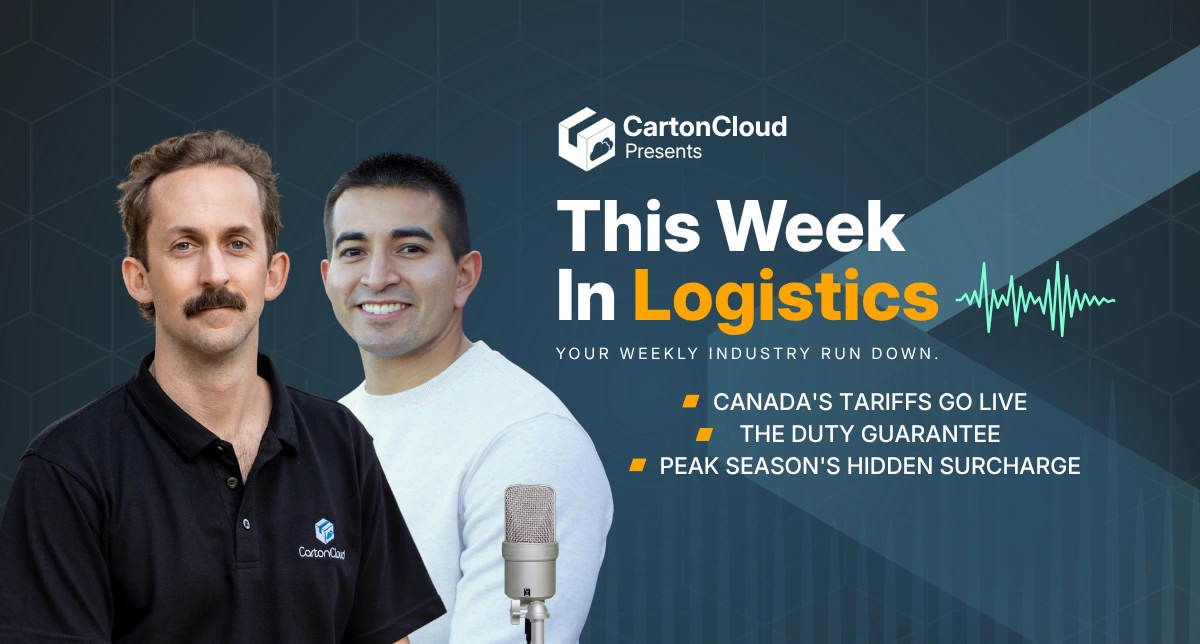
This Week in Logistics: A Cost Rule Peak — Canada's Tariffs Go Live, FedEx Guarantees Your Duties, and Peak Season Surcharges Land
What's the Best WMS for Small 3PLs That Need an Easy Setup?

CartonCloud vs Extensiv: Which Platform Delivers More for 3PLs?

Get a Free, Honest Read on Your Operation, in About Two Minutes

How to Implement a WMS in Your Small 3PL Business: A Practical Guide
.webp)
This Week in Logistics: Multiple Warehouses, Multiple States, One Standard — How HD Warehousing Does It, With Special Guest Chad Hildebrandt, Owner & COO
August 2026: New Feature Round-Up
Warehouse Software for Cold Storage, Food, and Temperature-Controlled Logistics
This Week in Logistics: Season 2 Returns — US-Canada Tariffs, Oil Volatility, and Panama Canal Cuts All at Once
.webp)
CartonCloud Named a 2026 "Great Supply Chain Partner" by SupplyChainBrain
.webp)
Dock Management: How We Built Visibility Into Every Delivery
.webp)
July 2026 — New Feature Round-up

What US 3PL Operators Really Say About Switching From Slow, Complex WMS Alternatives

CartonCloud vs Competitors: An Honest Comparison from an Implementation Specialist
.webp)
Running Multiple Sites from One WMS System: How HD Warehousing Scaled Without the Complexity
.webp)
This Week in Logistics: The Operator Playbook
CartonCloud Feature Spotlight: April-June 2026