This Week in Logistics: Policy Pressure, the Illusion of Capacity + the Shift to Real Resilience
This Week in Logistics, the market isn't screaming about a massive demand shock or a single explosive disruption… instead, it's flashing a very different, quieter warning — one that’s showing up inside daily operations.
Published:
March 19, 2026

TABLE OF CONTENTS
This Week in Logistics, the market isn't screaming about a massive demand shock or a single explosive disruption… instead, it's flashing a very different, quieter warning — one that’s showing up inside daily operations.
Across Australia, New Zealand, the US, Canada and Mexico, the signals are consistent. Costs are rising in new places, capacity is tightening in more complex ways, and policy is starting to directly impact how operators plan and execute.
TL;DR: Join me for Episode 4 of This Week in Logistics as we break down what’s actually driving cost and complexity right now — from policy-driven volatility and cross-border constraints to shifting margin pressure — and what operators should do to stay in control.
Listen to the full podcast below!
The Stories Moving Logistics This Week
First, let’s hit the news desk and get you all caught up on the headlines worth paying attention to this week.
Ocean rates are rising again — but with a different ceiling
Drewry’s World Container Index increased 8% week over week, driven by stronger Asia–Europe rates and gains on the Trans-Pacific.
Note: This isn’t a return to pandemic-era spikes. However, it does reinforce a more important shift — the floor of ocean pricing is structurally higher than it used to be, and is still highly sensitive to geopolitical shocks like those in the Middle East.
What’s changed is how carriers manage capacity. Excess capacity has largely been absorbed, giving them more control to move prices quickly when networks tighten. For operators, that means less predictability — even in relatively stable markets.
FedEx signals a shift in B2B service expectations
FedEx has launched a reusable packaging solution for B2B shippers, partnering with Returnity.
This signals that B2B service expectations are evolving. Customers are no longer just asking if you can ship a product — they’re asking how efficiently, how sustainably, and how cleanly you can manage the full lifecycle, including returns.
For 3PLs, this puts reverse logistics front and centre. It’s no longer a secondary workflow — it’s becoming a competitive differentiator.
Margin pressure is shifting to surcharges + fuel
SeaBridge Global Logistics released a market update highlighting a growing challenge, particularly across Australia and New Zealand.
While base container rates remain relatively stable, operators are being hit hard by:
- Rising bunker costs
- Emergency surcharges
- Domestic fuel volatility
This reinforces a key shift happening across the market — margin pressure is no longer sitting in linehaul rates.
It’s showing up in accessorials, exceptions, and cost variability across the execution layer. If you’re not tracking total cost closely, it’s easy to miss where profitability is actually being lost.
Policy pressure is building in the US
The U.S. Trade Representative has recently announced new Section 301 investigations into structural excess capacity across multiple manufacturing economies.
While this may sound like a policy headline, it has immediate operational impact — even small shifts toward tariffs or trade restrictions can quickly reshape sourcing decisions, landed costs, and freight flows.
We’ll break this down further in the first deep dive, but the key takeaway is this: policy is now directly influencing planning cycles.
Strong Mexico growth meets tightening capacity
C.H. Robinson reports that Mexico has started the year strongly, with exports up 8.1% year over year, building on an already record-setting 2025.
At the same time, Uber Freight is reporting tightening truckload capacity — with a 56,000 driver shortage creating pressure across key cross-border corridors.
This creates a two-speed dynamic. Demand is growing, but execution is becoming more constrained. We’ll unpack this further below, but the implication is clear: capacity may look available — however, qualified capacity is tightening fast.
Infrastructure investment signals a shift toward operational resilience
Finally, both New Zealand and Australia announced major infrastructure investments this week.
New Zealand confirmed six initiatives under its Coastal Shipping Resilience Fund, while Infrastructure Australia pushed freight networks (including ports and connectivity) to the top of its national priority list.
This is a strong signal that resilience is moving beyond strategy and into execution. Governments are investing in redundancy, coordination, and network strength — particularly at key handoff points between road, rail, and ports.
Logistics Fun Fact of the Week
Since this episode lands on St. Patrick’s Day in Vancouver, it’s only right we talk about the supply chain behind one of the world’s most iconic exports — Guinness.🍺
On an average day, the world drinks around 7.5 million pints of Guinness.
But on St. Patrick’s Day? That number jumps to over 13 million pints in just 24 hours — nearly double the usual volume!
To make that happen without taps running dry, the Guinness supply chain ramps up weeks in advance. It’s estimated that delivery vehicles travel over 4.7 million miles (more than 6 million kilometres) globally just to position kegs for this single day.
It’s a perfect example of what logistics really looks like — a huge amount of coordination behind what feels like a simple moment.
So if you’re heading to the pub anytime soon, take a second to appreciate the real MVPs — the dispatchers, warehouse teams, and drivers who make sure your pint is delivered fresh and ready to enjoy.
Why Policy is Now an Operational Risk
As mentioned earlier, the new U.S. Section 301 investigations are creating a real planning cycle problem for operators moving freight globally and across borders.
We’ve seen this dynamic before in USMCA discussions — but this time, it’s playing out at a global scale. The focus is on “structural excess capacity,” where goods are subsidised, dumped into markets, or routed through third countries to bypass tariffs.
The moment policy shifts, (or even threatens to) your landed cost assumptions can change overnight, which is what triggers the real disruption.
We see this play out every time tariff risks hit the news. Shippers don’t wait — inventory gets pulled forward to avoid potential cost increases, driving short-term demand spikes. Ports become congested, spot rates climb, and networks tighten artificially. Then, once tariffs are introduced, the cycle reverses. Demand drops off sharply, capacity floods back into the market, and rates fall just as quickly.
This is an example of the bullwhip effect in action — not driven by demand, but by policy.
What we’re seeing now is the downstream impact of that uncertainty. Planning cycles are shrinking, and operators are moving away from 12–18 month forecasts toward shorter booking windows, more flexible contracts, and hybrid pricing strategies. When confidence in the planning horizon weakens, operators end up paying a premium for it.
For 3PLs, this also means a shift in customer expectations. Clients want deeper visibility into origin and compliance to avoid unexpected penalties. Ultimately, it forces a reset internally, as compliance, procurement, and transport can no longer operate in silos.
Policy is now a line item in your operation — sitting directly in your control tower.
The Illusion of Capacity in Cross-Border Freight
Nearshoring has been one of the biggest growth stories in logistics over the past 12 months — especially across North America.
Mexico has now overtaken China as the largest exporter to the U.S., with growth expanding well beyond automotive into electronics and advanced manufacturing. On paper, it looks like a clear win. But underneath that growth, there’s a constraint building.
Tender acceptance is now slipping. There’s a 56,000 driver shortage across key corridors and as a result, execution is getting harder. That’s the illusion of capacity.
Cross-border freight isn’t just about having trucks available — it’s about having the right trucks, with the right drivers, operating within a highly coordinated system.
When you layer in the current challenges such as security risks impacting driver availability, tight equipment supply, and strict compliance requirements like CTPAT certification, you'll find that the pool of qualified carriers shrinks quickly. This is why “freight is moving” doesn’t mean “freight is easy.”
For operators, the takeaway is clear. The real bottleneck isn’t trucks — it’s qualified, compliant capacity. Therefore, it’s important to invest in:
- Strong carrier relationships
- Tight compliance processes
- Consistent execution discipline
Because in these corridors, capability beats availability every time.
The Shift to Real Resilience
The infrastructure announcements in Australia and New Zealand this week highlight a broader shift. Resilience is no longer a concept discussed in strategy decks — it’s being funded and operationalised.
Both governments are sending a clear message: networks are under pressure, volumes are rising, and the biggest vulnerabilities aren’t always the major assets. They’re the handoff points between them.
Recent events have made this clear. Flooding has cut critical rail lines in Australia, isolating regions for weeks. Cyclone Gabrielle severely damaged road infrastructure in New Zealand.
When primary networks fail, the issue isn’t just capacity — it’s the lack of coordinated alternatives.
That’s why we’re seeing investment in:
- Coastal shipping as a backup “blue highway”
- Improved port connectivity
- Stronger integration across transport modes
For operators, this connects directly to cost.
At the same time, operators in Australia and New Zealand are being hit by rising surcharges and exception costs — particularly at these vulnerable nodes, causing margins to leak.
The takeaway is that resilience isn’t about having spare trucks sitting idle. It’s about:
- Sharing data across your network
- Having alternative routes pre-approved
- Coordinating decisions across systems
- Maintaining tight control over exception handling and admin
In other words, resilience is built through coordination and control, not just capacity.
The Operator Playbook for This Week
1. Reprice based on total cost — not just freight rates
If your team is reviewing lane profitability purely through the lens of the base rate, you’re missing the real picture.
Right now, margin pressure isn’t coming from linehaul alone. It’s coming from everything around it — fuel, surcharges, and corridor-specific risk.
Make it a priority this week to update your view of:
- Bunker + fuel exposure
- Accessorials + emergency surcharges
- Corridor-specific volatility
2. Treat cross-border as a capability — not just a lane
In North America, the constraint isn’t theoretical capacity. It’s qualified execution.
Cross-border freight rewards discipline. That means tightening the fundamentals:
- Customs + compliance processes
- Documentation accuracy + tracking
- Data quality across shipments
- Carrier selection + performance
If any of these are inconsistent, scaling volume will amplify risk — not revenue.
The operators who perform well in this environment are the ones who treat cross-border as a specialised capability, not just another route in the network.
3. Invest in coordination before adding complexity
When pressure builds, the instinct is often to add more carriers, systems, as well as workarounds.Before expanding your network, step back and ask: is your current operation actually coordinated?
Visibility is useful; but it’s the coordinated decision-making across your warehouse and transport operations that drives outcomes when something goes wrong.
When your WMS and TMS are connected, your team can:
- Respond faster to disruptions
- Make decisions with shared, real-time data
- Reduce delays at handoff points
What We’re Watching Next Week
Looking ahead, there are two key signals worth keeping on your radar.
- First, the ongoing USTR Section 301 investigations. Any movement here (even early indications) has the potential to shift sourcing strategies, trigger front-loading behaviour, and compress planning cycles even further.
- Second, the driver shortage in Mexico and how that begins to influence spot rates as we move closer to summer. With capacity already tightening across key cross-border corridors, even small shifts in demand could create outsized pricing pressure.
Both of these trends point in the same direction: less predictability, tighter execution windows, and a greater premium on flexibility. Staying close to these signals early will give you more time to respond before the market forces your hand.
Want to know more?
Listen to Episode 4 of This Week in Logistics on Spotify or Apple to hear the complete breakdown.
See you next week!
Post by Shaun Hagen, CEO CartonCloud.
Explore the resource hub
Tips, tools, downloadable guides and stories from logistics teams who are working smarter.

CartonCloud’s Commitment to Security: SOC 2 Type 2 Audit Complete

How to Implement a WMS in Your Small 3PL Business: A Practical Guide
.webp)
This Week in Logistics: Multiple Warehouses, Multiple States, One Standard — How HD Warehousing Does It, With Special Guest Chad Hildebrandt, Owner & COO

August 2026: New Feature Round-Up
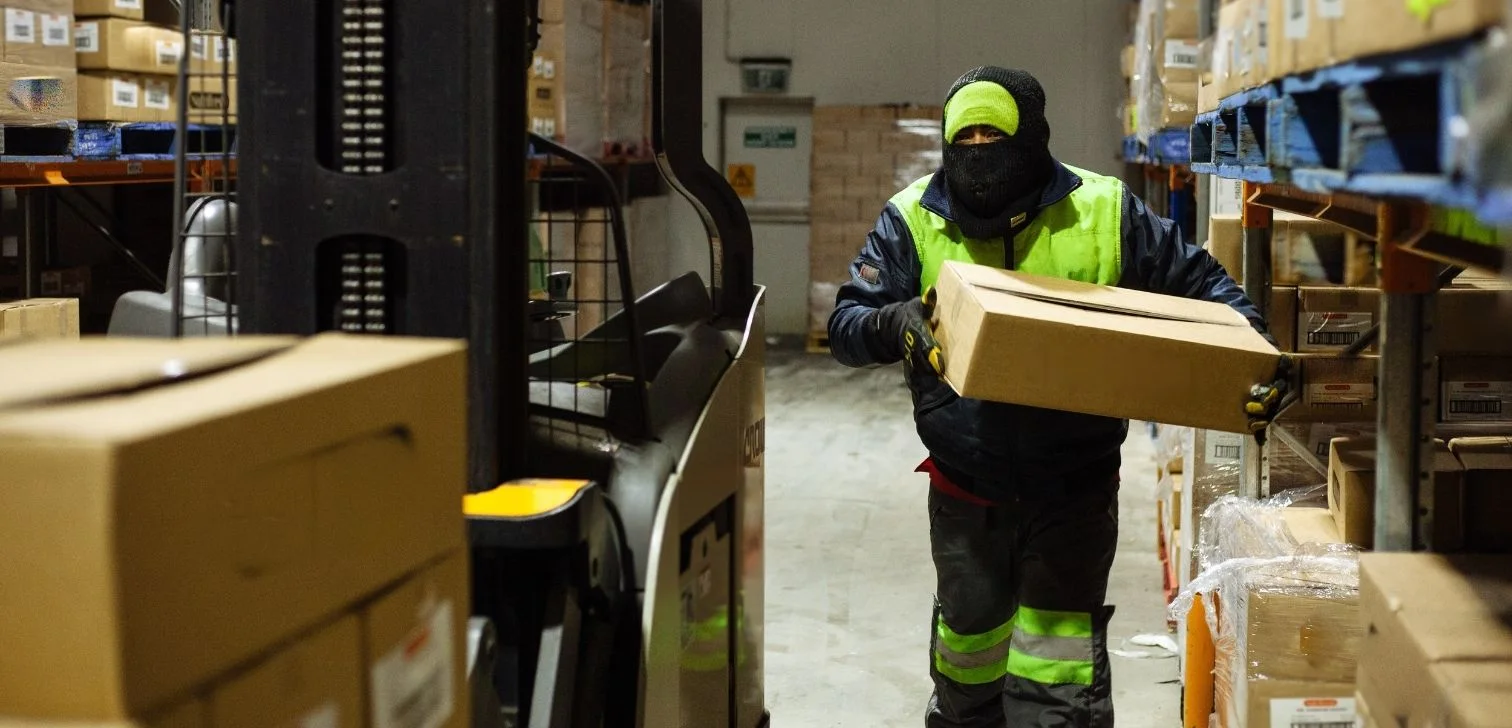
Warehouse Software for Cold Storage, Food, and Temperature-Controlled Logistics
This Week in Logistics: Season 2 Returns — US-Canada Tariffs, Oil Volatility, and Panama Canal Cuts All at Once
.webp)
How Do You Know You've Outgrown Basic Warehouse Systems? 7 Signs for Growing US 3PLs
.webp)
CartonCloud Named a 2026 "Great Supply Chain Partner" by SupplyChainBrain
.webp)
Dock Management: How We Built Visibility Into Every Delivery
What's the Best WMS for Small 3PLs That Need an Easy Setup?
.webp)
July 2026 — New Feature Round-up

What US 3PL Operators Really Say About Switching From Slow, Complex WMS Alternatives

CartonCloud vs Competitors: An Honest Comparison from an Implementation Specialist
.webp)
Running Multiple Sites from One WMS System: How HD Warehousing Scaled Without the Complexity
.webp)
This Week in Logistics: The Operator Playbook

Deposco Alternatives: What Growing 3PLs Should Consider
CartonCloud Feature Spotlight: April-June 2026
.webp)
3PL Software Pricing: What You're Actually Paying For (And How to Compare It)

Inside CartonCloud: A Top-Rated 3PL Logistics Software Platform
3PL Software Find the Best Fit for Your Business