This Week in Logistics: Aramco Says Oil Won't Normalise Until 2027 — and Two Other Shifts That Moved the Ground This Week
Saudi Aramco says oil won't normalise until 2027, Australia has scaled back Inland Rail, and CVSA Roadcheck Day 1 puts 1 in 3 trucks out of service. Three structural shifts that change planning assumptions for 3PLs, transport operators, and warehouse leaders this week.
Published:
May 20, 2026
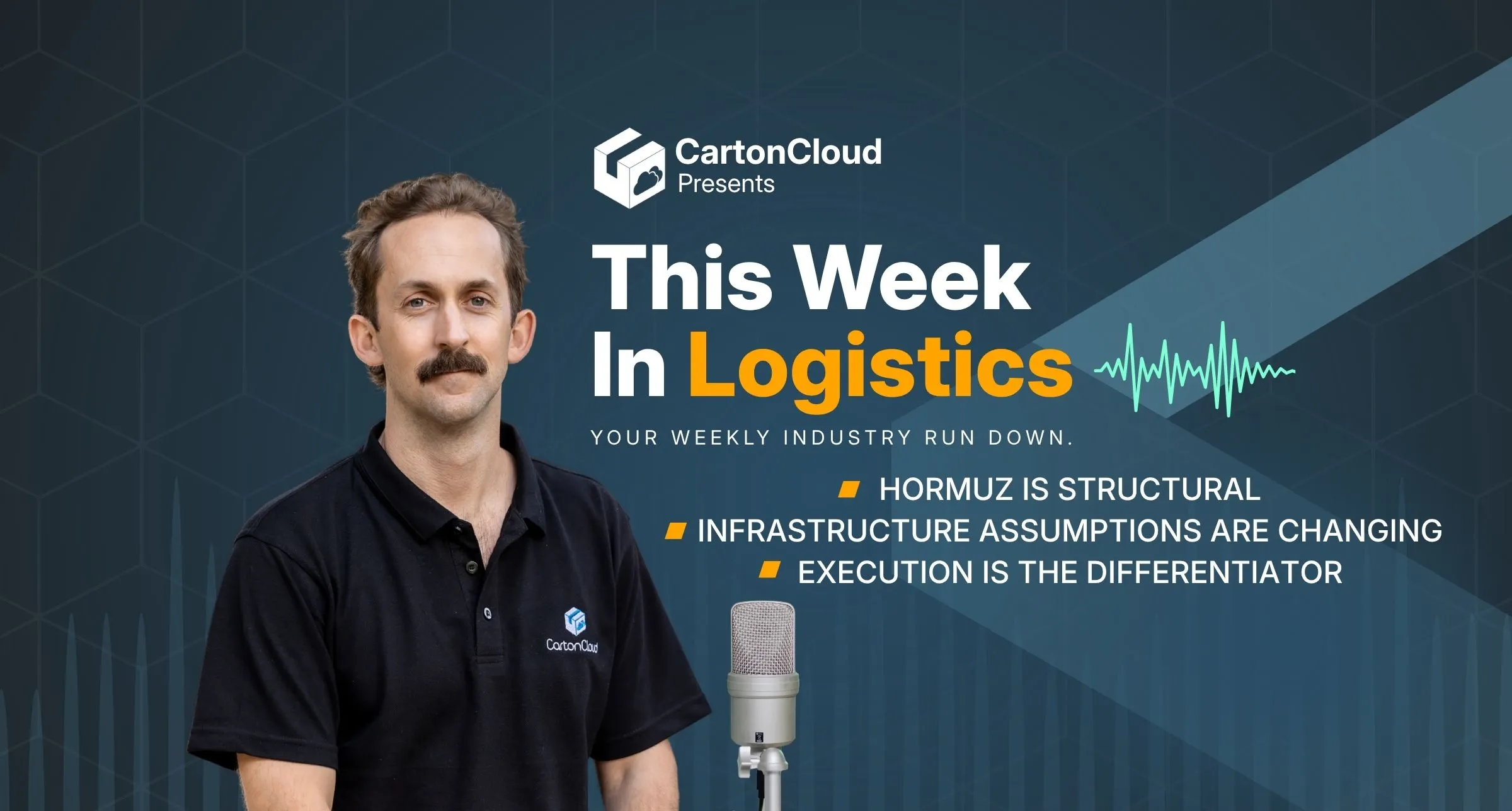
TABLE OF CONTENTS
Last week we talked about volatility being the new operating environment. This week in logistics, the tone has shifted. The dramatic swings have settled and the headlines are a little bit quieter. But when the dust settles, you get to see what the ground actually looks like and what has moved. And across Australia, New Zealand, the US, and Canada, the ground has moved in some significant ways.
I'm Shaun Hagen, CEO of CartonCloud. I've spent the last decade working with 3PLs, freight forwarders, and in-house logistics teams through fuel cycles, capacity crunches, and every wave of platform competition the category has thrown at them. This week, three structural shifts landed at once, and each one changes a planning assumption operators have been working from for years.
If I had to frame it in one sentence, it would be this. The dust is settling, but the ground has shifted underneath operators' planning assumptions.
Three things happened this week that matter. The Hormuz oil crisis stopped being a short-term disruption and started looking like a structural reality through 2027. Australia's biggest freight infrastructure project just got scaled back, which changes long-term planning for East Coast operators. And the CVSA Roadcheck data showed a clear gap between operators who were ready and operators who were not.
Here's what they mean for 3PL and in-house logistics operators, and your planning.
The Hormuz crisis is now a structural reality, not a short-term disruption
Prices settled into a range this week, with Brent Crude sitting around $101 to $108 a barrel. That sounds like stability compared to last week's wild swings. But the comment that landed hardest came from the CEO of Saudi Aramco, the world's largest oil company. Even if the Strait of Hormuz reopened today, the market will not normalise until 2027.
The reason is purely practical. Mines have to be cleared from the waterway, hundreds of ships stranded in the Gulf need to be redeployed, and insurance companies need to feel confident enough to cover tanker voyages through the Strait again. That does not happen in days or weeks. It happens in months.
Over the last few episodes, we tracked this crisis through several phases. Initial shock, the surcharge wave, supply stress, government interventions, military escalation, and now what you might call the acceptance phase. The key shift here is the timeline.
What that means for operators is that any fuel surcharge model built as a temporary response to a short-term disruption now needs to be converted into a permanent part of the pricing structure. "Eventually" now means 2027, not next quarter.
Last episode I mentioned that every fuel surcharge model built on a single number is wrong. This week I would go even further. Every fuel surcharge model built on a temporary assumption is also wrong. The discipline now is to build a pricing cadence that adjusts in both directions, automatically, as fuel climbs or drops.
The operators handling this well are the ones with flexible, two-directional pricing cadences already in place. The ones still on flat rates and lazy surcharges are the most exposed right now, and the gap between those two groups is widening every week.
"'Eventually' now means 2027, not next quarter. Every fuel surcharge model built on a temporary assumption is structurally wrong."
Australia's Inland Rail has been scaled back — and that changes planning
In Australia, the Federal Government has stopped development on the northern sections of the Inland Rail project. This was a planned 1,600-kilometre freight rail corridor designed to link Melbourne and Brisbane. Costs have now exceeded $45 billion. The full corridor is on hold indefinitely, but the southern section from Beveridge near Melbourne to Parkes in central New South Wales will still be built, targeting late 2027.
Alongside that, the government announced a $1.75 billion investment into the existing freight rail network — track renewal, passing works, signalling — alongside a pilot program to incentivise shifting more freight onto rail and coastal shipping.
The Inland Rail decision matters far beyond rail operators because it wasn't just a transport project. It was a core planning assumption. Over the last decade, a lot of industrial strategy regarding where to build warehouses, which corridors to prioritise, and how to balance road versus rail relied on Inland Rail sitting in the background. Halting the northern half forces companies to revisit those assumptions.
The commitment to rail remains. It's just in a more targeted, commercially defensible form. But "more targeted" means different conclusions about depot location, corridor mix, and intermodal play than the ones operators were building toward.
Across the Tasman, the same theme showed up in a different form. New Zealand and Singapore signed a highly significant, world-first legally binding agreement earlier this month. It's designed to keep essential goods flowing between the two countries during a crisis, covering food, fuel, medical equipment, and construction materials. It accompanies a warning from Singapore's Prime Minister that energy flows through Hormuz may still be limited until the end of the year.
The signal is clear. Governments are treating supply chains as strategic national capabilities rather than background plumbing. Expect more scrutiny around your business continuity plans during a crisis. Can you identify essential freight, prioritise it, and prove what happened?
For operators, the practical response is layered:
- Pressure-test any depot, corridor, or multimodal assumption built around an infrastructure timeline that may no longer arrive.
- If you're not directly impacted by Inland Rail, the habit of pressure-testing assumptions is still what separates the best operators from the rest.
- Map your essential-freight workflows now, while you have time, so the answer is ready when a customer or regulator asks.
Execution quality is now the competitive differentiator in transport + keeping your trucks on the road
In the US, the Commercial Vehicle Safety Alliance ran its annual Roadcheck inspection blitz last week — a 72-hour period where inspectors across the US, Canada, and Mexico pull over and inspect commercial trucks. The Day 1 data has come back, and it is sobering. Roughly 1 in 3 trucks inspected on the first day was placed out of service.
To put that into context, last year's full event failure rate was closer to 1 in 5. This significant jump is happening in a market where truck availability was already at its lowest level in a decade.
The Roadcheck data made something very visible this week. The disciplined carriers who passed had their electronic logging devices in order, cargo securement correct, and documentation clean. The ones who didn't are now stuck dealing with delayed loads, compliance costs, and damaged customer relationships. In a tight market, compliance isn't just a regulatory requirement. It represents fleet availability.
This connects directly to the Amazon assessment. The industry conversation around Amazon Supply Chain Services has moved past the initial shock and into a practical question. What do operators actually do about it? Analysts are now drawing comparisons to AWS — the way Amazon built cloud infrastructure for itself and then opened it up to everyone. The current assessment is that while the stock market overreacted in the short term, the structural shift is real in the long term.
Amazon's 96.4% on-time delivery rate is going to become the benchmark customers use to evaluate every logistics provider. You don't necessarily need to match it. But you absolutely must know your own number. You need to be able to confidently explain where your service meets or exceeds that benchmark — whether that's through specialised handling, operational flexibility, responsiveness, or local knowledge.
Not knowing your data is becoming commercially dangerous in a market where the big players publish theirs openly.
The operators who will thrive can answer the question precisely:
- "My on-time range for your freight type is this"
- "My exception resolution time is this"
- "My onboarding speed for new customers is this"
- "My ability to handle your non-standard, complex, regional, or time-critical freight is something Amazon's standardised platform does not do well"
That is the conversation. And it requires you to know your numbers.
"When big tech and regulators are publishing hard performance and compliance data, the operator who can answer with confidence and specificity wins the customer conversation every time."
The operator playbook for the next seven days
1. Make fuel structures permanent. Turn short-term surcharge models into permanent pricing structures. The Aramco timeline means we are looking at 2027 before normalisation. Make sure your pricing model works across a wide range and scales dynamically up and down.
2. Revisit network assumptions. If you are an East Coast Australian operator, pressure-test any depot, corridor, or multimodal assumption built aroun Inland Rail timelines that may no longer arrive. Even if you aren't directly impacted, building the habit of pressure-testing assumptions is what separates the best operators from the rest.
3. Make performance visible. Know your exact numbers — on-time rates, exception resolution times, onboarding speeds, and cost-to-serve per customer. When big tech and regulators are publishing hard performance and compliance data, the operator who can answer with confidence and specificity wins the customer conversation every time.
What to watch this week
- Roadcheck full results as the out-of-service numbers are released through the week
- US-Iran negotiations — Brent Crude will react within hours to any breakthrough or breakdown
- Fair Work Commission (Australia) — the first review hearing for the fortnightly fuel recovery order on May 25
- Customer RFPs — how Amazon's performance metrics start influencing procurement conversations over the coming weeks
FAQ
Q: When will the Strait of Hormuz oil market normalise?
A: The Strait of Hormuz oil market is not expected to normalise until 2027, according to the CEO of Saudi Aramco — even if the waterway reopened today. The delay reflects the practical work of clearing mines, repositioning stranded tankers, and rebuilding insurance coverage for voyages through the Strait. Operators should treat 2027 as the planning horizon, not next quarter.
Q: What does the Inland Rail decision mean for Australian freight operators?
A: The Inland Rail decision means the northern corridor (above Parkes, NSW) is on hold indefinitely, with only the southern section from Beveridge to Parkes still proceeding, targeting late 2027. The Federal Government is redirecting $1.75 billion into upgrading the existing freight rail network, which changes long-term planning assumptions for East Coast warehouse and transport operators.
Q: What is the New Zealand and Singapore supply chain resilience pact?
A: The New Zealand and Singapore supply chain resilience pact is a world-first legally binding agreement designed to keep essential goods flowing between the two countries during a crisis. It covers food, fuel, medical equipment, and construction materials, and signals that governments are now treating supply chains as strategic national capability rather than background plumbing.
Q: How bad were the CVSA Roadcheck Day 1 results?
A: CVSA Roadcheck Day 1 results placed roughly 1 in 3 inspected commercial trucks out of service, compared to roughly 1 in 5 across last year's full event. The jump is happening in a US truck market where capacity was already at its lowest level in a decade, which means the compliance gap is now translating directly into fleet availability.
Q: What should 3PLs do about Amazon Supply Chain Services?
A: 3PLs should treat Amazon Supply Chain Services as a long-term structural shift, not a short-term threat — and respond by knowing their own performance numbers cold. Operators who can clearly articulate their on-time rates, onboarding speed, and ability to handle complex freight will be in a strong position. Those who can't will feel pressure as Amazon's published benchmarks shape customer expectations.
Q: How should operators update their fuel surcharge model right now?
A: Operators should convert short-term fuel surcharge responses into permanent pricing structures that scale dynamically in both directions. With Hormuz normalisation now expected to take until 2027 according to Saudi Aramco, any pricing model built on a single Brent number or temporary assumption is structurally wrong.
The bottom line: Spot the pattern early. Simplify your response. The dust is settling, so make sure you know exactly where the ground has moved. This week, treat 2027 as the planning horizon, pressure-test the network assumptions underneath your operation, and answer performance questions with specificity.
Explore the resource hub
Tips, tools, downloadable guides and stories from logistics teams who are working smarter.
Deposco Alternatives: What Growing 3PLs Should Consider
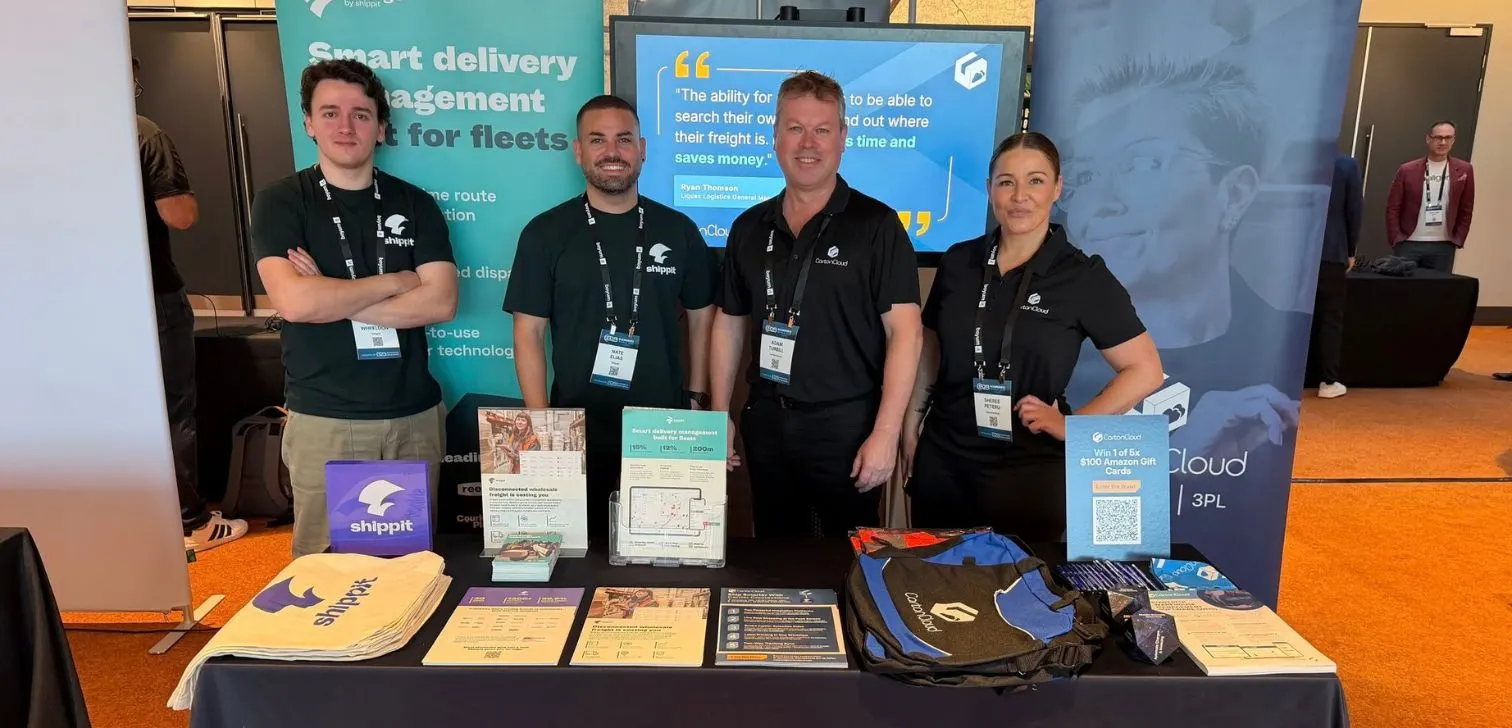
What We Heard at B2B World APAC: Large Brands Want Delivery Visibility, Not Just Warehouse Visibility
The Fastest WMS to Implement for E-Commerce Fulfillment 3PLs in the USA
This Week in Logistics: A Cost Rule Peak — Canada's Tariffs Go Live, FedEx Guarantees Your Duties, and Peak Season Surcharges Land
What's the Best WMS for Small 3PLs That Need an Easy Setup?

CartonCloud vs Extensiv: Which Platform Delivers More for 3PLs?
Get a Free, Honest Read on Your Operation, in About Two Minutes

CartonCloud’s Commitment to Security: SOC 2 Type 2 Audit Complete

How to Implement a WMS in Your Small 3PL Business: A Practical Guide
.webp)
This Week in Logistics: Multiple Warehouses, Multiple States, One Standard — How HD Warehousing Does It, With Special Guest Chad Hildebrandt, Owner & COO
August 2026: New Feature Round-Up
Warehouse Software for Cold Storage, Food, and Temperature-Controlled Logistics
This Week in Logistics: Season 2 Returns — US-Canada Tariffs, Oil Volatility, and Panama Canal Cuts All at Once
.webp)
How Do You Know You've Outgrown Basic Warehouse Systems? 7 Signs for Growing US 3PLs
.webp)
CartonCloud Named a 2026 "Great Supply Chain Partner" by SupplyChainBrain
.webp)
Dock Management: How We Built Visibility Into Every Delivery
.webp)
July 2026 — New Feature Round-up

What US 3PL Operators Really Say About Switching From Slow, Complex WMS Alternatives
CartonCloud vs Competitors: An Honest Comparison from an Implementation Specialist
.webp)
Running Multiple Sites from One WMS System: How HD Warehousing Scaled Without the Complexity