Best 3PL Software Alternatives: 2026 Comparison Guide
Talking to US 3PLs every week who are evaluating software, here's an honest breakdown of the platforms that come up most — so you can cut through the noise and find the right fit.
Published:
May 26, 2026

TABLE OF CONTENTS
The right 3PL software depends on how your operation is structured, how fast you need to be live, and whether you need warehouse management, transport management, or both in one place. This guide covers the platforms US 3PLs are actually comparing in 2026 — with a straight look at what each one does well, where it falls short, and who it's built for.
— TL;DR — The short version Best 3PL Software Alternatives: 2026 Comparison Guide
- Most 3PL platforms are WMS-only. If you run transport alongside warehousing, that narrows the field quickly.
- Implementation timelines range from days to months — and that gap matters more than most buyers expect.
- Pricing models differ significantly. Per-user and per-client structures can punish growth in ways that aren't obvious upfront.
- A software partner’s support quality is the most commonly cited reason operators switch — and it's often the most underweighted factor in the buying process.
- The right platform is the one your team will actually use, not the most feature-rich one on paper. Look for a system that is easy to learn, flexible to your workloads, mobile app — and fast onboarding.
As Head of Sales for North America at CartonCloud, I spend most of my week talking to US 3PLs who are evaluating software. The questions are pretty consistent — what's the difference between these platforms, what's the catch, and which one is actually going to work for an operation like mine. This guide is my honest answer to all of them.
What to look for before you compare platforms
Before you get into feature lists, get clear on what your operation actually needs. The questions I see buyers get tripped up on most often:
- WMS, TMS, or both? Most platforms lead with WMS. If you also run transport, you'll need native TMS or a separate system — and that integration overhead adds up fast.
- How fast do you need to be live? Timelines range from days to several months. If you're replacing an existing system mid-operation, downtime risk is real.
- How does pricing scale? Per-user and per-client models look manageable on day one. They look different when you've onboarded five new clients in a year.
- What does support look like after go-live? This is the factor most buyers underweight — and the one that drives most switching decisions. Ask specifically who answers the phone and where they're based.
CartonCloud
Best for: Scaling SMB and mid-market 3PLs running B2B pallet operations, e-commerce fulfillment, cross-docking, or combined warehouse + transport.
CartonCloud is a 3PL software platform with WMS, TMS, and automated billing built into one connected system. It was built inside a working 3PL, which is why the workflows feel like they were designed by someone who's actually been on the floor.
- WMS + TMS: Warehouse and transport in one platform. No integration required between the two, data flows seamlessly and securely across your operations.
- Automated billing: Rate cards, storage, handling, and transport charges calculated and invoiced automatically.
- Customer portal: Every client gets their own visibility portal — included at every tier, no extra fee, with 24/7 access to real-time data.
- Mobile app: Select your mode and instantly start working — from warehouse put away, pick + pack, scan move, or driver app — with our mobile app native to both iOS and Android.
- Integrations: Walmart, Shopify, WooCommerce, Amazon, StarShipIT, Shippit, ShipStation, Xero, QuickBooks, MYOB, and others — plus an open API and the ability to build custom integrations for your specific operation.
Pricing: Pay for what you need, with a plan that’s right for you. Usage-based across four tiers — Starter, Professional, Professional Plus, and Enterprise. Your tier is set by the functionality your operation needs. Volume pricing sits on top independently.
Local support and training: Local expert support teams based in US, Canada, Australia and New Zealand who know 3PL operations — on the phone, on email, and on-site where it's needed. Backed by a comprehensive online knowledge base available to every user and their customers, plus CartonCloud Academy — free online training so your team and your clients can get up to speed quickly and keep building expertise as you grow.
Onboarding: CartonCloud's implementation timeline is significantly shorter than most platforms in this space — without the lengthy IT project or professional services overhead most competitors require.
Strengths:
- ✓ All-in-one without the integration overhead.
- ✓ Fast to implement — no lengthy IT project.
- ✓ Pricing that doesn't penalize you for winning new business.
- ✓ US + Canada-based support team who understand 3PL operations.
Where it's not the right fit:
- ✘ Very large enterprise operations needing deep labor management, or heavy ERP customization will need an enterprise platform.
What Users Are Saying:
"We implemented within 3 months and we've grown 500 to 600% since. CartonCloud was a major factor of that growth. It gave our customers access to portals. It gave us extreme traceability." — Aaron Rossiter, Warehouse Manager, Seatram Logistics
"Saved 40 to 60 hours per week on admin while doing 30 to 50% more work." — Ryan Thomson, Operations Manager, Liquex Logistics

Extensiv (formerly 3PL Central)
Best for: Extensiv is commonly seen in evaluations for established 3PL operations that require a wide range of functionality and integrations across their tech stack. They’ve been in the space for a long time and have strong brand recognition within the market.
The platform itself is capable, but many operators underestimate the overall complexity involved once additional modules, integrations, and services are layered into the solution. Longer implementation timelines and a pricing structure that can become difficult to forecast as functionality expands are often key considerations during the evaluation process.
- WMS: Strong multi-client warehouse management for established operations.
- TMS: No native TMS. Transport workflows require external tools and the integration overhead that comes with them. (Extensiv does not offer a dedicated in-house integration team to support custom integration projects, which often leaves customers responsible for sourcing and managing their own third-party developers.)
- Integrations: Large integration library.
- Add-on modules: Core functionality sits behind a modular pricing structure. Extensiv's own product page confirms Small Parcel Suite is sold as an add-on, and advanced analytics sit behind the Enterprise and Professional tiers. Order Manager is a separate product. The base subscription is a starting point, not a ceiling.
Pricing: Available on request. Extensiv charges for client users but not warehouse users, with the bigger cost consideration being customizations. Labels, reports, and workflow changes typically require paid support to configure. Their scanning web application is also not included as a standard feature and is typically charged separately.
Extensiv also does not have an in-house API or integration team, meaning customers usually need to source their own developers for integration work, which adds additional cost and extends timelines beyond the platform subscription.
Onboarding: Typically eight weeks to three months. Important to note, we commonly hear, and several Capterra reviewers cite the need for extensive training to be able to use the platform effectively.
Support: Verified user reviews on Capterra and G2 mention difficulty reaching account managers, slow response times outside business hours, and an "extensive training" requirement to operate the system confidently. G2 gives Extensiv an ease-of-use rating of 4.2 / 5, and Capterra users give a rating of 4.1 / 5.
Strengths:
- ✓ Established brand with deep 3PL feature set.
- ✓ Strong fit for operations that have already invested in IT and process maturity.
- ✓ Wide integration library.
Where it's not the right fit:
- ✘ SMB and scaling mid-market 3PLs — the modular pricing structure means costs compound as you win clients, add modules, and turn on integrations.
- ✘ Operations that need transport management — there's no native TMS, so you'll be running and reconciling a second system.
- ✘ Teams that need to be live quickly — eight weeks to three months is the floor, not the ceiling.
- ✘ 3PLs that want predictable pricing — the base subscription doesn't include the add-ons most operations end up needing.
- ✘ Operations that need responsive, logistics-native support — verified reviews flag this consistently as a friction point.
- ✘ They do not have an in-house API development team and only provide consulting support, not build services. Customers are typically expected to source their own developers or rely on external providers for integration work.
For a detailed comparison, see CartonCloud vs Extensiv: Which Platform Delivers More for 3PLs?
Fishbowl
Best for: Small to mid-sized light manufacturers and assemblers — businesses building, kitting, or producing product in-house — that need bill-of-materials, work order, and production tracking alongside basic inventory and warehouse functionality, with QuickBooks as their accounting backbone.
Fishbowl is one of the most familiar names in inventory management, particularly for operators who run QuickBooks. It was built for product businesses that manufacture or assemble what they sell — and the manufacturing module is the genuine reason to look at it. For pure warehousing, inventory, or 3PL operations, Fishbowl is harder to justify: there's no native TMS, no multi-client 3PL billing engine, no customer portal built for end-clients, and the cloud version carries fewer features than the on-premise edition. If you're a manufacturer with a warehouse, Fishbowl can work. If you're a warehouse or 3PL without a production line, you're paying for capability you don't need and missing capability you do.
- Manufacturing: Bill of materials, work orders, and production tracking — the core reason to choose Fishbowl over a pure WMS.
- WMS: Basic warehouse functionality designed to support manufacturing operations, not multi-client 3PL workflows.
- TMS: Not included.
- Integrations: Strong QuickBooks connection. Beyond that, Fishbowl charges $49/month per additional integration add-on.
- Deployment: On-premise (Fishbowl Advanced) or cloud (Fishbowl Drive). The cloud version carries fewer features than the on-premise edition — worth checking before you commit.
Pricing: Two models. Fishbowl Drive (cloud) and Fishbowl Advanced (on-premise) with licence fees per single user, additional user licences per seat plus annual maintenance fees.
Onboarding: Typically two to eight weeks. Reviewers note the onboarding process requires sustained time and training investment.
Support: G2 gives Fishbowl 7.7 / 10 for ease of use and 6.8 / 10 for ease of setup. Capterra users rate it 4.1 / 5 for ease of use. Common review themes include outdated UI, on-premise reliability issues, and a learning curve that takes time to clear.
Strengths:
- ✓ Genuine fit for small to mid-sized light manufacturers running QuickBooks.
- ✓ Long-established platform with broad familiarity in the manufacturing and wholesale segments.
- ✓ Delivers Bill of Materials and work order capability that pure WMS platforms don't offer.
Where it's not the right fit:
- ✘ 3PLs of any size — Fishbowl isn't built around multi-client warehousing, multi-rate-card billing, or end-client visibility portals.
- ✘ Warehouses or 1PLs without a manufacturing requirement — you'll be paying for production capability you don't need, and missing TMS, multi-client billing, and customer portal capability you likely do
- ✘ Operations that need transport management — no native TMS
- ✘ Teams that need cloud-first, mobile-native workflows — the on-premise version still carries the deeper feature set
- ✘ Operations that grow quickly — per-seat licensing means costs scale with headcount, not value delivered
For a detailed comparison, see CartonCloud vs Fishbowl: A Comparison Guide for 3PLs.
ShipHero
Best for: Direct-to-consumer e-commerce brands and e-commerce-focused 3PLs running high-volume parcel fulfillment, primarily through Shopify, Amazon, and other online marketplace channels.
ShipHero is a legitimate option if your operation is built around e-commerce pick-and-pack and marketplace integrations are the priority. They offer two distinct products — WMS for Brands (for in-house e-commerce operations) and WMS for 3PLs (for fulfillment providers serving e-commerce clients). The product is genuinely well-built for parcel-out, DTC, marketplace-first workflows. Where the fit narrows is for operations that look less like e-commerce: B2B pallet work, freight, mixed warehouse-and-transport operations, or cross-docking are not what ShipHero was designed for, and that shows in the product.
- WMS: Strong e-commerce fulfillment workflows — pick/pack, batch picking, returns, marketplace sync. Mobile pick app is well-rated.
- TMS: None. ShipHero connects to parcel carriers and offers rate-shopping inside the WMS, but there's no native transport management — no driver app, no route optimization, no linehaul or distribution workflows.
- B2B and wholesale: Functional but not the strength. Capterra reviewers explicitly cite wholesale workflows as a weak area, with mandatory steps in the wholesale flow that don't suit higher-volume B2B operations. B2B EDI compliance is delivered via SPS Commerce integration rather than native capability.
- Integrations: E-commerce focused — Shopify, Amazon, eBay, BigCommerce, Walmart, Etsy, plus major parcel carriers. 60+ integrations published.
Pricing: Custom quote-based across three tiers — WMS for Brands, WMS for 3PLs, and Enterprise. Publicly starts around $1,995/month. ShipHero's own G2 profile now lists "Contact Us" for the standard plan, so expect a sales conversation to confirm actual pricing for your operation.
Onboarding: Typically six to eight weeks. Reviewers note onboarding can be information-heavy upfront, particularly for teams migrating from older systems, but the platform settles quickly once configured.
Support: G2 rates ShipHero at 4.4 / 5 across 199 reviews, with strong scores for ease of use (8.6 / 10) and quality of support (8.6 / 10). Capterra shows 4.3 / 5 across 88 reviews.
Strengths:
- ✓ Purpose-built for high-volume DTC e-commerce fulfillment.
- ✓ Strong marketplace integrations and parcel carrier rate shopping.
- ✓ Well-rated user experience for warehouse pick/pack teams.
- ✓ Genuine 3PL tier with multi-client billing for e-commerce fulfillment providers.
Where it's not the right fit:
- ✘ 3PLs running B2B pallet, freight, or cross-docking work — the product is parcel-out by design, and wholesale flows are a known friction point in user reviews.
- ✘ Operations that need transport management — there's no native TMS, no driver app, no route optimization; ShipHero is a WMS that prints carrier labels.
- ✘ Mixed-operation 3PLs running e-commerce alongside B2B pallet or distribution — you'll end up bridging two systems.
- ✘ Operators looking for transparent pricing upfront — entry pricing now requires a sales conversation.
For e-commerce-focused 3PLs running pure DTC fulfillment, ShipHero is a credible option. For most multi-service 3PLs running mixed warehouse and transport workflows, the scope and platform model don't match.
Mintsoft
Best for: UK and European e-commerce 3PLs and online retailers running high-volume parcel fulfillment across multiple marketplaces and courier services.
Mintsoft is a solid fit for UK and European e-commerce 3PLs and online retailers, particularly operators running across Amazon, Shopify, eBay, and the UK courier network. It has good marketplace coverage and a strong following in the UK. For North American operators, the support footprint and pricing transparency are less established, which is worth factoring in.
- WMS: E-commerce-focused warehouse management with marketplace connections, pick/pack workflows, and a mobile app for barcode scanning.
- TMS: No native TMS. Mintsoft handles carrier integrations (rate shopping, label generation, tracking) but transport management — route planning, driver app, proof of delivery — runs via a separate integration.
- Integrations: E-commerce and shipping focused.
Pricing: Transparent in the UK; less so for North American operations. Order-volume based, scaling with monthly order volume. Transparent in the UK; less so for North American operations, which typically require a sales conversation.
Onboarding: Typically two to eight weeks.
Support: Strong Trustpilot rating (4.7) but a smaller G2 and Capterra review footprint than other platforms in this guide. Reviewers consistently praise integration depth and onboarding; common friction points cited in Capterra and third-party reviews include a dated user interface, time-consuming initial setup, and "endless CSV uploads" for tasks other platforms handle natively.
Strengths:
- ✓ Strong e-commerce integration coverage.
- ✓ Good fit for UK-origin operations.
Where it's not the right fit:
- ✘ 3PLs that need native transport management — Mintsoft's TMS capability is a third-party integration with Stream, not built-in.
- ✘ North American operations needing local courier coverage and same-timezone support — the platform's footprint is UK-first by design.
- ✘ Mixed-operation 3PLs running B2B pallet or freight alongside e-commerce — Mintsoft is a parcel-out e-commerce platform, not a multi-modal logistics system.
- ✘ 3PLs running complex per-client billing — Mintsoft has billing capability but falls short of the WMS + TMS + multi-rate-card-billing model most multi-service 3PLs require.
- ✘ Operators wanting modern UI and minimal admin overhead — reviewers consistently cite a dated interface and CSV-heavy workflows.
For a detailed comparison, see CartonCloud vs Mintsoft: Which WMS Is Best for 3PLs and E-commerce Fulfillment?
Deposco
Best for: Mid-market to larger operations with complex omnichannel fulfillment requirements — operations selling across e-commerce, retail stores, marketplaces, and wholesale channels that need a single platform to orchestrate inventory and orders across all of them.
Deposco skews toward larger, more complex operations — managing inventory and orders across e-commerce sites, physical stores, marketplaces, and 3PL fulfillment in a single system. The platform is genuinely strong for brands and retailers running multi-channel operations at scale, and Deposco's customer profile reflects that. For a scaling SMB 3PL, it's likely more platform than needed — and the investment to get there (both time and money) is significant.
- WMS: Strong mid-market WMS with omnichannel fulfillment workflows.
- TMS: Not included.
- OMS / DOM: Distributed Order Management — orchestrating inventory and orders across multiple fulfillment nodes (warehouses, stores, drop-ship partners).
- Integrations: Wide integration set for mid-market operation, including ERPs, retailer EDI, shipping carriers, materials handling equipment, and third-party TMS providers.
Pricing: Not transparent — available on request. Expect a full sales cycle with custom quoting based on operation size, modules, and integration scope.
Onboarding: Implementation timelines vary significantly with operation complexity, with a minimum of 3 months of onboarding even for smaller SMBs. Verified reviews describe a range from "straightforward and quick" for simpler deployments to longer, more involved rollouts for enterprise customers with multi-channel and ERP integration requirements.
Support: Capterra reviews highlight strong development team responsiveness and partnership-style account management. Common friction points include limitations with specific ERP integrations (NetSuite cited), order waving logic, and Android device update behaviour on warehouse scanners.
Strengths:
- ✓ Genuine omnichannel depth — WMS + OMS + DOM unified on a single codebase.
- ✓ Scalable from mid-market to large enterprise operations.
- ✓ Strong fit for brands and retailers running multi-channel fulfillment.
- ✓ Active development partnership reported by long-term customers.
Where it's not the right fit:
- ✘ Pure-play 3PLs without omnichannel or retail-store fulfillment complexity — the OMS/DOM capability is the platform's distinctive strength, and if you're not using it, you're paying for capability that won't move the needle.
- ✘ Operations that need native transport management — Deposco offers rate shopping inside the WMS, but full TMS workflows (route planning, driver app, linehaul, proof of delivery) require partner integrations, not native capability.
- ✘ Scaling SMB and mid-market 3PLs prioritizing fast time-to-value — the platform is built for enterprise-scale orchestration, which adds implementation and configuration overhead that smaller operations rarely need.
- ✘ 3PLs that want predictable, transparent pricing upfront — Deposco requires a full sales process to scope and quote.
- ✘ 3PLs running high-volume pallet in, pallet out or cross-docking — the platform is built for omnichannel orchestration, and that complexity may not suit everyday cross docks or pallet handling.
Da Vinci
Best for: Mid-market 3PLs with complex e-commerce fulfillment requirements, in-house technical resources, and ability to invest significant time in configuring a deeply customizable platform.
Da Vinci is a mid-market 3PL WMS, and is one of the longer-standing platforms in the 3PL WMS space with e-commerce fulfillment depth and a North American presence. Unlike many competitors in this guide, Da Vinci offers genuinely native WMS, TMS, and yard management on a single platform. The trade-off is depth over ease — reviewers consistently describe Da Vinci as powerful and configurable but with a steeper learning curve than newer cloud-native platforms. Implementation tends to be resource-intensive, so it suits operations with the technical team to dedicate to the implementation roll out, and the available timeline to do it properly.
- WMS: Deep multi-client warehouse management with wave processing, smart packing cartonization, UCC128/GS1 support, and small-parcel manifesting.
- TMS: Native transport management included, supporting LTL/FTL — one of the few platforms in this guide where TMS isn't an add-on or a partner integration.
- YMS: Native yard management — uncommon in the SMB/mid-market WMS space.
- Integrations: Strong EDI/ERP/shopping cart integration — built for 3PLs serving customers with complex compliance and integration requirements.
Pricing: Available on request.
Onboarding: Implementation is typically resource-intensive. Reviewers note mastering the full system requires significant time and effort, which directly affects implementation speed and user adoption.
Support: It’s worth noting there are limited user reviews across G2 and Capterra compared to other platforms in this guide. Existing reviews praise customer support, consistent updates, and tutorial quality. Common friction points are around the learning curve, depth of individual modules, and occasional glitches that can be difficult to diagnose.
Strengths:
- ✓ Honestly, this is one of the few platforms with genuinely native WMS + TMS + YMS (no partner integrations required for transport or yard).
- ✓ Highly configurable — adapts to bespoke client requirements and complex EDI/integration needs.
- ✓ Long-established North American 3PL presence with 20+ years of customer base maturity.
- ✓ Strong fit for established 3PLs serving large retail or wholesale customers with strict compliance requirements.
Where it's not the right fit:
- ✘ 3PLs prioritizing fast time-to-value — Da Vinci is built for configuration depth, not rapid go-live. Implementation is typically resource-intensive.
- ✘ Operations without in-house technical resource — the platform's flexibility relies on someone configuring it well, which adds dependency.
- ✘ Teams looking for modern, mobile-native UX out of the box — Da Vinci's depth shows in the interface, and adoption requires investment in training.
- ✘ 3PLs wanting transparent, predictable pricing upfront — full sales process required.
For a detailed comparison, see CartonCloud vs. Da Vinci Comparison Guide for 3PLs.
Manhattan Associates
Best for: Large enterprise 3PLs and national manufacturers, and global distribution operations with significant IT resources, long implementation timelines, established supply chain functions, and seven-figure technology budgets.
Manhattan Associates is in a different weight class, and power some of the largest distribution operations in the world.
For genuinely enterprise-scale operations, it's a credible and capable choice. For SMB and mid-market 3PLs or mid-market in-house logistics teams, it's a different category of platform entirely — the cost, complexity, and implementation timeline are calibrated to operations many times larger than most readers of this guide.
- WMS: Enterprise-grade warehouse management with labor management, slotting optimization, automation orchestration, and machine-learning-driven order streaming on a unified microservices architecture.
- TMS: Native transport management included as part of the broader Manhattan Active suite.
- Integrations: Extensive enterprise ERP and supply chain connectivity, designed for multi-system enterprise tech stacks.
Pricing: Enterprise — expect significant investment across license, implementation, and ongoing support.
Onboarding: Typically 6-12 months to over a year for full implementation, extending to 12-18 months or longer for complex multi-site operations.
Strengths:
- ✓ Deep functionality for very large, complex operations.
- ✓ Genuine enterprise-grade capability and platform maturity (30+ years in market).
- ✓ AI-driven throughput optimization with measurable performance outcomes.
- ✓ Built for multi-site, multi-node, high-complexity distribution networks.
- ✓ Strong global brand presence and analyst recognition.
Where it's not the right fit:
- ✘ SMB and mid-market 3PLs or in-house brand teams — Manhattan is calibrated for operations shipping 50,000+ orders/day; below that threshold, you're paying enterprise costs for capability your operation can't fully leverage.
- ✘ Operations prioritizing fast time-to-value — six to twelve months is the floor, not the ceiling.
- ✘ Scaling 3PLs without dedicated IT teams — Manhattan requires significant process redesign, configuration, and ongoing optimization resource to deploy and run effectively.
- ✘ 3PLs wanting predictable, transparent pricing — full enterprise sales process required; implementation costs alone can exceed most SMB 3PLs' total annual software spend
Cin7
Best for: Product brands, retailers, wholesalers, and manufacturers — businesses selling their own product across multiple channels (DTC, B2B wholesale, Amazon, retail) — that need unified inventory and order management across their sales operations. Not built for 3PL providers running multi-client warehousing.
Cin7 comes up in comparisons because of its inventory depth, but it's worth being clear: it is built for product brands managing their own stock across multiple sales channels, it's not a 3PL platform. The platform does not deliver core warehouse operational workflows, multi-client warehouse billing, or transport management. For brands with simple, single-zone stock — a few SKUs, one or two pickers, parcel-out only — that's not a problem. For brands or operators running a real warehouse floor with multiple zones, scanners, drivers, multi-warehouse stock, or their own delivery fleet, those gaps become operational blockers, not feature wishes.
If you're a product business managing stock across retail channels, it's a real option. If you're running a 3PL, you'll be working around its limitations from day one.
- Inventory & ERP-lite: Strong multi-channel inventory tracking, purchasing, sales order processing, B2B portals, and bill of materials assembly.
- Warehouse management: Basic warehouse functionality designed to support a brand's own stock — not multi-client 3PL workflows. No multi-rate-card billing engine for end-clients. No customer portal for 3PL clients. No mobile-native warehouse app built around picker, packer, and driver workflows.
- TMS: Not included. No driver app, no route planning, no proof of delivery, no linehaul or distribution workflows.
- 3PL Connect: A connector platform that lets product brands push inventory and orders to their 3PL providers — meaning Cin7 is designed to work with 3PL platforms, not replace them.
- Integrations: Strong for retail and e-commerce — Shopify, Amazon, Xero, QuickBooks, WooCommerce, ShipStation, plus EDI connectivity to big-box retailers.
Pricing: Three tiers including; Standard, Pro and Advanced. Cin7 Omni (enterprise tier with deeper EDI and 3PL connectivity) is custom-quoted. Reviewers have flagged significant pricing increases over time.
Onboarding: Typically two to six weeks or longer for Omni implementations with EDI and enterprise integrations. Reviews indicate the platform has a notable learning curve — particularly for users without prior inventory or ERP system experience.
Support: Frequently cited as a friction point. Software Advice reviewers note long wait times, with delays reported in weeks or months and limited access to knowledgeable staff, with support primarily handled via email rather than direct phone or on-site contact. For operations running live warehouse activity where stock or order issues stop the operation cold, the support model is worth weighing carefully.
Strengths:
- ✓ Genuine strength for product brands managing inventory across multiple sales channels.
- ✓ Strong EDI and big-box retailer connectivity at the Omni tier.
- ✓ Established platform with 8,500+ global customers, particularly strong in apparel, fashion, furniture, food & beverage.
- ✓ Works as a complementary inventory layer that connects to dedicated 3PL platforms.
Where it's not the right fit:
- ✘ Not designed for multi-client 3PL operations .
- ✘ Not suitable for 1PL brands running a real warehouse floor — multi-zone picking, scanner-driven workflows, putaway logic, pack stations, driver teams, multi-warehouse stock — that need genuine WMS workflow depth rather than inventory-tracking-with-warehouse-features.
- ✘ Operations that need transport management — no native TMS.
- ✘ Operators wanting responsive, hands-on support.
- ✘ Brands that have outgrown spreadsheet inventory but need warehouse and transport infrastructure to scale — Cin7 closes the inventory gap, but the operational gap remains.
How to choose the right fit for your operation
If I could give one piece of advice before you start booking demos, it's this: know what your operation needs before you start comparing. These questions will help you narrow the field — and make sure you're asking the right things when you do get on a call:
- Running warehouse, transport, or both? CartonCloud is equipped with a fully native WMS and TMS in one system — no integration required.
- Primarily e-commerce fulfillment? ShipHero, Mintsoft, and CartonCloud's e-com workflows are all worth a side-by-side demo.
- Fast implementation a priority? CartonCloud averages around 3-5 weeks of active onboarding. Most others are months.
- Pricing predictability important? Check whether the model charges per client or per user — those escalate quickly as you grow.
- Local support non-negotiable? CartonCloud has US and Canada-based teams. Support model varies significantly across the rest of the field.
"Having CartonCloud come on board has been one of the best moves that I could have made, and I don't think we would have won as much business as what we do." — Deanne Luke, Founder, Lexington Logistics
If you'd like to see how CartonCloud works for an operation like yours, book a free demo — I'm happy to walk you through it.
FAQ
Q: What is the best 3PL software in 2026?
A: The best 3PL software depends on your operation's size, complexity, and whether you need warehouse management, transport management, or both. CartonCloud, Extensiv, ShipHero, and Deposco are among the most compared platforms for US 3PLs, with CartonCloud rated 4.9 out of 5 on G2 and consistently cited for ease of use, fast onboarding, and local support.
Q: What is the difference between a WMS and a TMS?
A: A WMS manages stock, orders, and warehouse workflows. A TMS manages delivery runs, drivers, and transport operations. Most 3PL platforms offer one or the other — CartonCloud includes both in a single connected platform.
Q: How long does 3PL software take to implement?
A: Implementation time varies significantly. CartonCloud averages around 3-5 weeks of active onboarding, with most operations live in a few weeks. Enterprise platforms like Extensiv typically take six weeks to several months.
Q: How does 3PL software pricing work?
A: Pricing models vary widely. Some platforms charge per user, some per client onboarded, and some on usage volume. Per-client and per-user models can escalate quickly as you grow. CartonCloud uses usage-based pricing across four tiers with no per-client license escalation.
Q: What should I look for when choosing 3PL software?
A: The key factors are whether the platform covers your full operation, how quickly you can go live, how pricing scales as you grow, what integrations are included, and what post-go-live support looks like. Running two to three platforms through a live demo of your actual workflows is the most effective way to decide.
Explore the resource hub
Tips, tools, downloadable guides and stories from logistics teams who are working smarter.

Running WMS and TMS Across Multiple Sites in Australia: The Questions We Answered at MegaTrans 2026
CartonCloud Feature Spotlight: July–September 2026
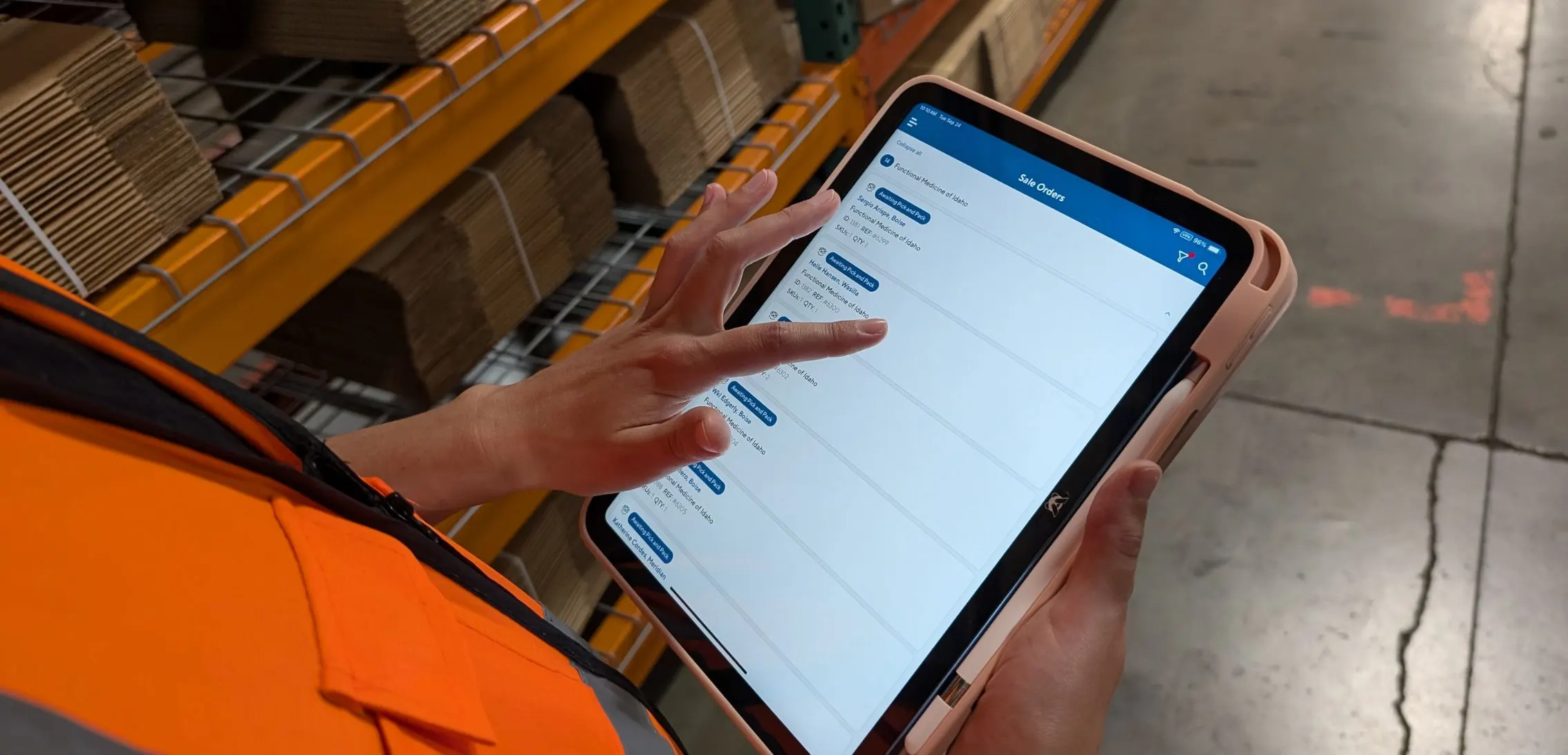
Deposco Alternatives: What Growing 3PLs Should Consider
What We Heard at B2B World APAC: Large Brands Want Delivery Visibility, Not Just Warehouse Visibility
The Fastest WMS to Implement for E-Commerce Fulfillment 3PLs in the USA
This Week in Logistics: A Cost Rule Peak — Canada's Tariffs Go Live, FedEx Guarantees Your Duties, and Peak Season Surcharges Land

What's the Best WMS for Small 3PLs That Need an Easy Setup?

CartonCloud vs Extensiv: Which Platform Delivers More for 3PLs?

Get a Free, Honest Read on Your Operation, in About Two Minutes

How to Implement a WMS in Your Small 3PL Business: A Practical Guide
.webp)
This Week in Logistics: Multiple Warehouses, Multiple States, One Standard — How HD Warehousing Does It, With Special Guest Chad Hildebrandt, Owner & COO
August 2026: New Feature Round-Up

Warehouse Software for Cold Storage, Food, and Temperature-Controlled Logistics
This Week in Logistics: Season 2 Returns — US-Canada Tariffs, Oil Volatility, and Panama Canal Cuts All at Once
.webp)
How Do You Know You've Outgrown Basic Warehouse Systems? 7 Signs for Growing US 3PLs
.webp)
CartonCloud Named a 2026 "Great Supply Chain Partner" by SupplyChainBrain
.webp)
Dock Management: How We Built Visibility Into Every Delivery
.webp)
July 2026 — New Feature Round-up

What US 3PL Operators Really Say About Switching From Slow, Complex WMS Alternatives

CartonCloud vs Competitors: An Honest Comparison from an Implementation Specialist