5 ways 3PL software will simplify your entire operation
The five places a connected WMS + TMS platform takes work off your plate, from invoicing to customer service, with examples from CartonCloud.
Published:
June 23, 2026
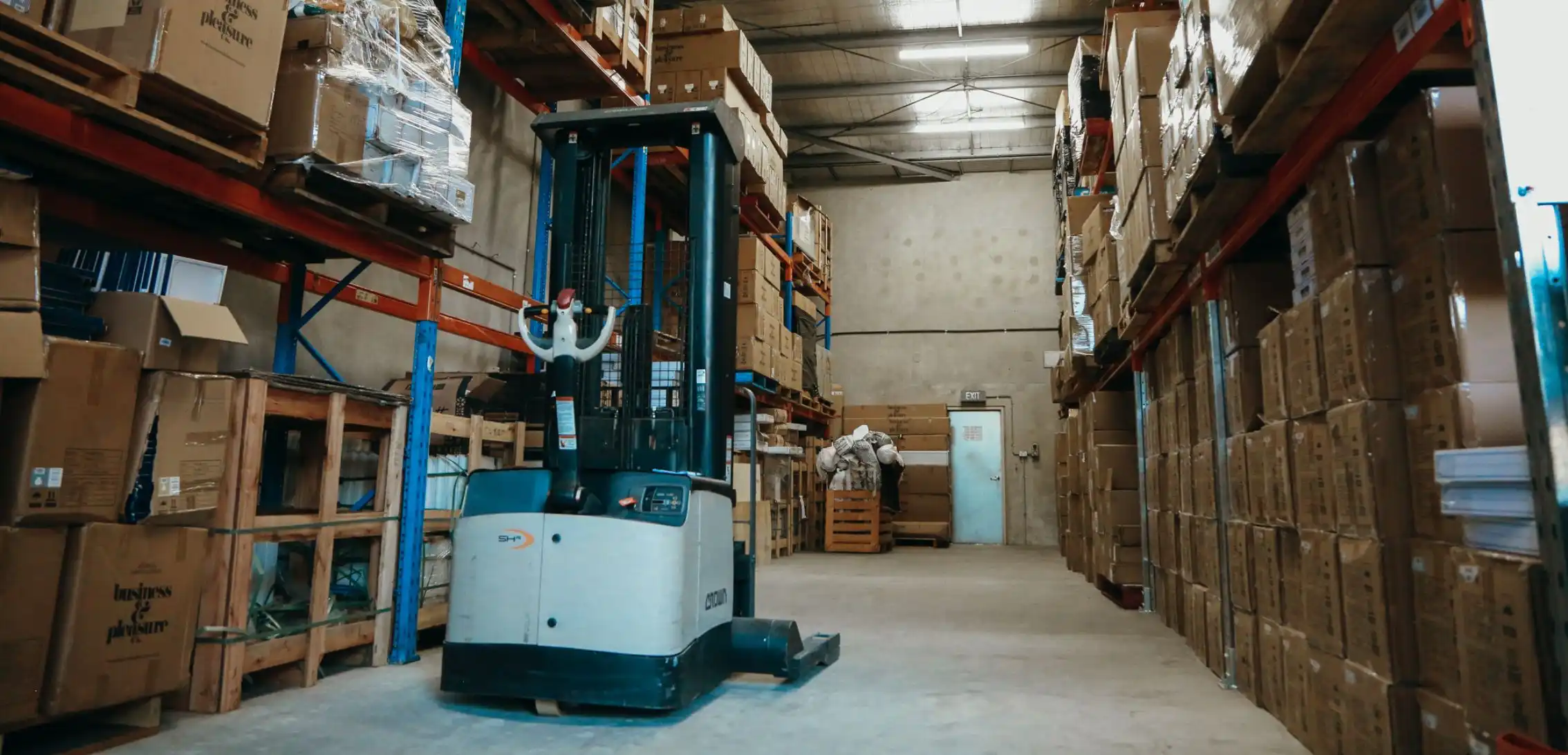
TABLE OF CONTENTS
The right 3PL software simplifies your operation in five places: it automates invoicing, gives you flexible picking workflows, optimises transport and delivery, connects warehouse and transport under one login, and lets clients serve themselves. Together, a connected WMS + TMS platform removes the manual admin that slows a growing 3PL down.
TL;DR (the short version)
- Automated invoicing pulls charges from real activity, so you bill faster and miss less
- Flexible wave picking and FIFO/FEFO rules let your team work the most efficient way
- Transport tools automate job sorting, route planning, ePODs, and driver ETA texts
- One WMS + TMS login means you enter customer and product data once, not twice
- A self-serve customer portal gives clients live visibility without adding work for you
I'm Vincent Fletcher, Co-founder and Chief Product Officer at CartonCloud. I've spent years inside 3PL warehouses, on the floor, talking with operators, understanding their day-to-day challenges.
When operators tell me their software "simplifies" things, they almost always mean these five jobs got easier. Here is what that looks like in practice.
As a third-party logistics business, you are the glue between your customer's orders and their on-time deliveries. You handle storage, inventory reporting, order updates, dispatch tracking, often cross-docking and on-forwarding too. That only stays manageable if your 3PL logistics management system carries the load with you.
"We're saving between 40 and 60 hours a week on admin, but we're doing 30 to 50% more work." Ryan Thomson, Operations Manager, Liquex Logistics
That is the goal: automate data input, make picking more efficient, optimise driver routes, and simplify the work at every turn. Here are the five ways a connected WMS + TMS does it.
1. How does 3PL software remove the hassle from invoicing?
With CartonCloud you invoice faster and get paid sooner. Your customer's sales orders flow in automatically from their sales channel (for example Shopify), their accounting software (such as MYOB), or email attachments, straight into your 3PL WMS.
With automated rate cards across both warehouse and transport, you link sales orders and consignments into a single invoice, which posts automatically into Xero or MYOB and emails to your customer.
For cross-docking, instead of printing invoices and shuffling paper across pallets on the dock, your customers email invoices directly and the system reads and matches them against the consignment. The detail behind this lives in automated billing and invoicing.
2. Why do flexible picking workflows matter?
One of the secrets to a fast and profitable process, is to know that you can do it your way. Flexible workflows let your team pick and pack in the most efficient way for the orders in front of them.
You can choose between three wave picking approaches: picking by order, by customer, or by product, so you make the best use of staff time and floor space. You can also set stock-selection rules such as First In First Out (FIFO) or First Expired First Out (FEFO), which matters for food, beverage, and anything with a shelf life.
For e-com fulfilment, the right picking workflow depends on what the order actually looks like.
Wave picking is ideal for single-item orders at volume. The system batches orders together and sequences the pick path by location, so your team collects items across dozens of orders in one efficient pass.
Pick to Tote is suited for multi-product orders, where one order might have several different SKUs that all need to stay together through the pick. Each tote represents one order. The picker scans the item, the system confirms the match, and the sorting happens in real time on the floor by placing the items in their designated tote. By the time a tote reaches the pack bench, it's complete and verified — nothing needs to be re-sorted.
For bulk or pallet-in/out operations, picking by customer is usually the right call. Your team pulls everything for one client in a single run — full pallets, mixed SKUs, or both — without jumping between orders. In CartonCloud, you configure the pick sequence at the customer level, so the system already knows which stock belongs to which client before the pick starts. Your team works through a single, clean job rather than mentally separating orders on the floor.
Where this gets really useful is stock rotation. You set FIFO or FEFO rules at the product or location level, and CartonCloud applies them automatically when directing the pick. The system looks at what's in each bin — the receipt date for FIFO, the expiry date for FEFO — and tells your team which unit to pull first. That matters a lot for food, beverage, or anything with a shelf life, because the rule is enforced at the point of pick, not checked manually at the end. Your team doesn't have to remember which pallet came in first or which batch expires soonest. The system handles it, and the audit trail is there to prove it.
3. How does 3PL software optimize transport and delivery?
With CartonCloud's TMS features and mobile app, transport and dispatch step up. You configure rules to automate job sorting and plan delivery routes that keep drivers efficient on the road.
Every job captures electronic proof of delivery, with the option for drivers to add comments or photos. Driver ETA text messages let customers prepare for an incoming delivery, which cuts failed drop-offs and the calls that follow them.
4. What do you gain by linking WMS + TMS in one system?
You get the benefits of a specialised WMS and a specialised TMS, on a single login. Linking the two saves time on customer data: enter details once and they apply across warehouse and transport.
Here’s what that looks like:
- One source of truth, dock to door. When warehouse and transport run on separate systems, visibility gaps open up between the pick and the delivery. With an integrated WMS + TMS, your ops team can see exactly where an order is — picked, dispatched, in transit, delivered — without switching screens or chasing drivers.
- Enter customer data once. Details set up in the warehouse carry through to transport automatically. No re-keying client addresses, product specs, or rate logic between systems.
- Rates that follow the job. Intelligent unit-of-measure mapping means you set up a product once, with the correct rates carried between systems automatically. Storage, handling, and transport charges all pull from the same rate card setup — so billing reflects what actually happened, end to end.
- Automated invoicing across both. One billing run covers warehouse activity and transport activity together. No reconciling two systems at month end, no missed charges because a delivery happened outside your WMS.
- Real-time visibility for your team and your clients. Drivers and warehouse staff work on the same platform. When a consignment is scanned out of the warehouse and assigned to a run, your client can see it move — through their own portal, without calling you.
- Cross-docking without the coordination overhead. Because inbound receiving and outbound run planning sit in the same system, you can allocate freight to a delivery run before it even arrives at the dock. That's where combined WMS + TMS earns its keep fastest.
For small and mid-size operations running their own trucks, this is often the single biggest operational unlock — not because the individual features are new, but because everything stops living in two places at once.
“We have more visibility of the information than [our customer] does. We are almost like their data source of information.
[Our clients] came from nothing — no systems, no data. For them, the key was knowing exactly what was in stock, what had shipped, and having proof they could show their end-customers. With CartonCloud, we could offer all of that, right from day one.” — Santiago Zubillaga, Founder, Logística Patagonia
5. How does a customer portal improve service without adding work?
Your system should help you deliver great service without extra effort. With a self-serve customer portal, clients log in to see live inventory, stock movement, detailed invoices, ePODs, and order status, any time of day or night. Because the data updates as work happens, the portal is always current, and your team is not pulled away to answer "where is my order?" The service gets better while the workload goes down.
What this means for operators
Simplifying an operation is not one big change. It is five smaller ones: faster invoicing, flexible picking, smarter transport, one connected system, and clients who can see for themselves. A purpose-built 3PL software platform handles all five, which is what frees a growing team to take on more without taking on more admin.
The simplest way to see how much admin a connected platform removes is to watch it run your own workflows. Book a free demo and we will show you CartonCloud in action.
Updated June 2026.
FAQ
Q: How does 3PL software simplify warehouse and transport operations?
A: 3PL software simplifies operations by automating the manual work between order and delivery: data entry, invoicing, picking allocation, route planning, and proof of delivery. A connected WMS + TMS keeps warehouse and transport on one source of truth, so your team spends less time on admin and reconciliation and more on moving orders.
Q: We're a growing 3PL losing hours to admin and missed charges. How does 3PL software fix that?
A: 3PL software fixes it by capturing charges from real warehouse and transport activity and generating invoices automatically, so nothing slips through. Orders flow in from Shopify or email without re-keying, and invoices post straight into Xero or MYOB. Operators commonly recover dozens of admin hours a week this way.
Q: Can one system manage both warehouse (WMS) and transport (TMS)?
A: Yes. CartonCloud combines warehouse management and transport management in one platform on a single login. You enter customer and product data once, rates carry between warehouse and transport automatically, and you can run them together or use either side on its own, which removes the need to reconcile two systems.
Q: What is wave picking and how does it speed up a warehouse?
A: Wave picking groups multiple orders into a single picking run instead of picking one order at a time. CartonCloud supports waving by order, customer, or product, which cuts walking and forklift travel and lifts throughput. Paired with FIFO or FEFO rules, it also keeps stock rotation correct for food and dated goods.
Q: How does a customer portal improve service without adding work?
A: A customer portal lets clients log in and see live stock, order status, invoices, and ePODs themselves, any time. Because it updates automatically as work happens, the information is always current and your team is not interrupted for updates. Service improves and the admin load drops at the same time.
Explore the resource hub
Tips, tools, downloadable guides and stories from logistics teams who are working smarter.

This Week in Logistics: A Cost Rule Peak — Canada's Tariffs Go Live, FedEx Guarantees Your Duties, and Peak Season Surcharges Land

What's the Best WMS for Small 3PLs That Need an Easy Setup?

CartonCloud vs Extensiv: Which Platform Delivers More for 3PLs?

Get a Free, Honest Read on Your Operation, in About Two Minutes

How to Implement a WMS in Your Small 3PL Business: A Practical Guide
.webp)
This Week in Logistics: Multiple Warehouses, Multiple States, One Standard — How HD Warehousing Does It, With Special Guest Chad Hildebrandt, Owner & COO
August 2026: New Feature Round-Up
Warehouse Software for Cold Storage, Food, and Temperature-Controlled Logistics
This Week in Logistics: Season 2 Returns — US-Canada Tariffs, Oil Volatility, and Panama Canal Cuts All at Once
.webp)
How Do You Know You've Outgrown Basic Warehouse Systems? 7 Signs for Growing US 3PLs
.webp)
CartonCloud Named a 2026 "Great Supply Chain Partner" by SupplyChainBrain
.webp)
Dock Management: How We Built Visibility Into Every Delivery
.webp)
July 2026 — New Feature Round-up

What US 3PL Operators Really Say About Switching From Slow, Complex WMS Alternatives

CartonCloud vs Competitors: An Honest Comparison from an Implementation Specialist
.webp)
Running Multiple Sites from One WMS System: How HD Warehousing Scaled Without the Complexity
.webp)
This Week in Logistics: The Operator Playbook
Deposco Alternatives: What Growing 3PLs Should Consider

CartonCloud Feature Spotlight: April-June 2026
.webp)
3PL Software Pricing: What You're Actually Paying For (And How to Compare It)