Even if you push us to sell to you, we may not. Here's why.
As a SaaS software vendor, client success is paramount to our success. If we detect that our software isn't the right application for a given customer, we'll unfortunately have to say no. This article explains why it's so important for us to work only with those who will be successful.
Published:
December 16, 2018

TABLE OF CONTENTS

Software products used to be purchased outright in large, one-off transactions. It was common place for a company to spend $100,000 on an application, $30,000 for implementation, $5k on a server, and then an ongoing annual fee of 10-20% of the purchase price ($10,000) for support and product updates. Not to mention the lock-in contracts of 3+ years.
With the majority of the revenue being generated up-front sales people were enticed by huge bonuses to close clients, regardless of product-business fit. While a successful client was of course, preferred; the sales model allowed for large amounts of money to be made (and bonuses to be paid) from those who the software didn't quite fit.
Salesforce.com is often attributed with changing the game in 1999 when they pioneered a new way to serve software (through a web browser), and also a new way to pay for software. By moving to a completely online system, in which Salesforce managed the servers and maintenance, users could access the software without needing to install anything. On the back of this, they moved away from the dominant model of a large, one-off up front payment, to charging smaller, monthly amounts to "lease" their software. This is commonplace today for cloud-based application, and is known as Software as a Service (SaaS).
In a non-SaaS world, the sales process ends with the client making a purchase.
In the SaaS world, the sales process starts with the client making a purchase.
As a negligible amount of money is being invested up-front by the customer, SaaS vendors need not only to meet a clients immediate needs, but to be successful, continually meet their needs as their business changes and adapts. For this reason, signing up a new client who won't be successful with the SaaS application is a total disaster. The client will quickly realise and terminate their subscription, and the vendor will receive very little money.
For this reason, business development (sales) staff at SaaS companies are not incentivised to sell to clients who won't be able to be successful with the software. As sales commissions are often based on revenue generated by the client over a period of time (12 months for example), if the client leaves in the first 3 months, the sales person is left with only 1/4 of their commission.
Contrast this with non-SaaS, in which the sale is made, the commission paid, and the client is left with a very large amount of money invested in an application not fit for their purpose.
From time-to-time we have discussions with potential clients who we deem outside of our "sweet-spot". They may have requirements we cannot meet (ie: complex line haul), or simply need something else that our warehouse management system doesn't provide (ie: production management for food). Often we are pressured by the client themselves, "I've heard great things! I want CartonCloud! It will work for me!", however we've learned over the last 3 years that these are clients we simply have to say no.
By taking on a client who we can tell will be unsuccessful, we overload our support and onboarding teams, and quickly find ourselves in a position in which the client is upset that they've invested time, and we're disappointed that we allowed them to sign up, despite our judgement of the situation not working.
If you're looking at CartonCloud for your organisation, and are worried you'll be stitched up with something that won't work, keep in mind that we only want to sell to those who will become success stories.
If we can't see it working, we'll simply say No.
Explore the resource hub
Tips, tools, downloadable guides and stories from logistics teams who are working smarter.
This Week in Logistics: A Cost Rule Peak — Canada's Tariffs Go Live, FedEx Guarantees Your Duties, and Peak Season Surcharges Land
What's the Best WMS for Small 3PLs That Need an Easy Setup?

CartonCloud vs Extensiv: Which Platform Delivers More for 3PLs?

Get a Free, Honest Read on Your Operation, in About Two Minutes

CartonCloud’s Commitment to Security: SOC 2 Type 2 Audit Complete

How to Implement a WMS in Your Small 3PL Business: A Practical Guide
.webp)
This Week in Logistics: Multiple Warehouses, Multiple States, One Standard — How HD Warehousing Does It, With Special Guest Chad Hildebrandt, Owner & COO
August 2026: New Feature Round-Up
Warehouse Software for Cold Storage, Food, and Temperature-Controlled Logistics
This Week in Logistics: Season 2 Returns — US-Canada Tariffs, Oil Volatility, and Panama Canal Cuts All at Once
.webp)
How Do You Know You've Outgrown Basic Warehouse Systems? 7 Signs for Growing US 3PLs
.webp)
CartonCloud Named a 2026 "Great Supply Chain Partner" by SupplyChainBrain
.webp)
Dock Management: How We Built Visibility Into Every Delivery
.webp)
July 2026 — New Feature Round-up

What US 3PL Operators Really Say About Switching From Slow, Complex WMS Alternatives

CartonCloud vs Competitors: An Honest Comparison from an Implementation Specialist
.webp)
Running Multiple Sites from One WMS System: How HD Warehousing Scaled Without the Complexity
.webp)
This Week in Logistics: The Operator Playbook
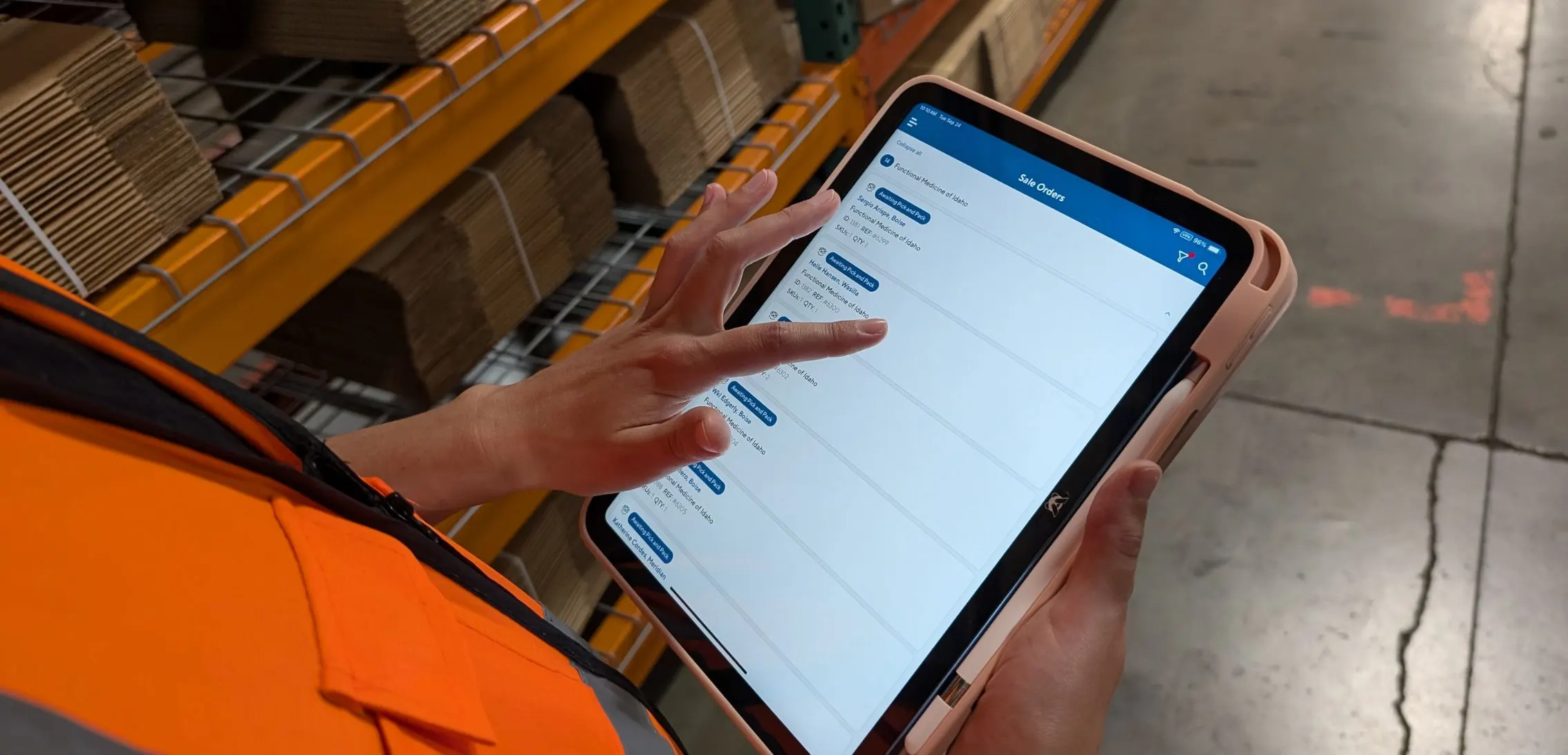
Deposco Alternatives: What Growing 3PLs Should Consider
CartonCloud Feature Spotlight: April-June 2026