This Week in Logistics: Flat Rates, Rising Costs + The Quiet Squeeze on Logistics Operators
If you've been feeling like there are two different realities currently playing out in logistics recently; with stable signals on the surface, yet increasing pressure beneath, you're not alone. On paper, the market looks manageable. Freight rates are flat. Capacity is available. But inside operations, the reality is shifting. Costs are rising through fuel and surcharges. Reliability is becoming harder to trust. And execution is quickly becoming the difference between profitable and unprofitable operations.
Published:
April 10, 2026

TABLE OF CONTENTS
If you've been feeling like there are two different realities currently playing out in logistics recently; with stable signals on the surface, yet increasing pressure beneath, you're not alone.
On paper, the market looks manageable. Freight rates are flat. Capacity is available.
But inside operations, the reality is shifting. Costs are rising through fuel and surcharges. Reliability is becoming harder to trust. And execution is quickly becoming the difference between profitable and unprofitable operations.
In short: the market looks stable — but it’s getting harder to run.
TL;DR: Join Shaun Hagen, CartonCloud CEO for Episode 6 of This Week in Logistics as we break down how surcharges and fuel costs are quietly hitting margins, why flat freight markets can be misleading, and where execution, infrastructure, and automation are actually delivering value.
Listen to the full podcast below!
The Stories Moving Logistics This Week
Let’s start by running through the key stories shaping logistics across multiple regions this week.
Ocean freight: flat rates, but reliability signals shifting
Drewry’s April 2 World Container Index held steady at $2,287 per 40-foot container — reinforcing the idea that rates are stable.
However, carriers are still actively managing networks, with 46 blank sailings expected over the next five weeks.
At the same time, Xeneta’s April 1 update shows that while capacity remains available on key East–West lanes, shippers are already buying certainty earlier — driven by bunker fuel costs, rerouting, and contingency planning coming back into focus. This setup suggests capacity exists, but confidence is starting to weaken.
Fuel + input costs: shifting from global story to local margin pressure
Across Australia and New Zealand, Rabobank’s April outlooks are explicitly flagging diesel, freight, fertiliser, and transport availability as active margin pressures.
This matters because it signals a shift. Fuel shocks are no longer just a global freight story — they’re now showing up in local operating costs, warehouse decisions, and customer pricing conversations.
Surcharges: now hitting customer-facing networks
On the cost front, Amazon has introduced a temporary 3.5% fuel and logistics surcharge across U.S. and Canadian fulfilment.
This is a clear signal that cost pressure is no longer staying upstream.
It’s now flowing directly into customer-facing fulfilment economics — forcing operators to decide what to absorb, what to pass through, and what to redesign.
Network performance: execution still matters
Over in Canada, CN Rail moved over 2.96 million metric tonnes of grain in March — its strongest March on record — following a recovery from weather-related disruptions.
The takeaway here is simple: Even in volatile conditions, strong inland execution can stabilise performance.
Infrastructure: investing where it removes friction
In Australia, the Port of Melbourne announced a $500M redevelopment with MEDLOG, focused on rail freight, intermodal activity, and container storage closer to the port.
The goal is practical — reduce truck movements, improve flow, and tighten network efficiency.
Automation: landing where it actually works
Finally, in the U.S., daily autonomous truck runs are now taking place between Laredo and Temple, Texas — handling the majority of driving tasks on a major cross-border corridor.
The key detail here isn’t the technology — it’s where it’s being deployed.
Automation is landing first in:
- High-volume
- Predictable
- Structured linehaul environments
What ties all of this together
Across all of these stories, the pattern is consistent:
- Costs are building through multiple layers.
- Reliability is becoming less predictable.
- Investment is focused on execution — not expansion.
Together, these signals explain why logistics is becoming more expensive to run, harder to plan, and more sensitive to execution decisions.
Logistics Fun Fact of the Week
If you’ve been on social media this week, you’ve probably seen the story of the great KitKat heist.
In late March, a truck carrying 12 metric tons of chocolate (that’s over 413,000 special edition KitKat bars!) vanished in transit between a factory in Italy and a logistics hub in Poland.
This wasn’t a simple theft. The truck was intercepted, the driver restrained, and the entire load disappeared.
But here’s where it gets interesting from a logistics perspective.
Nestlé didn’t just file an insurance claim and move on. Because every batch was serialised, they launched a public tracking tool, asking customers across Europe to enter the eight-digit code on their KitKat wrappers. If it matches the stolen batch, it gets flagged — helping authorities trace where the product ends up.
It’s a great example of how something as simple as track-and-trace can turn into a powerful, real-world tool for visibility — even helping solve problems far beyond day-to-day operations.
The Surcharge Trap: Where Margins Are Actually Getting Squeezed
The most important operating signal this week isn’t a rate spike. It’s cost layering.
Across the past seven days, we’ve seen:
- Diesel + input cost warnings across Australia + New Zealand.
- Fertiliser prices rising sharply.
- Amazon introducing a 3.5% fuel + logistics surcharge across fulfilment.
These signals show where margins are being compressed — and how cost pressure is shifting.
Now, you’re no longer just managing freight rates. You’re now dealing with:
- Fuel
- Transport availability
- Input costs
- Customer-facing surcharges
What this means for operators:
- Margin pressure is now multi-layered, not event-driven.
- Costs are reaching customer-facing fulfilment.
- Pricing decisions need to happen faster than before.
If your customer pricing cadence is slower than your cost increases, margins tighten immediately. This is where disciplined operators adjust quickly — and others get caught out.
The Illusion of Stability: Flat Rates, Unstable Networks
Right now, the cost pressure in logistics isn’t concentrated — it’s layered.
At a headline level, the market looks steady. Container rates are flat, and capacity is still available across key lanes, but underneath that, reliability is shifting.
We’re seeing dozens of blank sailings building over the coming weeks, while shippers are already securing space earlier to avoid disruption. At the same time, fuel costs and routing complexity are continuing to add pressure behind the scenes.
This creates a clear disconnect — price stability on one side, and increasing service variability on the other.
Leading operators are responding differently. They’re separating cost decisions from service decisions, building lead time buffers into their planning, and booking earlier for critical shipments. They’re also segmenting freight more carefully — protecting high-priority orders while allowing flexibility where it makes sense.
Looking ahead, be sure to expect:
- More schedule changes.
- Shorter rate validity windows.
- Increasing variability in transit times.
Execution Wins: Where Investment Is Actually Landing
This week also showed where the industry is putting capital — and the pattern is clear.
From major infrastructure investment at the Port of Melbourne, to record grain movement in Canada, to autonomous trucking on U.S. linehaul corridors, the focus isn’t on expansion for the sake of it. It’s on execution.
Each of these stories are solving the same problem: how to move freight more efficiently through the network.
Across the board, we’re seeing a shift toward:
- Infrastructure being positioned closer to demand, reducing wasted movement.
- Networks being optimised for flow, not just scale.
- Automation being applied in predictable, repeatable environments.
Autonomous trucking is a good example of this in action. It’s not being deployed in complex, unpredictable last-mile environments. Instead, it’s showing up where logistics is most structured:
- High-volume corridors
- Repeatable routes
- Clear handoff points
Why this matters:
The next gains in logistics won’t come from visibility alone. They’ll come from:
- Fewer handoffs
- Better node placement
- Reduced empty miles
- Faster, more consistent execution
The Operator Playbook for This Week
1. Segment your freight by consequence
In a noisy market, treating all freight the same is where mistakes happen. You end up overpaying for non-critical shipments — and under-protecting the ones that actually matter.
Instead, separate your freight clearly:
- Must-arrive freight → book earlier, add lead time buffers.
- Can-wait freight → allow flexibility where possible.
The goal is simple: protect your highest consequence freight first.
2. Price faster
Cost pressure is building across multiple layers — fuel, bunker, accessorials, and fulfilment.
That means your pricing decisions need to keep up.
This week, audit every pass-through in your network:
- Linehaul
- Cartage
- Parcel
- Fulfilment
If these costs are moving, waiting until a monthly review to adjust pricing is too late. Faster pricing conversations are what protect your margins in this kind of environment.
3. Remove one wasted handoff
In uncertain markets, removing friction is often more valuable than adding sophistication.
Look for one clear inefficiency you can fix this week:
- An empty or unnecessary movement
- Poor node placement
- A clunky handoff in dock scheduling or dispatch
You don’t need a full network redesign. Just remove one point of friction — and you’ll start to see the impact immediately.
What We’re Watching Next Week
Looking ahead, there are three key signals to watch closely.
- First, keep an eye on fuel + surcharge pass-throughs — especially whether more operators follow Amazon in pushing costs into customer-facing pricing.
- Second, watch whether blank sailings start translating into real service deterioration. It’s one thing to see schedule adjustments on paper — it’s another when they begin to impact transit times and reliability.
- And third, look for any early signs of booking softness or behaviour shifts — whether that’s forward buying, delayed orders, or tougher pricing conversations starting to emerge.
Want to know more?
Listen to Episode 5 of This Week in Logistics on Spotify or Apple to hear the complete breakdown.
See you next week!
Post by Shaun Hagen, CEO CartonCloud.
Explore the resource hub
Tips, tools, downloadable guides and stories from logistics teams who are working smarter.

Running WMS and TMS Across Multiple Sites in Australia: The Questions We Answered at MegaTrans 2026
CartonCloud Feature Spotlight: July–September 2026
Deposco Alternatives: What Growing 3PLs Should Consider
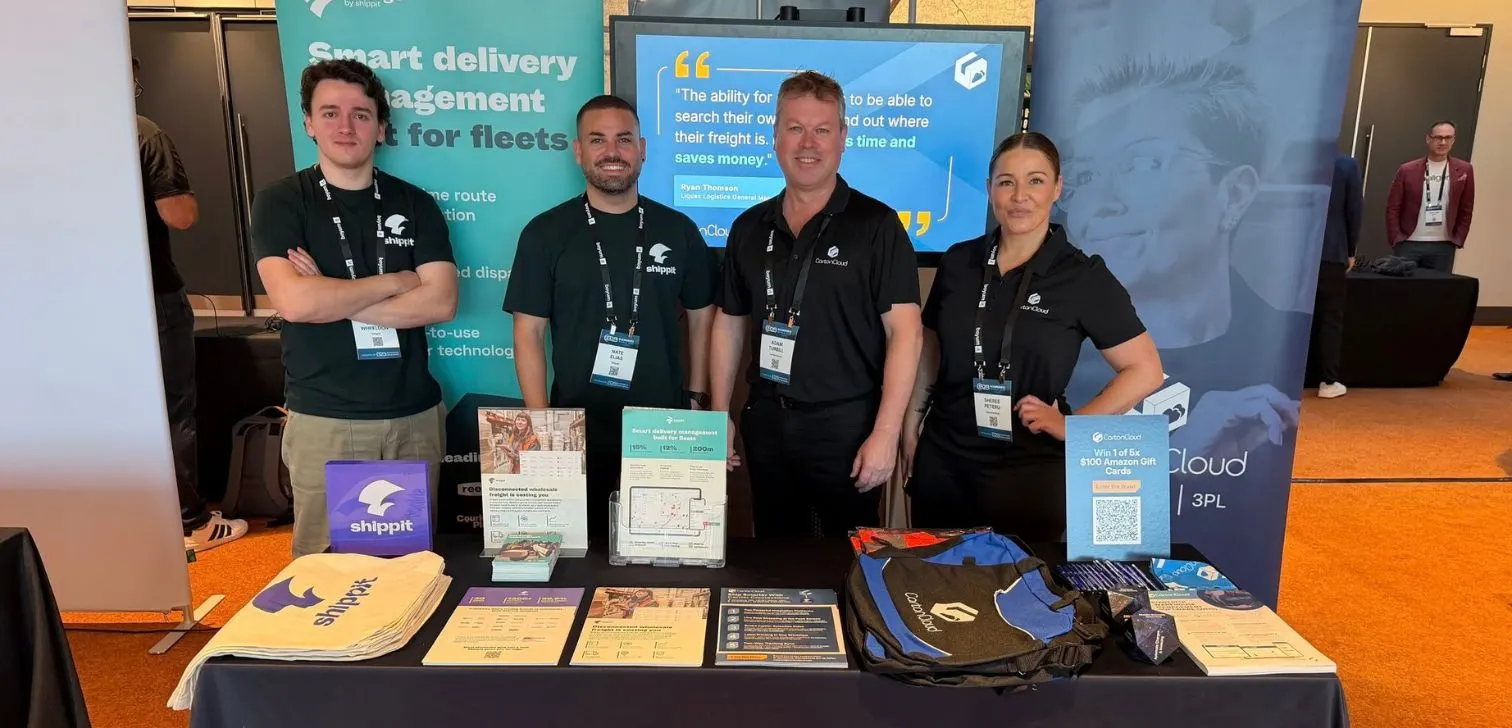
What We Heard at B2B World APAC: Large Brands Want Delivery Visibility, Not Just Warehouse Visibility
The Fastest WMS to Implement for E-Commerce Fulfillment 3PLs in the USA
This Week in Logistics: A Cost Rule Peak — Canada's Tariffs Go Live, FedEx Guarantees Your Duties, and Peak Season Surcharges Land
What's the Best WMS for Small 3PLs That Need an Easy Setup?

CartonCloud vs Extensiv: Which Platform Delivers More for 3PLs?

Get a Free, Honest Read on Your Operation, in About Two Minutes

CartonCloud’s Commitment to Security: SOC 2 Type 2 Audit Complete

How to Implement a WMS in Your Small 3PL Business: A Practical Guide
.webp)
This Week in Logistics: Multiple Warehouses, Multiple States, One Standard — How HD Warehousing Does It, With Special Guest Chad Hildebrandt, Owner & COO

August 2026: New Feature Round-Up
Warehouse Software for Cold Storage, Food, and Temperature-Controlled Logistics
This Week in Logistics: Season 2 Returns — US-Canada Tariffs, Oil Volatility, and Panama Canal Cuts All at Once
.webp)
How Do You Know You've Outgrown Basic Warehouse Systems? 7 Signs for Growing US 3PLs
.webp)
CartonCloud Named a 2026 "Great Supply Chain Partner" by SupplyChainBrain
.webp)
Dock Management: How We Built Visibility Into Every Delivery
.webp)
July 2026 — New Feature Round-up

What US 3PL Operators Really Say About Switching From Slow, Complex WMS Alternatives