3PL Software Pricing: What You're Actually Paying For (And How to Compare It)
A straight look at how WMS and 3PL software is priced, what drives the cost, what the main platforms charge, and where the hidden fees hide.
Published:
July 7, 2026
.webp)
TABLE OF CONTENTS
3PL software pricing in 2026 runs on one of four models — usage-based, per-user, per-client, or modular add-on — and the model matters more than the sticker price. Per-user and per-client structures escalate as you grow; usage-based pricing scales with volume, not headcount.
The biggest real cost driver is rarely the headline subscription: it's the time required for implementation, paid customizations or add-on features, per-integration fees, and the systems you have to bolt on when one platform only covers half your operation. This guide breaks down the models, what you're actually paying for, and what the main platforms charge.
TL;DR — The short version
- Spot hidden growth taxes early: Most 3PL software is priced in one of four ways: usage-based, per-user, per-client, or modular add-on (with Enterprise platforms adding heavy license and implementation fees). Knowing early can prevent you from locking into a model that works against your operational setup.
- Protect your margins as you scale: Per-user and per-client models look affordable on day one but get expensive fast as you win new business or add staff. Opting for usage-based pricing ensures your software costs only scale with your actual order volume, never your headcount.
- The initial sticker price is rarely the real cost: By looking out for hidden implementation fees, paid customizations, per-integration charges, and bolt-on modules, you can calculate your true ROI accurately right from the start.
- Transport isn't always included: Most platforms are strictly WMS-only. If you run delivery trucks or transport too, make sure to factor in a second system plus the integration overhead.
- All in one platform: CartonCloud uses usage-based pricing across four tiers, with WMS, TMS, automated billing, and a customer portal included at every tier and no per-user or per-client escalation.
I'm Ryan Hwang, Sales Manager North America at CartonCloud. Pricing comes up on absolutely every call I have with 3PL operators looking for the right system. It’s a massive consideration for business managers, and no wonder why — but the important thing to remember, is not the upfront price, but the hidden costs that you might not consider, until you’re locked in. That might be, a WMS price that conveniently leaves out transport, a base tier that bumps up your bill every single time you win a new client, or implementation costs that suddenly pop up after the contract is signed. We hear about this all of the time from CartonCloud alternatives.
At CartonCloud we do things differently: we use usage-based pricing where your tier is set by the functionality your operation needs; volume sits on top independently, meaning there’s absolutely no surprises in pricing when you win a new client. You use, and pay for, what you need.
To help you get the right information before you sign on the dotted line, let’s take a look at how 3PL software pricing works across the board, what’s typically included (or left out), and the smart questions to ask before you commit.
How does 3PL software pricing actually work?
There are typically four models you'll encounter.
- Usage-based: With this model, you pay for the specific tier of functionality you need, and the cost scales gently alongside your actual operational volume (like order count or throughput).
- Per-user / per-seat: Here, your monthly subscription scales directly with the number of user logins you create. It looks manageable early on, however as you add a new warehouse worker, picker, or driver, they become an extra line item. The cost grows with your headcount rather than the actual value or efficiency delivered.
- Per-client: This model ties your software subscription costs directly to the number of customers you onboard. The catch here however is that with every new contract you sign, it can feel like a bit of a penalty against the very growth you’re chasing.
- Modular add-on: This approach offers a low base subscription for core capabilities, allowing you to stack extra features as your business evolves (sold as paid modules). It’s important to note that the advertised price is a floor, not a ceiling. Crucial tools like advanced transport management, automated billing, custom integrations, and reporting often live behind those paid modular tiers.
It's also worth flagging the enterprise tier separately: significant license + implementation + ongoing services fees put it in a different weight class entirely, designed for operations running tens of thousands of orders a day.
The takeaway: Overall, the model you choose is your main cost driver. For example, a platform charging $500/month per-client is much more expensive than a $2,000/month usage-based platform once you hit five clients (and as you continue to add more clients, the gap will continue to widen from there).
Before you sign with any vendor, ask these five questions:
- Does it cover my whole operation — warehouse + transport?
- How fast can I go live, + what does implementation cost?
- Does pricing scale on volume, users, or clients?
- Which integrations are extra?
- What support does the base price include?
What are you actually paying for in 3PL software?
To get the most ROI out of your 3PL software, you'll want to map out the exact capability stack your warehouse actually needs — and check whether each feature is included or an add-on. These are the most common features 3PLs add to their short-list when looking for software that can manage their operation from end-to-end.
- WMS covers stock management, orders, warehouse workflows, barcode scanning, and inventory accuracy. For this one it's table stakes — every platform covers this to some degree, so it's rarely the differentiator.
- TMS handles your route planning, driver app, proof of delivery, and dispatch. Most 3PL software platforms don't include this natively — which means you need a second system and an integration cost on top of your WMS quote.
- Automated billing is worth calling out specifically. Things such as rate cards, storage, handling, and transport charges are still something that’s offered as a separate product or paid module.
- Customer portal gives each of your clients self-serve access to live inventory, order status, and delivery tracking. Whether that's included or priced per-seat varies significantly across platforms — it's worth asking upfront.
- Integrations + open API connects your software to accounting tools, e-commerce platforms, and carriers. Often, platforms can charge per connector, meaning if you’re a multi-client 3PL with diverse integration needs, costs can add up fast.
- Support + onboarding isn't always equal across vendors. There's a real difference between a local team with logistics knowledge and a global ticket queue — and between fast onboarding vs. a paid professional services project that runs for weeks before you're live.
Now here’s an important thing to remember: running a WMS + a separate TMS + a separate billing tool + per-connector fees can cost more than the individual line items suggest in money and in reconciliation time. A 3PL stitching three systems together to do what one platform does natively is paying three times: once in software fees (for a separate WMS and TMS) and once in the admin overhead of keeping them aligned. That's why it's worth prioritizing software that handles all of this in one platform — so you're not managing the gaps between systems on top of managing your operation.
"CartonCloud can interact with other systems and data can flow. It [saves] us 30 or 40 hours a week; it pays for itself very quickly.” — Peter McDougall, Operation Manager, Macknsons
What do the main 3PL platforms charge?
Most platforms don't publish pricing. Here's what's known, sourced from public information and CartonCloud's own platform comparison guide to help you spot-check at a quick glance.
- CartonCloud
- Model: Usage-based across four tiers — Starter, Professional, Professional Plus, and Enterprise. Your tier is set by the functionality your operation needs; volume sits on top independently.
- Every tier includes WMS, TMS, automated billing, a customer portal, the mobile app, and the full integration library and open API. Local US and Canada support is included as standard.
- No per-user or per-client escalation, which means winning a new client doesn't raise your software bill. You can get a specific pricing quote on a quick 15-minute discovery call with our team.
- Extensiv (formerly 3PL Central)
- Model: Pricing is available on request, and the model charges for client users — so costs can rise as you grow your customer base. The platform is modular, with tools like the Small Parcel Suite, advanced analytics, and Order Manager sold separately.
- It’s worth asking upfront about customizations, reports, and the scanning app, as they are typically paid extras. Extensiv doesn't have an in-house integration team, so you'll need to source your own developers for custom work.
- ShipHero
- Model: Quote-based across three tiers; entry pricing has shifted to "Contact Us" so you'll need a sales conversation to get a number.
- ShipHero is built around high-volume DTC e-commerce — but there's no native TMS, so if you run transport alongside fulfillment, you'll need a separate system.
- Fishbowl
- Model: Per-seat license with annual maintenance, plus around $49/month for each additional integration.
- It's a familiar tool for businesses running QuickBooks, but it was built for light manufacturing — not multi-client 3PL operations. If you're evaluating it as a 3PL platform, it's worth understanding that distinction before you get too far into the sales process. (See more on how CartonCloud compares to Fishbowl here).
- Mintsoft
- Model: Order-volume based pricing, which is transparent in the UK but typically a sales conversation for North American buyers.
- Mintsoft is focused on UK and EU e-commerce fulfillment, and TMS is handled through a third-party integration rather than natively. (See more on how CartonCloud compares to Mintsoft here).
- Deposco
- Model: Pricing isn't published — expect a custom quote and a full sales cycle.
- Deposco is aimed at mid-market and enterprise omnichannel operations, and onboarding typically runs a minimum of three months, so it's not a quick-start platform.
- Da Vinci
- Model: Available on request. Da Vinci is one of the few platforms in this category with genuinely native WMS, TMS, and YMS on one platform — but it's configuration-heavy and resource-intensive to implement, which is worth factoring into the true cost.
- Manhattan Associates
- Model: Enterprise-tier pricing with significant license, implementation, and ongoing support fees. Manhattan is purpose-built for very large operations that deal with 50,000+ orders per day. For most 3PLs evaluating software in this guide, it's a different weight class entirely.
- Cin7
- Model: Three tiers (Standard, Pro, Advanced), with the Omni plan custom-quoted. Reviewers have flagged price increases over time as something to watch.
- It's worth noting that Cin7 is primarily an inventory and ERP-lite tool built for product brands — not a purpose-built 3PL platform, so some 3PL-specific workflows may require workarounds.
For the full side-by-side platform breakdown, see the 3PL software alternatives comparison guide.
What hidden costs should you watch for in 3PL software?
The headline subscription is rarely what a 3PL ends up paying. Here are the costs that tend to catch 3PLs off guard — often after the contract is already signed.
- Implementation + professional services — long, consultant-led rollouts carry real services fees and lost-time cost. An 8-to-12-week implementation before your team is operational is a cost, not just a delay.
- Per-integration fees — connectors charged individually add up quickly, especially for 3PLs managing multiple e-commerce clients across different platforms.
- Per-seat creep — every new warehouse worker, driver, or admin login is a recurring cost.
- Per-client escalation — your software bill rises every time you win new business. For a 3PL, this is the most punishing model.
- Paid customizations, labels, + reports — "configurable" can mean "billable." Check what's included in the base tier before committing.
- Add-on modules — the base price is a floor. If transport, billing, or advanced reporting sit behind paid tiers, you're not comparing the same product.
- Support tiers + contract lock-in — check what level of support the base price actually buys, and whether you're on an annual contract or month-to-month.
How does CartonCloud pricing work + why is it built that way?
CartonCloud offers usage-based pricing across four tiers. Select the plan that suits your operation, and pay for what you use. Unlimited users, and as you scale, your system scales with you.
The tier sets the functionality level; operational volume scales independently on top. There's no per-user or per-client escalation — meaning winning a new client doesn't raise your software bill.
Every tier includes WMS, TMS, automated billing, and a customer portal as standard. There's no integration tax to get your warehouse and transport talking to each other, and no separate billing product to bolt on. The integration library and open API connects to Xero, QuickBooks, MYOB, Shopify, WooCommerce, Amazon, StarShipIT, ShipStation, and more.
CartonCloud was built by people who actually ran a 3PL — so the pricing model was designed with operator growth in mind.
The question I hear most often is "what happens to my cost when I win a new client?" The honest answer with CartonCloud: nothing changes. You celebrate the win, onboard the client, and your software bill stays the same until your operational complexity genuinely requires more functionality.
For the full pricing model and how CartonCloud compares to alternatives, see how CartonCloud pricing works, in full.
To get a specific quote for your operation, book a 15-minute discovery call with our team!
FAQ
Q: How much does 3PL software cost?
A: 3PL software cost depends on the pricing model, not just the tier. Usage-based platforms scale with order volume; per-user and per-client models scale with staff or clients onboarded. Most platforms quote per operation after a discovery call, and implementation is a separate cost to factor in.
Q: Why is WMS pricing so hard to find online?
A: Most WMS and 3PL platforms don't publish pricing because cost depends on modules, integrations, user counts, and client volumes — so they quote per operation. Platforms like ShipHero, Extensiv, Deposco, Da Vinci, and Manhattan all require a sales conversation before a number appears. Usage-based vendors can give a clearer figure once they understand your operational volume.
Q: What's the difference between usage-based and per-user 3PL software pricing?
A: Usage-based pricing scales with how much your operation runs through the system — order and throughput volume — independent of headcount. Per-user pricing scales with logins, so every new warehouse worker or driver adds cost. For a growing 3PL, usage-based pricing means you're not paying more simply for adding staff to the floor.
Q: What hidden costs come with 3PL software?
A: The most common hidden costs are implementation and professional services fees, per-integration charges, per-seat or per-client escalation, paid customizations and reports, and add-on modules that sit behind the base subscription. A long, consultant-led implementation is itself a cost — in money and in delayed ROI. Always price the whole operation, not the headline tier.
Q: Does CartonCloud charge per user or per client?
A: No. CartonCloud uses usage-based pricing across four tiers, with cost scaling on operational volume rather than per user added or per client onboarded. WMS, TMS, automated billing, and a customer portal are included at every tier. A specific quote for your operation starts with a 15-minute discovery call.
Explore the resource hub
Tips, tools, downloadable guides and stories from logistics teams who are working smarter.
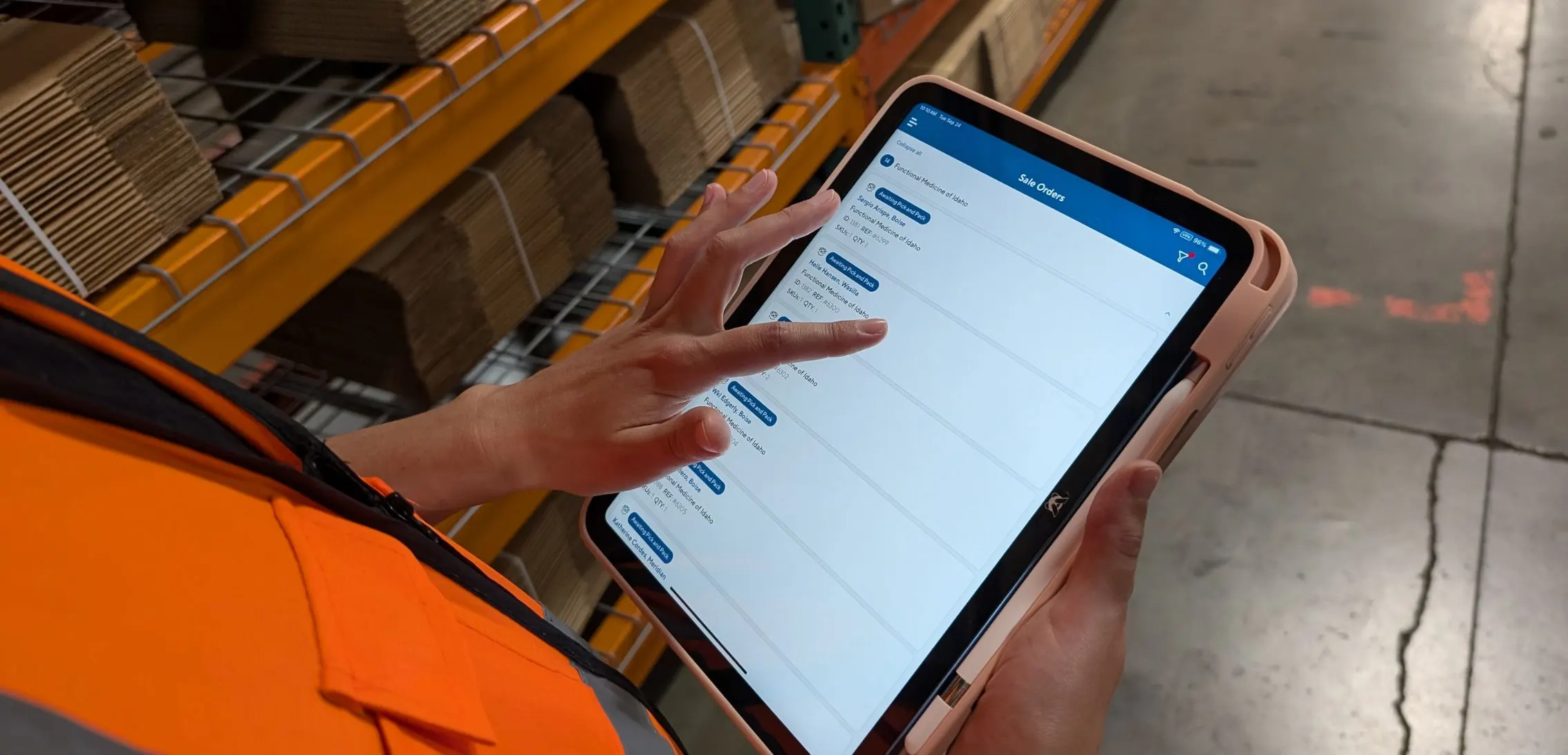
Deposco Alternatives: What Growing 3PLs Should Consider
What We Heard at B2B World APAC: Large Brands Want Delivery Visibility, Not Just Warehouse Visibility
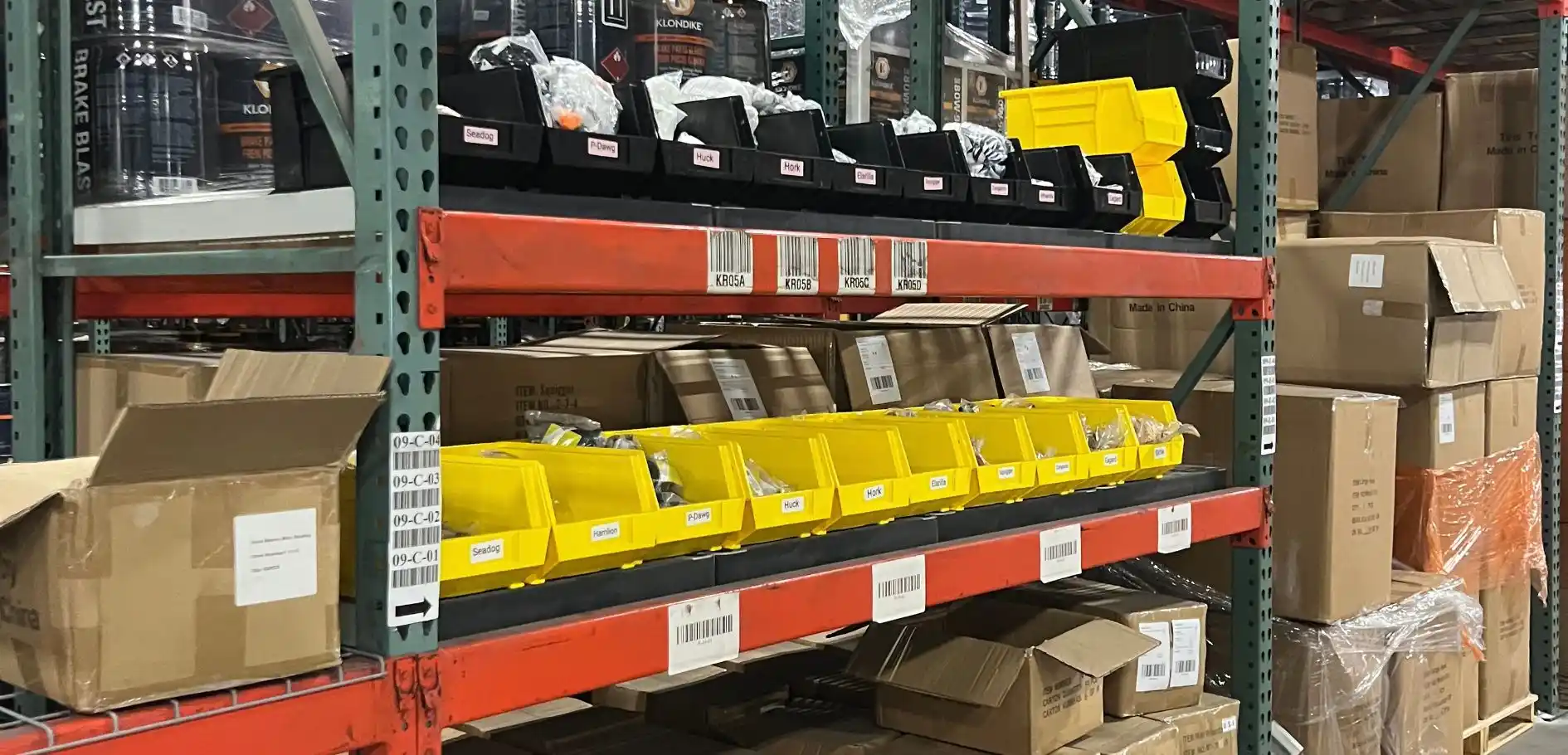
The Fastest WMS to Implement for E-Commerce Fulfillment 3PLs in the USA
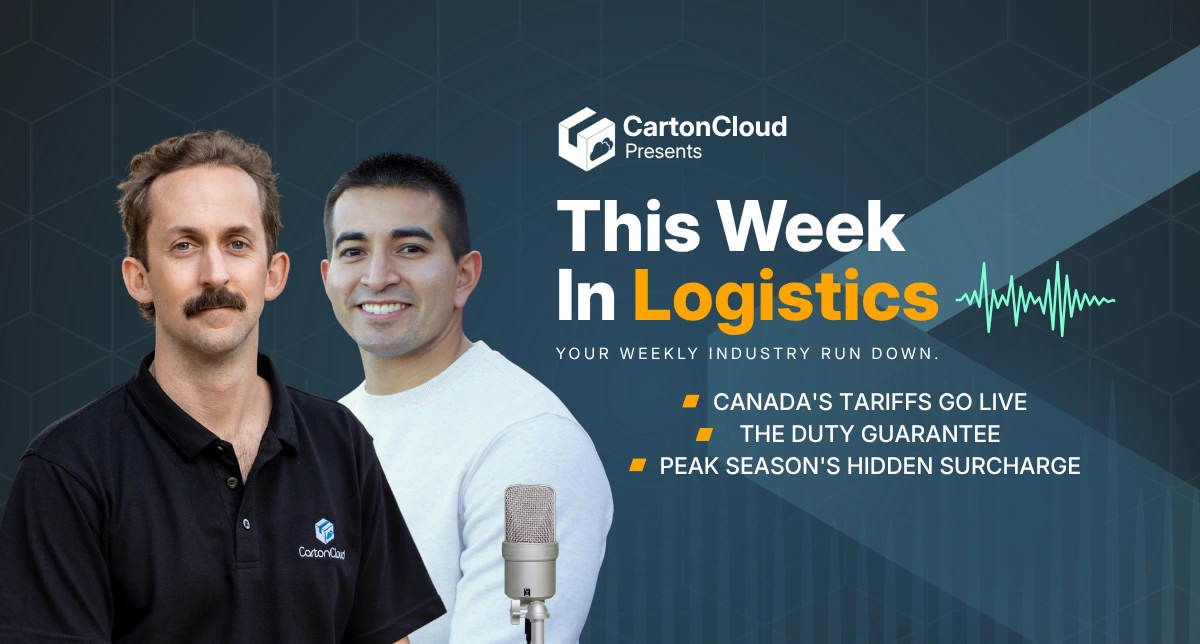
This Week in Logistics: A Cost Rule Peak — Canada's Tariffs Go Live, FedEx Guarantees Your Duties, and Peak Season Surcharges Land

What's the Best WMS for Small 3PLs That Need an Easy Setup?

CartonCloud vs Extensiv: Which Platform Delivers More for 3PLs?

Get a Free, Honest Read on Your Operation, in About Two Minutes

CartonCloud’s Commitment to Security: SOC 2 Type 2 Audit Complete

How to Implement a WMS in Your Small 3PL Business: A Practical Guide
.webp)
This Week in Logistics: Multiple Warehouses, Multiple States, One Standard — How HD Warehousing Does It, With Special Guest Chad Hildebrandt, Owner & COO
August 2026: New Feature Round-Up

Warehouse Software for Cold Storage, Food, and Temperature-Controlled Logistics
This Week in Logistics: Season 2 Returns — US-Canada Tariffs, Oil Volatility, and Panama Canal Cuts All at Once
.webp)
How Do You Know You've Outgrown Basic Warehouse Systems? 7 Signs for Growing US 3PLs
.webp)
CartonCloud Named a 2026 "Great Supply Chain Partner" by SupplyChainBrain
.webp)
Dock Management: How We Built Visibility Into Every Delivery
.webp)
July 2026 — New Feature Round-up

What US 3PL Operators Really Say About Switching From Slow, Complex WMS Alternatives

CartonCloud vs Competitors: An Honest Comparison from an Implementation Specialist
.webp)
Running Multiple Sites from One WMS System: How HD Warehousing Scaled Without the Complexity