Deposco Alternatives: What Growing 3PLs Should Consider
Deposco is a capable WMS platform — but it's not built for every operation. Here's an honest look at who Deposco is actually designed for, where it falls short for scaling 3PLs, and what to look for in a 3PL software alternative.
Published:
October 2, 2026
TABLE OF CONTENTS
The best Deposco alternative for scaling 3PLs, in-house logistics teams, and transport operators is CartonCloud. Deposco is built for mid-market and enterprise retailers running omnichannel fulfilment across stores, e-commerce, and marketplaces. If you don't need that complexity, you'll pay for capability you never use, with an implementation timeline to match. CartonCloud delivers native WMS, TMS, automated billing, and customer portals in one platform, live in days, not months.
— TL;DR — The short version
What to know before evaluating Deposco alternatives:
- Deposco is built for mid-market to large omnichannel operations — its core strength is WMS + OMS + Distributed Order Management on one codebase.
- Scaling 3PLs, in-house logistics teams, and transport operators without omnichannel complexity often pay for capability they never use.
- CartonCloud is built for scaling 3PLs, in-house logistics teams, and transport operators — native WMS + TMS + automated billing + customer portals, live in days not months.
I'm Ryan Hwang — I lead sales across North America for CartonCloud, and I spend a lot of time talking to operators who are evaluating or reconsidering their WMS. Deposco comes up regularly. It's a credible platform. But the operators who come to us after evaluating it often say the same thing: it felt like it was built for someone bigger, or more complex, than them.
That's not a criticism of Deposco. It's a fit problem — and fit is everything when you're choosing the software your operation runs on.
CartonCloud is built for scaling 3PLs, in-house logistics teams, and transport operators who need WMS, TMS, automated billing, and customer portals in one connected platform — and need to be live fast. If that matches your operating model, here's how the two platforms compare.
What Is Deposco + Who Is It Actually Built For?
Deposco is a cloud-based supply chain platform that combines warehouse management, order management, and Distributed Order Management (DOM) on one codebase. Its distinctive capability is orchestrating inventory and orders across multiple fulfillment nodes — warehouses, retail stores, drop-ship partners, and marketplaces — all from a single system.
Their customer base reflects this: mid-market to enterprise retailers, DTC brands, and large 3PLs with complex omnichannel operations.
That's a strong platform for the right operation. The question is whether your operation is that operation.
Deposco is a strong fit for:
- ✓ Retailers running inventory across stores, e-commerce, and marketplaces who need a single system to orchestrate orders across all of them.
- ✓ Large 3PLs with dedicated IT resources, established supply chain functions, and capacity for a multi-phase rollout.
- ✓ Operations with meaningful omnichannel complexity — drop-ship, store fulfillment, multi-node inventory routing.
Deposco is less suited to:
- ✘ Scaling 3PLs, in-house logistics teams, and transport operators running warehouse and transport operations without omnichannel complexity.
- ✘ Operations that need to be live in days to weeks, not months.
- Teams that need native transport management — driver app, route planning, ePOD — not partner integrations.
- ✘ Operators who need transparent, predictable pricing and fast time-to-value from day one.
Why Do Scaling 3PLs Look for a Deposco Alternative?
The friction points that send operators looking for alternatives tend to cluster around the same areas.
- Implementation overhead. Deposco's implementation timelines vary significantly with operation complexity. For enterprise multi-channel deployments, that's expected and appropriate. For a scaling 3PL that needs to be live and serving clients quickly, it's a problem. Verified Capterra reviews describe a range from straightforward for simpler deployments to significantly longer for complex rollouts — and for most growing 3PLs, the timeline is closer to the latter.
- No native TMS. Deposco offers carrier rate-shopping inside the WMS, but full transport management — driver app, route planning, proof of delivery, linehaul workflows — requires partner integrations. For a 3PL running both warehouse and transport, that means managing two systems and an integration layer rather than one connected platform.
- Pricing opacity. Deposco does not publish pricing. A full sales cycle with custom quoting is required. For operators trying to evaluate ROI before committing to a sales process, that's a meaningful barrier.
- Feature depth versus operational fit. Deposco's OMS and DOM capability is genuinely strong — but for a 3PL without omnichannel fulfillment complexity, it's capability they'll never use. The platform is built for a level of orchestration that most growing 3PLs don't need, and the configuration and training load reflects that.
What to Prioritize When Evaluating Deposco Alternatives
Here's what actually matters for a scaling 3PL evaluating options.
- Does it include native WMS + TMS in one platform? Managing warehouse and transport from separate systems with an integration layer creates manual work and visibility gaps. A connected platform means one source of truth, automated data flow between warehouse and transport, and one team to call when something isn't working.
- Does it automate multi-client billing? 3PL billing is complex — storage charges, handling fees, transport rates, minimum charges, sliding scales, per-client rate cards. Being able to get it up and running without a lengthy setup process or professional services required is an important consideration, especially when you're onboarding a new client with a unique rate structure and need billing live quickly.
- Are customer portals included? Your clients expect real-time visibility into their stock and orders. A customer portal that gives them self-serve access reduces inbound queries, builds trust, and is increasingly a requirement for winning and retaining larger clients. It should be included at every tier, not a paid upgrade.
- How fast is onboarding? A system that takes months to implement affects your ability to take on new clients and deliver for existing ones. Look for platforms where onboarding is measured in days to weeks, with a support team that understands logistics — not just software.
- Is pricing transparent and usage-based? Pricing that grows with your operation, with no surprise fees as you add clients or volume, makes the ROI calculation straightforward from day one.
How Does CartonCloud Compare to Deposco?
CartonCloud is built for a different operating model than Deposco — and that difference is worth being direct about. Here's a full profile of each platform so you can check out the main differences at a quick glance.
CartonCloud
Best for: Scaling SMB and mid-market 3PLs running B2B pallet operations, e-commerce fulfillment, cross-docking, or combined warehouse + transport.
CartonCloud started inside a real 3PL, built to solve problems the founders were living with every day — including the reporting and billing visibility their own clients wanted. The platform has grown from that origin into a 3PL software system trusted by 600+ logistics businesses and 50,000+ users across North America, Australia, and New Zealand. WMS, TMS, and automated billing are built into one connected system — not assembled from separate products — and the platform consistently earns top ratings for ease of use, support, and value from the operators running it every day.
- WMS + TMS: Warehouse and transport management in one platform. The two systems share the same data, so there's no integration layer to manage and nothing falls between the cracks.
- Automated billing: Rate cards, storage, handling, and transport charges are calculated and invoiced automatically across every client.
- Customer portal: Every client gets their own portal with real-time access to stock levels, orders, and reports — 24/7, without needing to contact your team (included at every tier, no additional fee). It's been live and refined across CartonCloud's customer base for years, not a recent addition.
- Mobile app: Everything your floor team and drivers need in a single app. Put-away, pick and pack, scan move, and driver workflows — available on both iOS and Android.
- Integrations: Connects natively to Walmart, Shopify, WooCommerce, Amazon, StarShipIT, Shippit, ShipStation, Xero, QuickBooks, MYOB, and more. Open API included, with the ability to build custom integrations where your operation needs them.
Pricing: Straightforward usage-based pricing across four tiers — Starter, Professional, Professional Plus, and Enterprise. Your tier is determined by the functionality your operation needs, with volume pricing sitting on top independently.
Local support and training: Backed by friendly, regional logistics experts based across the US, Canada, Australia, and New Zealand, who are always just a quick phone call or email away. If you prefer a self-paced approach, everyone on your team (and your clients!) gets full access to a comprehensive online knowledge base, alongside the CartonCloud Academy. This offers free, online training with course and video modules so your staff and customers can get up to speed quickly and refresh their knowledge on the system anytime.
Onboarding: Get live quickly in just weeks (with no lengthy IT projects or professional services overheads that most competitors require).
Strengths:
- ✓ All-in-one WMS + TMS without the integration headache: Warehousing and transport work together naturally right out of the box, saving you from the stress (and extra cost) of juggling and connecting separate software vendors.
- ✓ Fast to implement + get running: Bypasses drawn-out IT projects, letting your team get comfortable with the system and see real operational improvements without a months-long wait.
- ✓ Pricing that grows with you: A volume-based model that aligns with your actual business volume (meaning your software costs stay fair and predictable as you win new clients).
- ✓ Support from people who’ve been there: CartonCloud’s onboarding and support teams come straight out of the logistics industry, so when you call, you’re talking to someone who truly understands the daily realities of running a warehouse floor.
Where it's not the right fit:
- ✘ Very large enterprise operations requiring deep, highly bespoke ERP engineering, advanced labor management tools, or heavy custom coding will generally require a dedicated enterprise-level platform.
What operators say:
"It's clear this was built by people who truly understand 3PL and the 3PL environment. The workflows are logical, practical, and easy to follow. It's designed for both accuracy and speed — and they've done a strong job of it. I honestly don't know how anyone can run a 3PL without CartonCloud." — Randy W., G2 review ⭐⭐⭐⭐⭐
Deposco
Best for: Mid-market to enterprise retailers, DTC brands, and larger 3PLs managing highly complex, multi-channel fulfillment environments (e-commerce, physical retail, marketplaces, and wholesale simultaneously).
Deposco was built to solve a very specific problem: coordinating multi-channel inventory and order routing across fragmented networks. It handles complex, multi-location logic well, but that architectural depth comes with a distinct trade-off. For 3PL operations that do not require this level of channel complexity, the platform’s heavy footprint typically results in prolonged implementations, rigid configurations, and a protracted sales process just to get a price quote.
- WMS: Offers functional mid-market warehouse management, with workflows designed specifically around the needs of omnichannel retail fulfillment rather than traditional B2B or rapid-fire 3PL logistics.
- TMS: Not included.
- OMS / DOM: Utilizes a Distributed Order Management (DOM) layer to route orders and balance inventory across various warehouses, physical stores, and drop-ship partners.
- Customer portal: Bright Portal, launched April 2026 — a native, white-labeled client portal with real-time inventory visibility, SLA reporting, and proactive alerts.
- Integrations: Provides standard mid-market connectivity to ERPs, retailer EDIs, shipping carriers, and warehouse automation, though setup complexity varies.
Pricing: Not transparent — available on request. Expect a full sales cycle with custom quoting based on operation size, modules, and integration scope. (It’s important to note that any add-on requirements that are discovered through the process will create a new formal Statement of Work, with additional quoting).
Onboarding: Implementation timelines are dictated by Deposco's enterprise schedule. Even for smaller deployments, go-live timelines commonly stretch to three months or more. For enterprise accounts requiring ERP and multi-channel integrations, verified user reviews note significantly longer rollouts — which is worth noting if you are replacing an active system.
Support: While user feedback highlights a collaborative account management approach, operator reviews note a few technical areas requiring careful configuration. These include constraints with certain ERP integrations (particularly NetSuite), order-waving logic, and the need for careful management during Android scanner software updates.
Strengths:
- ✓ Includes WMS, OMS, and DOM on a single codebase, which benefits complex, multi-channel orchestration.
- ✓ Can handle the high order volumes of established mid-market and enterprise retail brands.
- ✓ Tailored for brands that own their inventory and sell across a wide matrix of digital and physical channels.
Where it's not the right fit:
- ✘ 3PLs without omnichannel or retail routing needs: Operations focused on traditional fulfillment may end up paying a premium for advanced DOM and OMS features they do not require.
- ✘ Operations that need native transport management: While Deposco offers parcel rate-shopping within the WMS, complete TMS workflows (such as route planning, driver apps, linehaul management, and proof of delivery) depend on third-party integrations rather than native functionality.
- ✘ Scaling SMB + mid-market 3PLs prioritizing fast time-to-value: The platform is engineered for enterprise-scale orchestration, which introduces implementation and configuration overhead that smaller, agile operations rarely need.
- ✘ 3PLs that want predictable, transparent pricing upfront: Because Deposco requires a full sales discovery process to scope and quote each project, early-stage budget forecasting can be difficult.
- ✘ 3PLs running high-volume pallet in, pallet out, or cross-docking: The platform is architected for complex omnichannel routing, meaning its baseline complexity may not align with straightforward bulk pallet handling or everyday cross-docking workflows.
Which Platform Is Right for Your Operation?
Choose CartonCloud if:
- You run a 3PL, in-house logistics team, or transport operator and need to manage warehouse and transport end-to-end.
- Native WMS + TMS in one platform matters — driver app, route planning, ePOD, no integration overhead.
- Multi-client automated billing is core to your operation.
- Transparent, predictable pricing matters from day one.
- Local, logistics-native support is important to how you operate.
Choose Deposco if:
- You run a retailer, DTC brand, or large 3PL with omnichannel fulfillment across stores, e-commerce, marketplaces, and drop-ship partners.
- You need Distributed Order Management to orchestrate inventory across multiple fulfillment nodes.
- You have dedicated IT resources and capacity for a multi-phase rollout.
For more on what to look for when evaluating 3PL software, see the 3PL Software Alternatives Guide.
If you'd like to see how CartonCloud works for an operation like yours, book a free demo and we'll walk through your specific setup with you.
FAQ
Q: What is the difference between Deposco and CartonCloud?
A: Deposco is built for mid-market to large omnichannel operations — retailers, DTC brands, and large 3PLs running multi-channel fulfillment with Distributed Order Management. CartonCloud is built for scaling 3PLs, in-house logistics teams, and transport operators who need native WMS, TMS, automated billing, and customer portals in one platform with fast time-to-value.
Q: Does Deposco include transport management?
A: Deposco does not have a native TMS. Full transport workflows including driver app, route planning, proof of delivery, and linehaul are delivered via partner integrations. For 3PLs running both warehouse and transport, CartonCloud includes native WMS and TMS in one platform, with no integration layer required between the two.
Q: How long does Deposco take to implement?
A: Deposco implementation timelines vary significantly with operation complexity, ranging from straightforward for simpler deployments to significantly longer for enterprise multi-channel rollouts. For scaling 3PLs that need to be live quickly, CartonCloud averages around six hours of active onboarding, with most operations live within days to a few weeks.
Q: How much does Deposco cost?
A: Deposco does not publish pricing. A full sales cycle with custom quoting is required based on operation size, modules, and integration scope. CartonCloud uses transparent usage-based pricing across four tiers, so operators can evaluate ROI before entering a sales process.
Q: Is Deposco a good fit for a small or growing 3PL?
A: Deposco is built for mid-market to enterprise operations with omnichannel fulfillment complexity. For a scaling 3PL or in-house logistics team without that complexity, the OMS and DOM capability often goes unused. CartonCloud is purpose-built for this segment, with fast onboarding, transparent pricing, and native WMS, TMS, and billing in one platform.
Q: What does CartonCloud offer that Deposco doesn't?
A: CartonCloud includes native transport management, automated 3PL billing, fast onboarding, and transparent usage-based pricing, all in one connected platform with no integration overhead. Deposco now offers a native client portal too (Bright Portal, launched April 2026), though CartonCloud's portal has been live and refined for years and draws on combined WMS and TMS data.
Updated October, 2026.
Explore the resource hub
Tips, tools, downloadable guides and stories from logistics teams who are working smarter.
This Week In Logistics: When the System Says Forty and the Shelf Says Twelve — How to Close the Inventory Gap, With Special Guest Gaubrielle Pritchard, Director of Product and Customer Marketing, Cin7
.webp)
The CartonCloud Logistics Index 2026: See where your operation stands

Running WMS and TMS Across Multiple Sites in Australia: The Questions We Answered at MegaTrans 2026
CartonCloud Feature Spotlight: July–September 2026
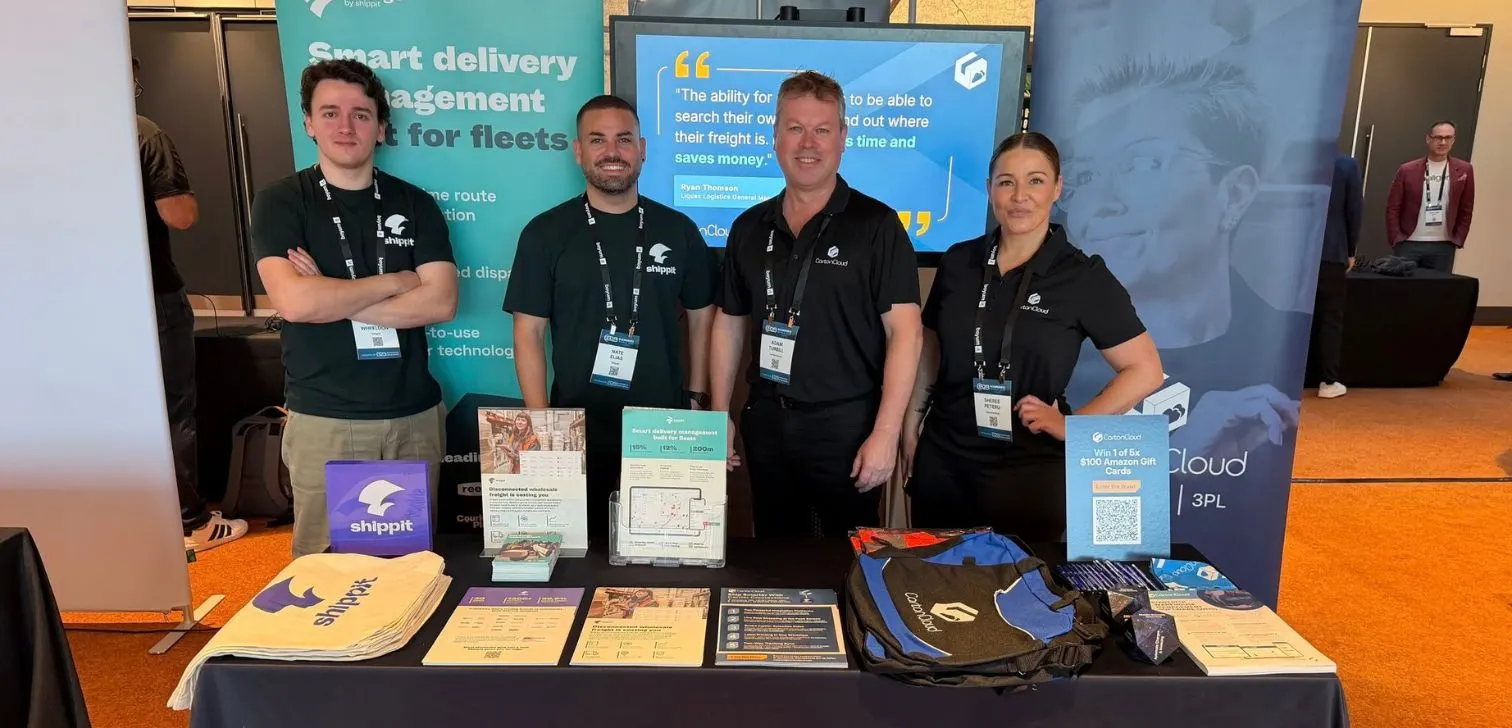
What We Heard at B2B World APAC: Large Brands Want Delivery Visibility, Not Just Warehouse Visibility
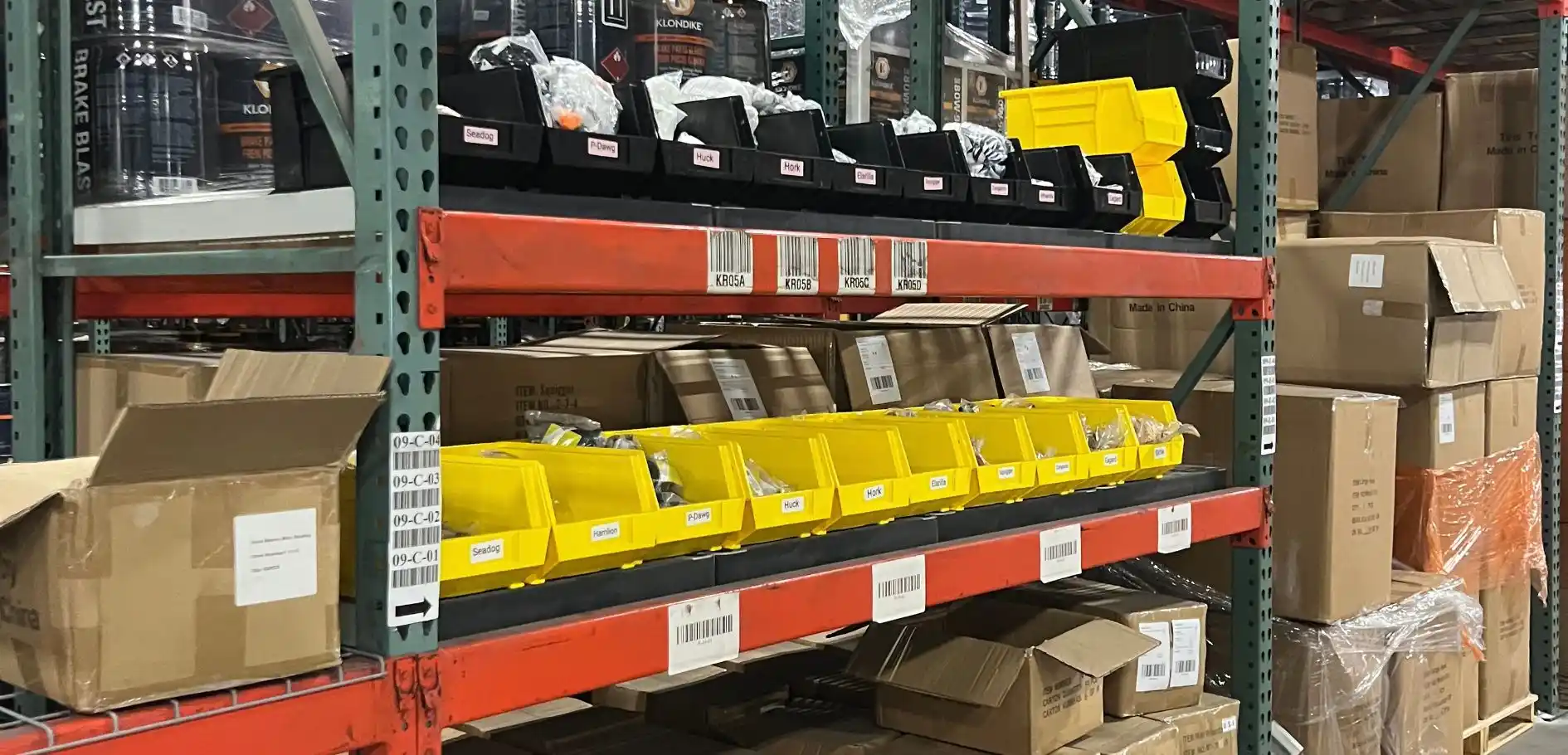
The Fastest WMS to Implement for E-Commerce Fulfillment 3PLs in the USA

This Week in Logistics: A Cost Rule Peak — Canada's Tariffs Go Live, FedEx Guarantees Your Duties, and Peak Season Surcharges Land

What's the Best WMS for Small 3PLs That Need an Easy Setup?

CartonCloud vs Extensiv: Which Platform Delivers More for 3PLs?

Get a Free, Honest Read on Your Operation, in About Two Minutes

CartonCloud’s Commitment to Security: SOC 2 Type 2 Audit Complete

How to Implement a WMS in Your Small 3PL Business: A Practical Guide
.webp)
This Week in Logistics: Multiple Warehouses, Multiple States, One Standard — How HD Warehousing Does It, With Special Guest Chad Hildebrandt, Owner & COO
August 2026: New Feature Round-Up

Warehouse Software for Cold Storage, Food, and Temperature-Controlled Logistics
This Week in Logistics: Season 2 Returns — US-Canada Tariffs, Oil Volatility, and Panama Canal Cuts All at Once
.webp)
How Do You Know You've Outgrown Basic Warehouse Systems? 7 Signs for Growing US 3PLs
.webp)
CartonCloud Named a 2026 "Great Supply Chain Partner" by SupplyChainBrain
.webp)
Dock Management: How We Built Visibility Into Every Delivery
.webp)
July 2026 — New Feature Round-up