How to Deliver an Amazon-Like Experience When You're Not Amazon
Consumers expect Amazon-speed delivery from every retailer they buy from. The gap isn't in the carrier network — it's upstream, inside the warehouse. Here's what closing it actually looks like for 3PLs and the retailers they support.
Published:
June 9, 2026
TABLE OF CONTENTS
Delivering an Amazon-like 3PL experience doesn't start with finding a faster carrier. With the right carriers, you can already ensure delivery in under two business days from collection. The bottleneck is often upstream, inside the retailer's own warehousing operation. The three-day gap between checkout and dispatch sits in the warehouse; in the systems, in the handoff between order and fulfilment. 3PLs that help their clients close that gap are the ones winning e-commerce contracts in 2026.
— TL;DR — The short version
- The New Gold Standard: Consumer delivery expectations set by Amazon, Uber Eats, + Domino's — have raised the bar for every retailer across both B2C + B2B.
- The True Opportunity: The secret to winning isn't just about faster carriers; it’s about unlocking efficiency right inside the fulfilment operation.
- Bridging the Gap: It’s important for retailers to match carrier delivery speed to meet consumer expectations.
- Operations First, Tech Second: The market leaders winning the delivery game succeed by streamlining their upstream operations first, then powering them with the right technology.
- The Petbarn Success Story: By perfecting their internal workflow, Petbarn now picks, packs, and ships within just five minutes of checkout—proving that operational excellence is the ultimate competitive advantage.
In our latest episode of This Week in Logistics, I sat down with Rob Hango-Zada — Co-Founder and Joint CEO of Shippit, the platform powering around 100 million deliveries a year across some of Australia's biggest retailers — to dig into what non-Amazon retailers can actually do to compete on delivery.
I'm Shaun Hagen, CEO of CartonCloud. We build the warehouse and transport management software that 3PLs and warehouses run their operations on, which means the gap between what consumers expect and what a non-Amazon operation can actually deliver is a problem I sit with most weeks. Let’s get into it.
Why is every retailer now being measured against Amazon's delivery standard?
Ever wonder why freight is suddenly being measured against the Amazon delivery standard?
“We're seeing that e-commerce expectations bleed into B2B. If your expectations are set by buying a $50 t-shirt, when you buy a $5,000 pallet of goods, you expect something comparable in terms of visibility and delivery timeframes,” said Shaun.
Rob seconded this notion, diving into exactly how consumer trends shape industry standards: "The last best experience is your next expectation."
Think about it. If your customer can order a burger on Uber Eats and see it arrive at their door in 30 minutes, that experience completely recalibrates what they expect from every subsequent purchase — even if it’s a $5,000 pallet of commercial goods for tomorrow's delivery run.
To be honest, I actually blame Domino’s for a lot of this! You buy a $10 pizza and you get a photo of it coming out of the oven, (and more or less, practically track the heart rate of your delivery driver on the way). No wonder consumers are expecting that same level of care and visibility for a pallet of frozen seafood.
The thing is, that subconscious training doesn’t just stay in B2C. We’ve seen those exact same expectations bleed straight into the B2B world. It now applies to every single retailer out there, whether they’ve built Amazon-level infrastructure or not.
“Speed is being matched with convenience. Consumers can be more flexible about their expectations if they have certainty, like picking a specific afternoon they'll be home, versus just wanting the absolute fastest delivery,” said Shaun.
So, what are consumers and B2B buyers actually looking for from delivery today? It really boils down to four key things:
- Speed: Same-day or next-day delivery — especially for Gen Z buyers who’ve grown up with Prime as the baseline.
- Certainty: A reliable, committed delivery window. In many cases, people actually value certainty more than pure speed.
- Visibility: Real-time tracking from checkout straight to the door, rather than a vague, static "five to seven business days" estimate.
- Easy returns: Low-friction returns that don't involve downloading PDFs or waiting six days just to get a label.
Here’s the silver lining: the retailers who are absolutely nailing this experience aren't doing it by constantly switching carriers. They’re winning because they focused on fixing their internal operations upstream first.
Once you get the operational foundation right, everything else falls into place.
What is the fulfilment bottleneck + why does it matter for 3PLs?
In our conversation, Rob shared that courier companies across Australia are routinely delivering in under two business days from the moment they collect a parcel. Yet, many retailers are still quoting five to seven business days at checkout.
"When you actually look at the data in terms of the delivery capability of the courier companies, they're delivering in under two business days from the time they collect. And so this vast disconnect of around three days of transit is sucked into what we call the fulfilment bottleneck." — Rob Hango-Zada, Shippit
The fulfilment bottleneck is typically driven by:
- Rigid fulfilment windows: Warehouse and store teams that operate on traditional business-hours cycles that simply don't match the modern pace of customer demand.
- Inventory blind spots: Retailers who don't actually know where their stock sits in the network until after a purchase has already been made.
- SLA uncertainty: Highly manual, human-dependent processes across warehouse and store locations that make concrete delivery promises nearly impossible to commit to.
- Disconnected systems: Order management, inventory, point of sale, and carrier platforms sitting in silos with no real-time data sharing between them.
Here lies the problem: slapping a faster carrier on top of that kind of infrastructure doesn't fix the issue. It just makes the same bottleneck more expensive.
For 3PLs, this is exactly where the opportunity sits. The businesses winning e-commerce warehouse contracts in 2026 aren't just offering storage and dispatch. They're closing the bottleneck for clients who can't do it themselves.
How do you deliver an Amazon-like experience as a non-Amazon retailer?
The standout example Rob brought to the conversation was Petbarn – a prime example of what's possible when a retailer invests in the right places. They can now pick, pack, and ship an order within five minutes of it being placed at checkout — across their entire store network.
That result wasn't delivered by a carrier. It was built upstream — through inventory visibility, order management, and connected systems that let every part of the operation work together in real time.
And that's the key question for any retailer looking to close the gap: where do you actually need to invest?
Does your customer need speed, or certainty?
Not every retail category needs same-day delivery. The right question is what the purchase occasion demands.
- Low-frequency, high-value purchases (commercial equipment, furniture, bulk goods): reliability and a committed window matter more than outright speed. Customers will wait — if they know exactly when.
- High-frequency, replenishment purchases (food, consumables, apparel): speed, certainty, and repeatability are all in play at once.
Understanding where your clients' products sit in that picture shapes everything — the delivery proposition, the SLA, and where a 3PL adds the most value in the relationship.
What can existing technology already do that hasn't been unlocked yet?
Before recommending a system replacement, Rob's advice is to challenge what's already in place. His team worked with a retailer facing an inventory visibility problem who was about to go through a full ERP replacement — and found a live data feed in the existing system that solved it with a fraction of the cost and complexity.
"A lot of retailers underestimate the capabilities of the systems they have today," Rob said. "There are a lot of shortcuts you can take to get to the outcome without going down big reinvention paths."
I've seen exactly the same on the 3PL warehouse side. The warehouse management system already in place often has capabilities going unused. The e-commerce integrations connecting order channels to fulfilment workflows sometimes only need configuration, not replacement. It is definitely worth a proper look under the hood before looking to invest in something new.
Is your carrier mix giving you leverage or locking you in?
One of the more striking things Rob shared: his team published a fuel surcharge transparency matrix and faced significant carrier backlash for shining a light on the inconsistency. One carrier running a 43% fuel surcharge sitting next to a competitor on 12%, in the same week, for the same product category.
The retailers and 3PLs with the most leverage are the ones who've maintained a multi-carrier mix. Single-carrier dependency removes the ability to navigate away from cost spikes or capacity constraints. Multi-carrier flexibility is an operational hedge — and increasingly important as surcharge stacks climb.
For 3PLs running transport management alongside warehousing, this is where a connected platform creates real value for e-commerce clients — transparent surcharge line items, real-time carrier performance, and the flexibility to route across carriers as conditions change. Route optimisation and billing and invoicing tools are built for exactly this kind of environment.
What do 3PLs supporting e-commerce need to offer in 2026?
The most important shift Rob pointed to: the business case for delivery has moved from cost reduction to customer benefit. A few years ago, every retailer conversation was about finding cheaper delivery. Now it's about delivery as a driver of repeat purchase and brand loyalty.
That reframe opens significant space for 3PLs who offer more than storage and dispatch. The 3PLs winning e-commerce contracts right now are the ones offering:
- Real-time inventory visibility and order status through a customer portal.
- Seamless connection to the retailer's order channels via e-commerce platform integrations without manual data entry on either side.
- Fulfilment SLAs that close the gap between checkout promise and actual delivery.
- Clear visibility into what each order costs to fulfil — and where the margin sits.
"Technology amplifies a good operation. It doesn't fix a broken one." — Shaun Hagen, CartonCloud CEO
The 3PLs in the best position to win and retain e-commerce clients are the ones who've done the operational work first — and then connected the right technology to multiply it.
What does the connected supply chain look like for e-commerce fulfilment in 2026?
Before we wrapped up, I asked Rob what he's genuinely excited about in the delivery and logistics space right now. His answer set a positive tone for where this is all heading.
The business case for delivery has shifted. A few years ago, every conversation Rob had with retailers was about finding cheaper delivery. Now it's about using delivery as a driver of repeat purchase and brand loyalty.
As Rob put it: "The business case is more linked to customer benefit — which is quite exciting. It means that the average delivery experience for the consumer is actually improving."
That's a fundamentally different brief — and it creates real room for 3PLs to position as strategic partners rather than cost centres.
The direction Rob sees is the connected supply chain. Carriers sharing real-time capacity data. Dynamic pricing that reflects actual load. Fulfilment systems that talk to order management that talks to carrier platforms — in real time.
And here's the encouraging part: that level of connectivity isn't a five-year project for most operations. It's a series of integrations between systems many businesses already have. The operators who move first get a real lead time advantage — and the ones sitting on underutilised technology have more to work with than they probably think.
The full conversation is live on This Week in Logistics. If you run a 3PL or warehouse supporting e-commerce clients, it's a great listen.
FAQ
Q: What does "Amazon-like experience" mean for a non-Amazon retailer?
A: An Amazon-like experience means fast, reliable, visible delivery with easy returns and real-time tracking from checkout to door. For most retailers, the gap isn't in the carrier — it's in the fulfilment operation upstream, between order placement and the moment a carrier collects the parcel.
Q: Why are retailers quoting five to seven days when carriers deliver in two?
A: The three-day gap sits inside the retailer's own operation — rigid warehouse hours, inventory blind spots, disconnected systems, and manual handoffs between teams. Fixing that upstream bottleneck is what closes the delivery gap, not switching carriers.
Q: How can a 3PL help retailers deliver a better customer experience?
A: A 3PL that offers real-time inventory visibility, seamless e-commerce integrations, transparent order tracking, and fast, accurate fulfilment is directly closing the Amazon gap for retail clients. The 3PLs winning e-commerce contracts are positioned as operational partners, not just storage providers.
Q: Is same-day delivery always the right target for retailers?
A: Not always. For low-frequency, high-value purchases, reliability and a committed window matter more than outright speed. For high-frequency replenishment categories, speed and certainty both apply. The right delivery proposition depends on what the purchase occasion actually demands.
Q: What software does a 3PL need to support e-commerce fulfilment in 2026?
A: A 3PL supporting e-commerce clients needs a WMS with real-time inventory visibility, e-commerce platform integrations that eliminate manual data entry, a customer portal for order status visibility, and billing tools that show cost-to-serve at the client level. Connected systems are the differentiator in 2026.
Author Shaun Hagen, CEO, CartonCloud. In conversation with Rob Hango-Zada, Co-Founder and Joint CEO, Shippit. Full episode on This Week in Logistics.
Explore the resource hub
Tips, tools, downloadable guides and stories from logistics teams who are working smarter.
How to Automate Warehouse Invoicing, Rate Cards, and Reporting
WMS vs TMS: What Growing 3PLs Actually Need
5 Signs Your 3PL Needs a Warehouse Management System
This Week In Logistics: When the System Says Forty and the Shelf Says Twelve — How to Close the Inventory Gap, With Special Guest Gaubrielle Pritchard, Director of Product and Customer Marketing, Cin7
.webp)
The CartonCloud Logistics Index 2026: See where your operation stands
Running WMS and TMS Across Multiple Sites in Australia: The Questions We Answered at MegaTrans 2026
CartonCloud Feature Spotlight: July–September 2026
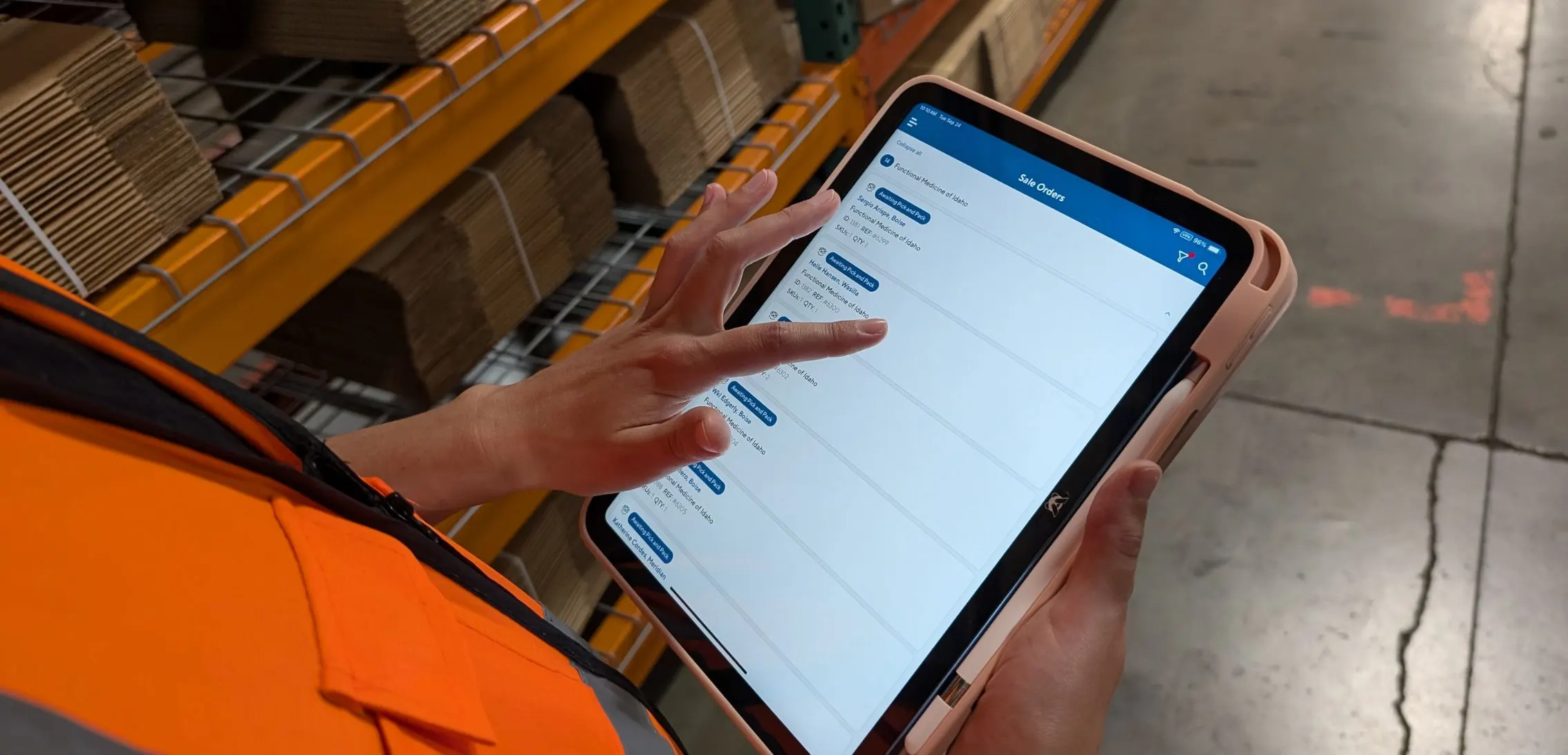
Deposco Alternatives: What Growing 3PLs Should Consider
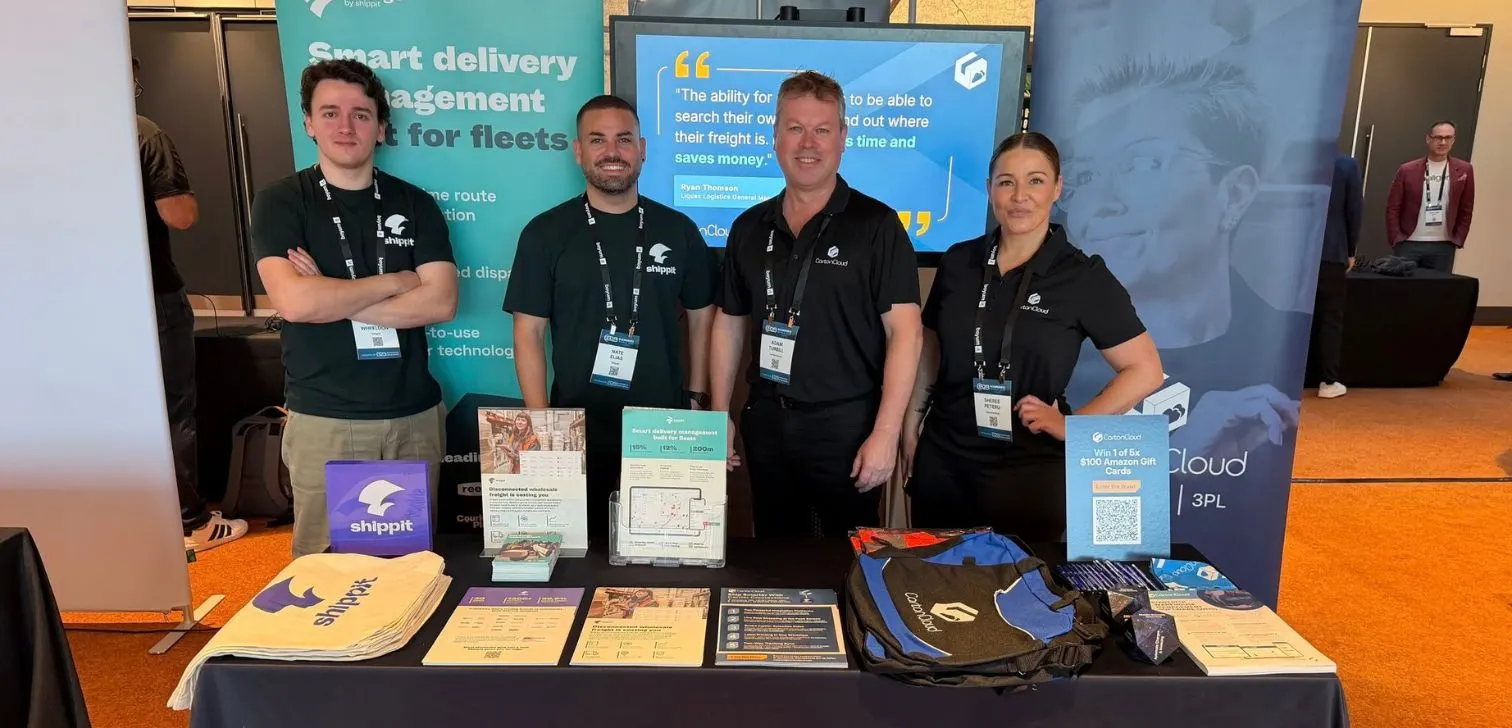
What We Heard at B2B World APAC: Large Brands Want Delivery Visibility, Not Just Warehouse Visibility
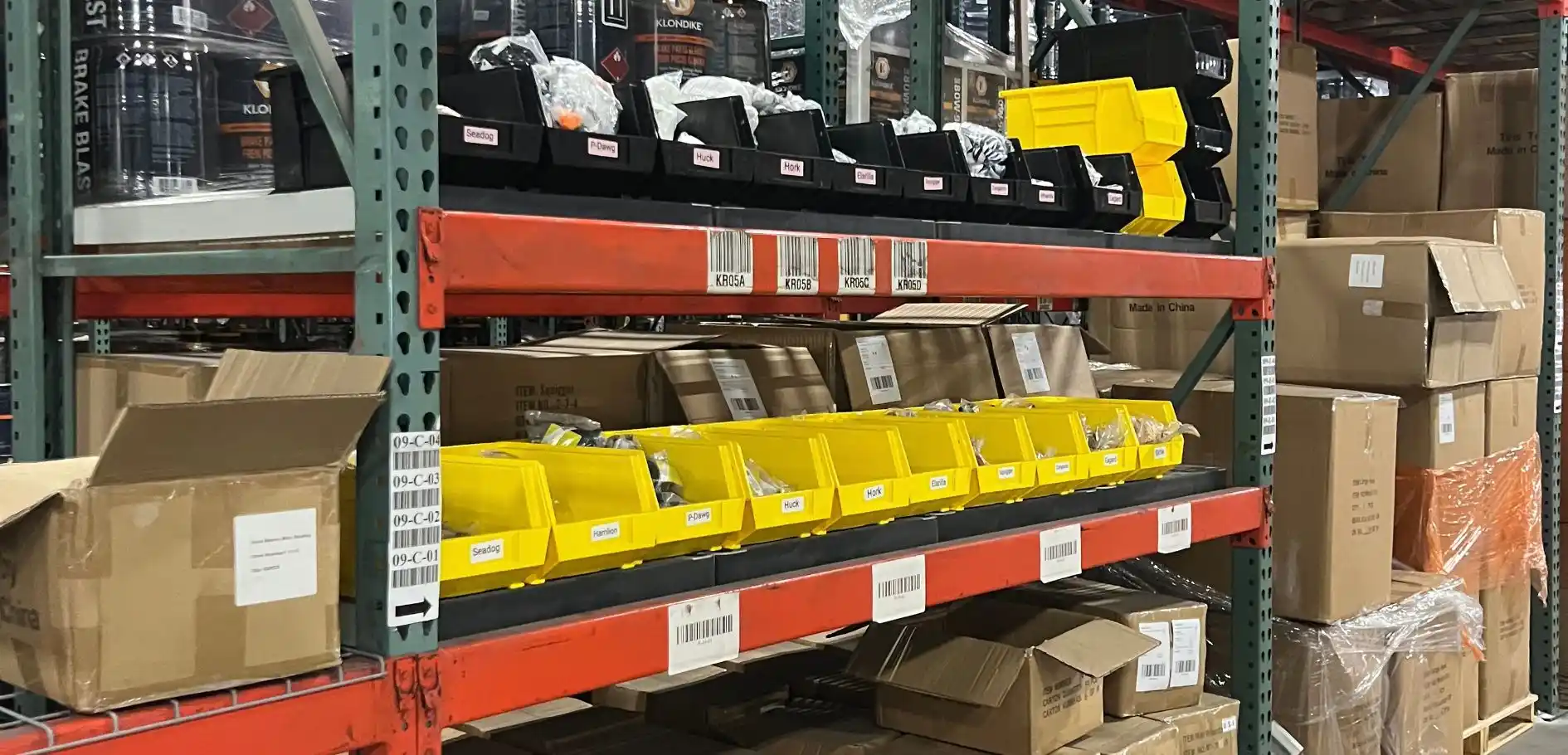
The Fastest WMS to Implement for E-Commerce Fulfillment 3PLs in the USA
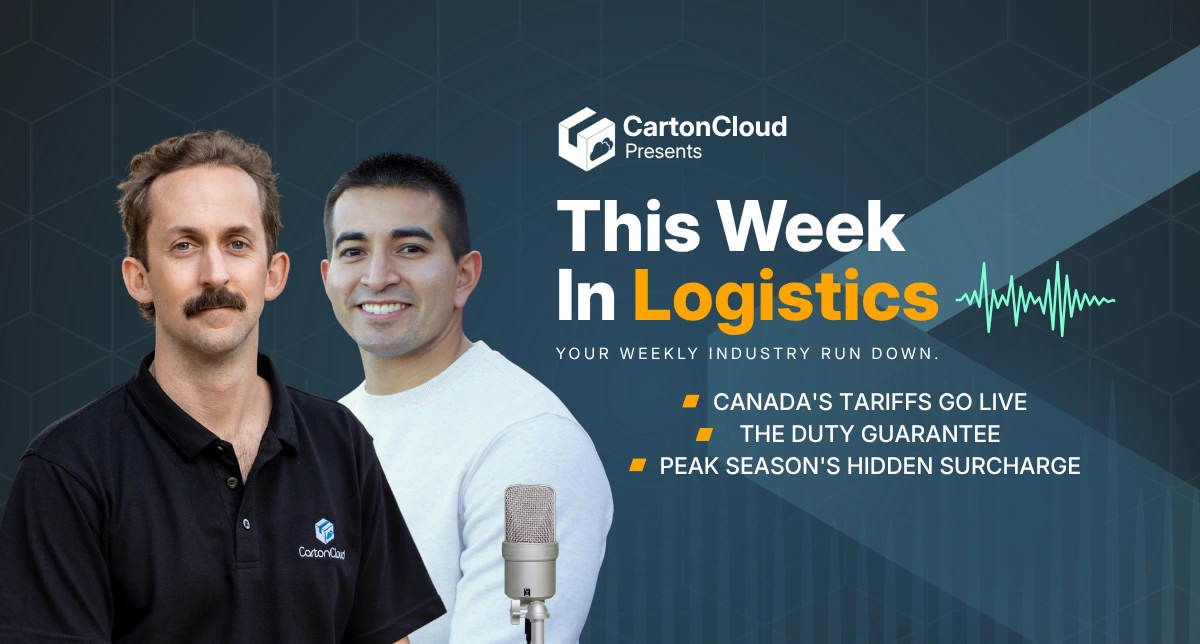
This Week in Logistics: A Cost Rule Peak — Canada's Tariffs Go Live, FedEx Guarantees Your Duties, and Peak Season Surcharges Land
What's the Best WMS for Small 3PLs That Need an Easy Setup?
CartonCloud vs Extensiv: Which Platform Delivers More for 3PLs?
Get a Free, Honest Read on Your Operation, in About Two Minutes

CartonCloud’s Commitment to Security: SOC 2 Type 2 Audit Complete
How to Implement a WMS in Your Small 3PL Business: A Practical Guide
.webp)
This Week in Logistics: Multiple Warehouses, Multiple States, One Standard — How HD Warehousing Does It, With Special Guest Chad Hildebrandt, Owner & COO
August 2026: New Feature Round-Up
Warehouse Software for Cold Storage, Food, and Temperature-Controlled Logistics
This Week in Logistics: Season 2 Returns — US-Canada Tariffs, Oil Volatility, and Panama Canal Cuts All at Once