This Week in Logistics: Season 2 Returns — US-Canada Tariffs, Oil Volatility, and Panama Canal Cuts All at Once
This Week In Logistics, your hosts CartonCloud CEO Shaun Hagen and Account Executive Javier Hernandez catch up on three cost drivers that moved while the show was off air, and what they mean for your operation right now.
Published:
August 28, 2026
TABLE OF CONTENTS
Since Season 1, three separate cost drivers have moved at once, and not all in the same direction. Oil prices spiked then settled, US-Canada tariffs went live overnight, and the Panama Canal started cutting vessel transits for only the second time in its history.
Before we get into it, we're thrilled to announce some exciting news — joining our long term host Shaun Hagen in TWIL Season 2 is our very own Javier Hernandez. Some of you might already know our Account Executive Javi from webinars and events here in North America. He's spent years in the logistics industry helping 3PLs and warehouses get more out of their operations, and he's joining me for TWIL news episodes this season. Together, we're breaking down what happened in logistics and what it means for your operation.
TL;DR — The short version
- Brent Spikes, Then Settles, But the Range Still Matters: Brent Crude spiked past $140 a barrel in July before settling back to around $92, and the working range from Season 1's close mostly held. Fresh US sanctions on Iran this week mean the risk premium isn't gone, so for operators, remember to keep your adjustment mechanisms live rather than relaxing (even though the headline number has calmed down).
- Tariffs Went Live Overnight: A fifty percent tariff hit roughly $20 billion of Canadian goods overnight, and Canada responds with its own tariffs from September 8. If you touch the US-Canada border, make sure you start to re quote now.
- The Panama Canal Adds a Second Cost Driver: Daily transits drop to 34, then 32 from September 15, only the second cut like this in the canal's 110-year history. Carriers are already raising surcharges, so make sure to lock in contract rates before mid-September.
- A Reason to Check Your Own Tech Vendors: Uber Freight confirmed unauthorised access to its systems, after a hacking group claimed to have taken close to a million files. For operators, this is a great reminder to ask your own vendors what's actually protecting your data.
- The Operator Playbook: Requote anything moving through the US and Canada before retaliation lands on September 8. Lock in your Panama Canal carrier rates before the mid-September surcharge hits. Ask your freight tech vendor what's actually protecting your data. And keep your pricing flexible, because nothing this week moved in a single direction.
I'm Shaun Hagen, CEO of CartonCloud and host of our podcast This Week In Logistics (TWIL). This season, we are bringing operator news and insights every 2 weeks — with the most important headlines, and trends shaping the logistics industry to deliver your go-to actions for real operator news — and what you can do to stay ahead.
Welcome back for Season 2. We've been off air since mid-June, and if you're in operations, you've probably felt shipping costs continue to creep up, delays stretch out, or your whole supply chain feel a little less reliable than it did a couple of months ago (you're definitely not imagining it).
We closed out Season 1 with a simple instruction: price for a range rather than a single number, and build in downside protection so you're not caught out when things move fast.
This season's headlines are a good test of that advice, and it's held up. Pricing for a range only works if you stick to it when the headline number moves, not just when it's calm, and the operators who recognise that difference are the ones who'll come out of this period ahead. Here's what actually happened while we were off air, and what to do about it this week.
Operator playbook: what to do in the next seven days
- Requote anything moving through the US and Canada. Tariffs are already live and Canadian retaliation lands September 8. If a quote sitting in your pipeline is using last month's numbers, get it updated now, not the next time it comes up.
- Call your Asia to US East Coast or Gulf carrier before the September surcharge hits. Ask what your specific contract rates look like post mid-September, not the published surcharge figure. Locking that answer in now will be a lot cheaper than finding out on an invoice.
- Send a quick email to your top freight tech or software vendor. Ask what protects your data and what guidelines they have in place. The Uber Freight incident is a reminder that even established freight platforms aren't immune, so it's worth knowing the answer before your operation is relying on them for something critical.
Let's dive deeper into the headlines shaping logistics right now.
What happened over the break
Oil prices spike, then settle — but the range still matters
When Season 1 closed in June, our working range for Brent Crude (the global oil benchmark) was $75–$95 a barrel with some downside protection. Here's what actually happened while we were off air: Brent spiked past $140 in July (the highest since 2008), then settled into a $76–$88 range, and today it's sitting around $92.
The range held for most of that window. The July spike is the reminder of why downside protection and quick recovery mechanisms matter, because you can't plan around a single number.
However, the story isn't finished. The US Treasury announced fresh sanctions this week on entities doing business with Iran, and oil is still moving through the Strait of Hormuz, the narrow shipping route roughly a fifth of the world's seaborne oil passes through. When tension rises there, fuel costs and freight surcharges rise for anyone shipping by sea or air.
"The guidance from last season doesn't change — it just gets reinforced. Price for the range, not the headline. Make sure you've got that flexibility in your pricing system, that you can keep the adjustment mechanisms live, and don't unwind that fuel discipline just because numbers have calmed down." — Shaun Hagen, CEO, CartonCloud.
Operators Takeaway: Don't let a calmer headline number talk you out of the systems you've already got in place. Keep pushing your team for clear visibility into what's actually driving each fuel surcharge line on invoices and load sheets, not just the total.
US-Canada tariffs went live overnight
US-Canada trade talks collapsed on Friday. Tariffs were live by Saturday: 50% on roughly $20 billion of Canadian goods, about 5% of everything Canada ships to the US annually, covering everything from hockey sticks to auto parts. Canada responds from September 8 on steel, dairy, appliances, agriculture equipment, and electronics.
Not every lane is getting hit the same way. Caterpillar, the heavy equipment manufacturer, booked a $392 million tariff refund this week as duty costs shrank on other fronts. Costs are moving both ways depending on the lane and the goods involved, in the same week.
Cross-border trucking capacity is still tight on both the Canada and Mexico sides, according to TRAFFIX's NAX Index, which has scored both corridors tight for a second straight month, heading into what's usually the quieter season.
"The question we keep getting from our operators, and their customers are asking the same thing, is: what does it actually mean for my services?" — Javier Hernandez, Account Executive, CartonCloud.
Operators Takeaway: You can't plan against a single number, because there isn't one right now. Review exposure weekly, stay flexible on pricing, and keep communication open with customers so you can navigate the volatility together rather than quietly absorbing the cost.
The Panama Canal is cutting transits for only the second time in its history
Ocean rates are rising, not softening. Drewry's World Container Index is up 4% to $4,526 per forty-foot container as of August 20, driven by Trans-Pacific trade, and the Panama Canal is about to add a second reason for that number to keep climbing.
From September 4, the Panama Canal caps daily transits at 34 vessels, down from the usual 35–38, dropping again to 32 on September 15. In the canal's 110-year history, this is only the second time it's done this. The first was the 2023–24 drought. This time it's El Niño: reduced rainfall has left the canal's freshwater lakes running low, and since the lock system relies on that water to move ships through, less rain means fewer vessels can pass each day.
Carriers aren't waiting to pass the cost on.
"MSC has raised its Panama Canal surcharge from $100 to $149 per container, and CMA CGM went to $500, both effective mid-September, specifically on the Asia to US East Coast and Gulf trade — which is exactly the lane that the canal is there to shortcut." — Shaun Hagen, CEO, CartonCloud.
So who actually feels the impact of these surcharges?
"It's across the board — it's a ripple effect. Importers, exporters, 3PLs handling Asia to US Gulf Coast ocean freight specifically. If that's you or your customers, the window is right now. That's when you're supposed to act, before that mid-September deadline." — Javier Hernandez, Account Executive, CartonCloud.
Operators Takeaway: If you're moving freight through the canal, the window to act is right now, before the mid-September deadline, not after the surcharge lands on an invoice.
What's shifting in vendor security, AI + driverless trucks
Uber Freight confirmed unauthorised access to its systems, after a group claimed it took close to a million files, including mailboxes, cloud storage, and accounts payable records. Uber Freight says the incident is contained with no disruption to operations, but it's still a good excuse to ask your own vendors what's actually protecting the systems your freight runs through.
On automation, Gartner research shows 67% of supply chain organisations are investing in AI, while 55% of chief supply chain officers say the return is still unclear. Gartner's take isn't that AI doesn't work, it's that most companies are running change management project by project with no overall strategy for which AI bets deserve the limited training, staffing, and change resources they've got.
"Everyone's just throwing that AI thing around, seeing what works and what doesn't. The gap isn't necessarily the technology, it's how it's actually working in that full rollout." — Javier Hernandez, Account Executive, CartonCloud.
Operators Takeaway: Ask your own tech vendors what's actually protecting your data. And before committing budget to AI, ask for the specific business outcome you're buying, not the pitch.
What to watch this week
- Canada's September 8 response. Does it trigger another round of US tariffs in response?
- The Iran-Oman deal. Does it finalise and keep Hormuz transit stable, or do the fresh US sanctions push oil back toward the July spike?
- State-level driverless truck policy. Do more states follow California's lead, adding regulatory risk faster than most automation rollout timelines currently allow for?
Nothing about the fundamentals changed over the break. Control what you can control, and don't let anyone rush you into a plan built on last week's numbers.
If you'd like to see how CartonCloud helps 3PLs and transport operators stay on top of costs, compliance, and capacity in a market like this one, book a free demo.
FAQ
Q: Why did oil prices spike past $140 a barrel in July 2026?
A: Brent Crude spiked past $140 a barrel in July, the highest level since 2008, driven by rising tension around the Strait of Hormuz, the shipping route roughly a fifth of the world's seaborne oil passes through. Prices have since settled to around $92, but fresh US sanctions on Iran mean the risk premium is still on the table.
Q: What do the US-Canada tariffs mean for landed costs?
A: The US-Canada tariffs mean a fifty percent duty on roughly $20 billion of Canadian goods, live overnight after trade talks collapsed. Canada's retaliation from September 8 targets steel, dairy, appliances, agriculture equipment, and electronics, so landed cost assumptions can shift in either direction depending on the lane.
Q: Why is the Panama Canal cutting daily vessel transits?
A: The Panama Canal is cutting daily transits to 34, then 32 vessels from September 2026 because of El Niño-driven low rainfall, which has reduced watershed inflows by around forty-four percent. It's only the second time in the canal's 110-year history this has happened.
Q: How should 3PLs price freight during this level of volatility?
A: 3PLs should price for a working range rather than a single number, since oil, tariffs, and canal capacity are all moving independently right now. Keeping adjustment mechanisms live and reviewing exposure weekly gives more flexibility than locking in against last month's assumptions.
Q: What happened with the Uber Freight data breach?
A: Uber Freight confirmed unauthorised access to its systems after a group claimed it took close to a million files, including mailboxes, cloud storage, and accounts payable records. Uber Freight says the incident is contained with no disruption to operations, but it's a good reason for operators to ask their own vendors what protects their systems.
Post by Shaun Hagen, CEO CartonCloud.
Shaun Hagen (00:05) Oil spiked past $140 a barrel, then came all the way back. US-Canada trade talks collapsed on Friday and tariffs were live by Saturday. And the Panama Canal is cutting ship transits for only the second time in its 110-year history. Season two starts now and there's a lot to catch up on. Hey everyone, I'm Shaun Hagen, CEO of CartonCloud, and welcome back to This Week in Logistics. Each episode we break down what actually matters in logistics — what happened, why it matters to you, and what you should actually do next.
And I'm really excited because season two comes with a big upgrade, and I am no longer flying solo. Some of you will already know him from our webinars and events, but I'm joined by Javi, and Javi brings years of experience in the logistics industry helping 3PLs and warehouses get more out of their operations. And he'll be joining me for the news episodes this season. Javi, welcome to This Week in Logistics. How are you feeling, mate?
Javier Hernandez (00:55) Good, good. Yeah, appreciate the intro there, Shaun. But yeah, super excited to hop into this, kind of give a different perspective here — both, you know, kind of from the operational standpoint, from the kind of system standpoint, just kind of seeing how everything works on a day-to-day.
Shaun Hagen (01:11) And full disclosure, Javi has been one of the most vocal participants in the background of This Week in Logistics. So it was a case of putting your money where your mouth is. And I'm very excited that you'll be joining me for this season. And honestly, really great to have that perspective on the table, and also very exciting to get a bit more diversification of the accents that we're putting out there as well. So thanks very much for jumping in, and looking forward to working together this year.
Now, we've been off the air since mid-June. So if you're in operations, you've probably felt shipping costs continue to creep up, delays stretch out, or just your whole supply chain feel a little bit less reliable than it did a couple of months ago. And you're not imagining it. And it kind of centers around some of the themes we've been talking about for a little while now. So the Middle East situation is continuing to push fuel costs around, and there's a pretty dynamic and fast-moving trade conflict sort of emerging between the US and Canada. At the same time we've got El Niño cutting ship capacity through the Panama Canal. So we're going to go deep on all three of those. But first let's hit the news desk and get you caught up on what's been happening.
Javier Hernandez (02:24) So the first big one is the US-Canada trade talks collapsed on Friday. Then Saturday they had about a fifty percent tariff live, roughly twenty billion dollars — so kind of a drop in the bucket there on just Canadian goods. Everything from hockey sticks to auto parts. Canada retaliates from about September eighth, targeting steel, dairy, appliances, electronics — kind of anything under the sun coming from Canada there.
We'll unpack a little bit more what that means, and kind of what that means on landed costs, as we dive into the other two.
Shaun Hagen (02:56) And full disclosure again, Javi and I are actually sitting on different sides of the 49th parallel. So I guess you'll know if we don't make it to episode—
Javier Hernandez (03:01) Ha ha ha.
Shaun Hagen (03:03) —episode three or four, that the trade war escalated. But it's also probably worth calling out that it's not all in one direction. You know, Caterpillar just booked a $392 million tariff refund as duty costs shrank on other fronts. So we talked about some of that story around having the paperwork and compliance in order, as there was so much uncertainty.
And I think this highlights that costs are moving both ways depending on the lane and the goods involved, which is exactly why you can't continue to run on last quarter's assumptions.
Javier Hernandez (03:35) Yeah. And then kind of the last point there — cross-border trucking still tight on both sides, Canada and Mexico, second straight month. So this is supposed to be kind of the quiet season, so to speak, so I wouldn't really count on that seasonal relief that we're typically used to seeing.
Shaun Hagen (03:51) Yeah, obviously the opposite end of the spectrum down in the southern hemisphere. But on the tech side of things, Uber Freight confirmed unauthorized access to its systems after a hacking group claimed it took control of close to a million files — mailboxes, cloud storage, accounts payable records. Now, Uber Freight says it's contained with no disruption to operations, but either way, it's a very good excuse to ask your own vendors what's actually protecting the systems your freight runs through.
This is an increasingly important part of how logistics companies look at their tech stack, and we've seen a few high-profile incidents over the last couple of years. I think this is really just the latest one that highlights the importance of making sure this is a consideration as operators look at what vendors are in their tech stack.
Javier Hernandez (04:34) Yeah. And then kind of staying on that tech piece — kind of a buzzword here, right, AI. So Gartner Research says sixty-seven percent of supply chain is going towards that AI. Fifty-five percent of chief supply chain officers say they're kind of unclear, you know, what the actual return is. I think everyone's just kind of throwing that AI thing around, kind of seeing what works and what doesn't. So I would say the gap isn't necessarily the technology, it's just, you know, how it's actually working in that full rollout.
Shaun Hagen (05:01) It reminds me a lot of what we've been, I think, seeing playing out on the robotics and automation side as well, where — very cool solutions — but sometimes they may struggle to solve a sort of Monday-morning problem, as we've called it on this show before. I've no doubt that they'll get there, but I think that sort of sixty-seven percent number really highlights that the gap is still there in the implementation.
And speaking of autonomous — the California Teamsters are suing the DMV over the April rules that first allowed heavy-duty driverless trucks on public roads there. Now, whatever you think of the merits, the practical read is that the regulatory timeline in California just got longer and less predictable. If a vendor's pitch around automation assumes that those rules hold as is, that timeline now has a genuine variable on it.
Javier Hernandez (05:48) So, and then on the water — ocean rates are rising, not softening. Drewry's World Container Index, about four percent, so looking about $45-46 US dollars per forty-foot container as of August twentieth. So that's really driven by the Trans-Pacific trade, and then the Panama Canal is about to make that even worse. We'll dive into that a little bit more when we get into these deep dives here.
Shaun Hagen (06:10) Cool. And then finally, on the local Australian counterpoint to that news — the Port of Melbourne just closed out FY26 with a record 3.52 million TEU, up 3.8 percent year on year. June alone was up 7.3 percent. And for context for our North American listeners, that's the middle of winter in Australia, which also happens to be the quietest part of the year with no holidays around. So the fact that Australian volumes are holding up even while the risk story unfolds everywhere else is, I think, quite a positive sign for the local market.
Now before we move on to the deep dives, our logistics fun fact of the week. FedEx robots are now loading trailers by themselves at their Hagerstown, Maryland hub — live at full production scale, not a pilot. FedEx and Dexterity have expanded the robotics partnership they've been piloting since 2023, and Dexterity's dual-armed robot called Mech is now working a 325,000-square-foot facility.
Javier Hernandez (07:06) Yeah, actually read a little bit about that one. So Mech actually has an eighteen-foot wingspan, which is wild, and then reaches about seven and a half feet vertically — so kind of getting close to the Wemby numbers there. But it handles packages up to about 132 pounds. And then it runs on a model called Foresight — it combines vision, depth sensing, and touch to decide where each package needs to go. So it's not just kind of blind automation — there's actually some, you know, some logic there behind it. So actually pretty cool to see.
Shaun Hagen (07:34) Yeah, for any listeners that are interested as well, the fact that this sort of popped up as the logistics fun fact of this week, of all weeks, was quite interesting — because if you haven't already seen it come across one of your news feeds, go and check out the Robot Olympics that ran last week in China. And it's pretty funny to see that compared to obviously what we see in the logistics space. And anyway, I won't spoil it for you—
Javier Hernandez (07:57) Yeah.
Shaun Hagen (07:57) —but go and check it out. But I do think the reason this matters is that obviously this FedEx application is a scenario where they load tens of thousands of trailers a day across its network, and that's a physically demanding, high-turnover job in LTL freight. And that manual burden is now being removed by automation. And I think it highlights where automation is strong — that's where businesses have obviously the scale and capital to invest, but they have the consistency of workflows to solve a very specific part of the supply chain, and that's where robotics is going to be stronger than just sort of general-purpose, multi-client facilities where the workflows and requirements vary.
So I think it was really cool, and I think we'll probably continue to highlight some of these as the year goes on. But it'd be great to see that continuing to get rolled out.
Anyway, onto deep dive number one. And when we closed out season one in June, the Iran framework deal had just been announced, and our working range for Brent Crude was $75 to $95 a barrel with some downside protection. And here's what actually happened while we were off air. Brent spiked past $140 in July, the highest since 2008. Then it's back to a $76 to $88 range, and today it's sitting around $92. So the range did hold for most of that window, but I think the July spike is the reminder of why we said the downside protection and quick recovery mechanisms are essential, and you can't plan around just a single number.
Now, obviously the story isn't finished. This week the US Treasury announced fresh sanctions on entities doing business with Iran. Oil is still moving through the Strait of Hormuz, but the risk premium is back on the table. And a quick refresher on why operators should care — Hormuz is the narrow shipping route that roughly a fifth of the world's seaborne oil passes through. So when tensions rise, fuel costs and freight surcharges rise for anyone shipping by sea or air.
Javier Hernandez (09:46) Yeah, and this is actually where it really gets the operators, right? Because the headline number, everyone kind of sees that, but what we're actually seeing on the ground is a whole different story.
Shaun Hagen (09:56) And I think that what we've been seeing on the ground is actually a little bit more acceptance of this being the new norm. And whilst it's not sort of a single, consistent message across our network and customer base — people talking to industry — I think people have done a reasonably good job at putting in place some of these mechanisms. It's obviously been going on for a while now. But interestingly, the feedback from a lot of customers and partners in the space is that this just is what it is. And they're probably more focused on controlling things that they can control, rather than sweating about some of this uncertainty in the Hormuz and oil pricing.
Now, that still shows up in landed costs and operating costs and volatility. And I think the other part where we've probably seen this being highlighted is increasing need for transparency and granularity around what is driving these fuel surcharges — so breaking them out rather than, you know, really getting detailed about how that's being represented on invoices and load sheets, broken down by fuel and surcharge class as well.
So at this stage I think it is what it is from an operator's perspective. It means it's obviously still front and center of planning. But I think it probably just highlights the importance of having that visibility, both in terms of your own rates and charging, but also from what you're getting charged by others. So the guidance from last season doesn't change — it just gets reinforced. So price for the range, not the headline. Make sure you've got that flexibility in your pricing system, that you can keep the adjustment mechanisms live, and don't unwind that fuel discipline just because numbers have calmed down. I think we've seen, even in the US-Canada situation, how quickly things can change.
Which is actually obviously a good segue to our deep dive number two, which is: if you or your customers touch the US-Canada border or have Canadian-sourced inputs anywhere in the supply chain, your landed cost assumptions just changed overnight, on the weekend. Not gradually, and not in one direction. And I think the sequence here matters. So talks broke down on Friday, tariffs were live by Saturday. And as Javi mentioned earlier, that's fifty percent on around twenty billion dollars of Canadian goods, which is around five percent of everything Canada ships to the US annually. Canada hit back on the eighth of September on steel, dairy, appliances, agriculture equipment, and electronics. And remember the Caterpillar refund from the news desk — some lanes are getting relief at the same time as others are getting hammered. So both directions, different lanes, same week.
Javier Hernandez (12:24) Yeah. And then on that too, Shaun — I guess the question we keep getting from our operators, and their customers are asking the same thing pretty much, is: what does it actually mean for my services? And so as we're looking at these cost rises, is it delays, is it extra charging — you mentioned some of the fuel surcharges. And then I think the one big thing underneath all that is, you know, what's my plan against everything, to help counteract it? Especially, I think a lot of these operators kind of just end up eating some of the costs, but really having a good plan going forward.
Shaun Hagen (12:55) Yeah, absolutely. I think the reality is you can't plan against a single number, because there isn't one. I think the fact that trade partners like the US and Canada can have such a rapid change in such a short period, you kind of need to be planning against a range and staying flexible and responsive. But you do need to be reviewing that weekly. I agree with you — I think that for some of these changes that happen so quickly, operators have in cases ended up wearing those costs. But I think that again highlights the importance of knowing what the costs are, what the impact on your business is, and staying close to your customers. Keep the communication lines open, make sure that they know as well, so that hopefully you can partner with them to navigate the volatility.
And I think that's really the main thing to take away from an operator's perspective — you can't plan against last week's numbers, because last week USMCA was on the table and now it's already gone. This week it's the border, last month it was Brent — whatever's driving the number, whether it's a strait, a border, or a canal, the operator response is the same. I think you need to be getting your admin in order before the next one lands, because there will probably be a next one.
Javier Hernandez (14:06) Deep dive number three. So this is the one adding a second independent reason for ocean rates to keep climbing, especially as we're coming into that peak season here in North America. So from September fourth, the Panama Canal caps daily transits to thirty-four vessels, down from the average of about thirty-five to thirty-eight. And then it's going to drop again to thirty-two on September fifteenth.
So in the hundred-and-ten-year history, that is the second time the Panama Canal has done this and cut it this way. The first was back in 2023, which was that '23–'24 drought that really caused that, and then this year it's El Niño. So rainfall from May through August ran about thirty-four percent below the historical average, and watershed inflows are down about forty-four percent. The National Oceanic and Atmospheric Administration puts the odds at roughly seventy percent that this becomes the strongest El Niño on record by the end of 2026. So if you're into mountain snowboarding, probably good for you. If you're in logistics, probably not so good for you.
Shaun Hagen (15:05) And I must admit, since we started this podcast, I feel like we've had a string of bad news for operators. And unfortunately, once again, carriers are not waiting to pass the costs on here. MSC has raised its Panama Canal surcharge from $100 to $149 per container, and CMA CGM went to $500, both effective mid-September, specifically on the Asia to US East Coast and Gulf trade — which is exactly the lane that the canal is there to shortcut. And I think here's the part that stings for operators — those surcharges land on top of what we've just been talking about, geopolitical risk premium already hitting the rate cards. Hormuz, US-Canada — basically a few independent cost drivers all hitting the same freight at the same time. And I think that just highlights the challenges for operators at the moment.
Javier Hernandez (15:54) Yeah, and so on that, right — who feels it? It's across the board, it's kind of that ripple effect. So importers, exporters, 3PLs handling Asia to US Gulf Coast, ocean freight specifically. And so if that's you or your customers, the window is kind of right now, right? That's when you're supposed to act, before that mid-September deadline. And then we'll get real specific in the playbook coming up.
Shaun Hagen (16:17) I think it's worth also restating that, like I said at the start, there is that counterpoint from Melbourne from the news desk. We have records for import volumes holding up in other parts of the world. So the risk story is real, but it's not uniform, and Australian operators are running a different playbook to the ones North American importers need right now. And as we move to wrap up the episode — onto the operator playbook. So, three things to actually do this week.
Javier Hernandez (16:41) So, one — requote anything moving through the US and Canada. Just make sure you're getting the best price there, not next time it comes up, but right now, just so you kind of stay ahead of it. Tariffs are live and retaliation lands September eighth. So if a quote is sitting in your pipeline and you're using last month's, just make sure you requote that and make sure you're getting the best rate.
Shaun Hagen (17:00) Number two — if you're moving freight through the canal, call your Asia to US East Coast or Gulf carrier now, before the September surcharge hits. Ask what your specific contract rates look like post mid-September, not the published surcharge. Locking that answer down now is a lot cheaper than finding out on an invoice at the time.
Javier Hernandez (17:18) Yep. And then three — just send an email to your top freight tech or software vendor, just asking, you know, what protects your data, what guidelines do they have in place. The whole Uber Freight incident is a reason to ask this month, not someday. Be proactive, not reactive. Takes about five minutes and you'll get a real answer while it's fresh in everybody's mind.
Shaun Hagen (17:40) Cool. Thanks very much, Javi. So for the watch list for this week — does Canada's September eighth retaliation trigger another round of US tariffs in response?
Javier Hernandez (17:49) Yep. Do Iran and Oman actually finalize a deal that keeps Hormuz transit stable, or do the new sanctions push oil back towards that $140 July spike?
Shaun Hagen (18:00) And do more states follow California's lead on driverless trucks? Because if they do, regulatory risk is stacking faster than most automation rollout timelines currently allow for.
Javi, great first episode. Thank you very much for joining me. I'm Shaun Hagen. He's Javier Hernandez, and this has been This Week in Logistics. Nothing about the fundamentals changed over the break. Control what you can control, and don't let anyone rush you into a plan built on last week's numbers. We'll see you in a few weeks.
Javier Hernandez (18:24) See ya.
Explore the resource hub
Tips, tools, downloadable guides and stories from logistics teams who are working smarter.

Running WMS and TMS Across Multiple Sites in Australia: The Questions We Answered at MegaTrans 2026
CartonCloud Feature Spotlight: July–September 2026
Deposco Alternatives: What Growing 3PLs Should Consider
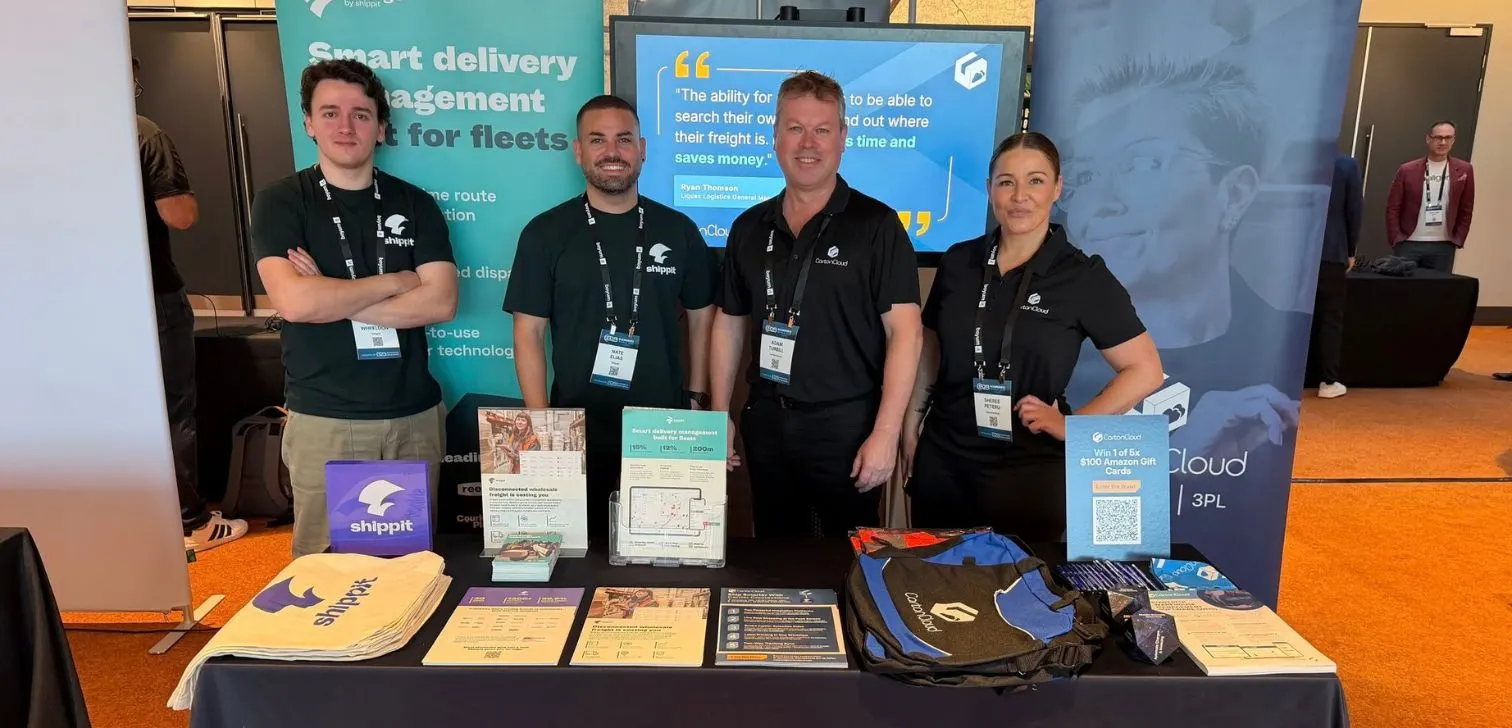
What We Heard at B2B World APAC: Large Brands Want Delivery Visibility, Not Just Warehouse Visibility
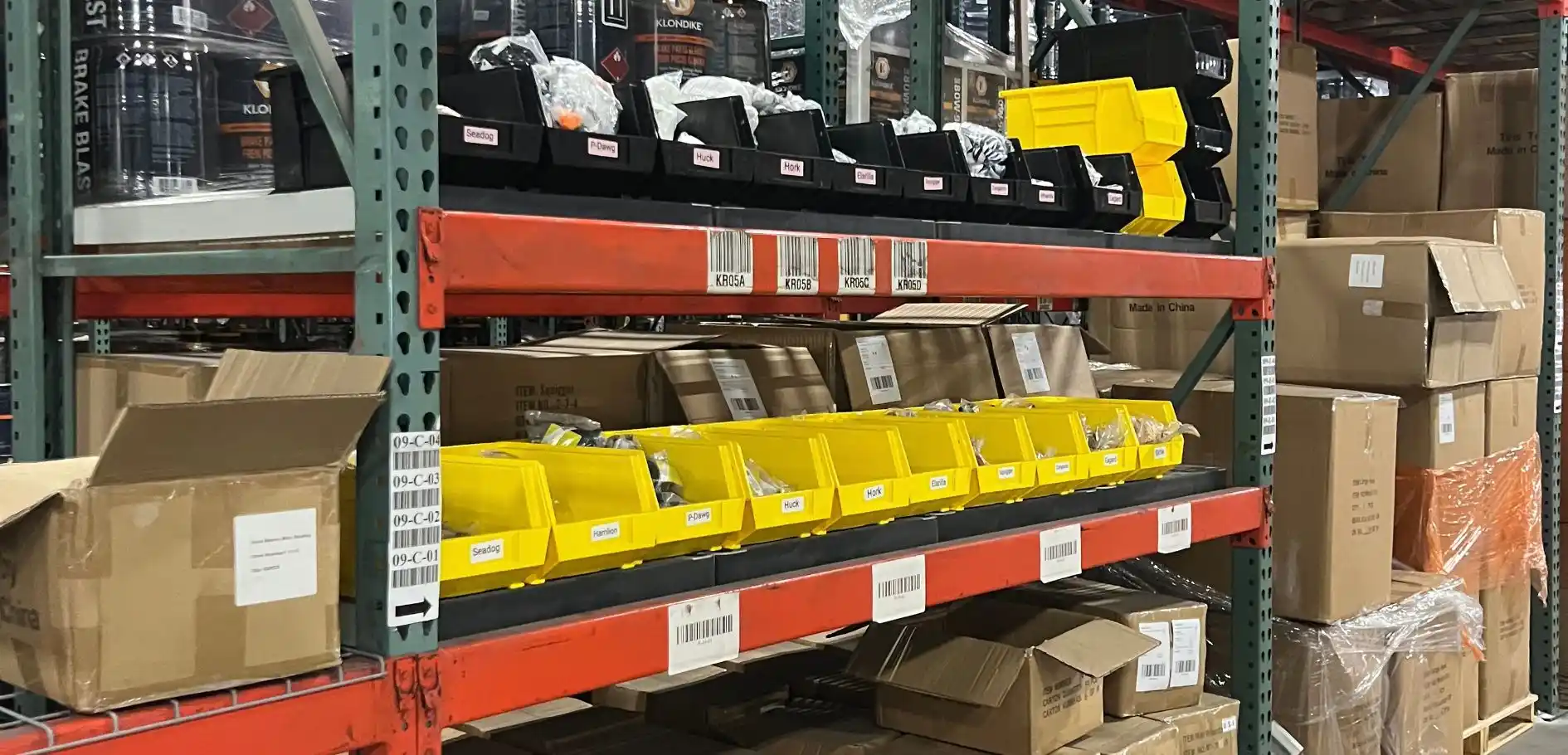
The Fastest WMS to Implement for E-Commerce Fulfillment 3PLs in the USA
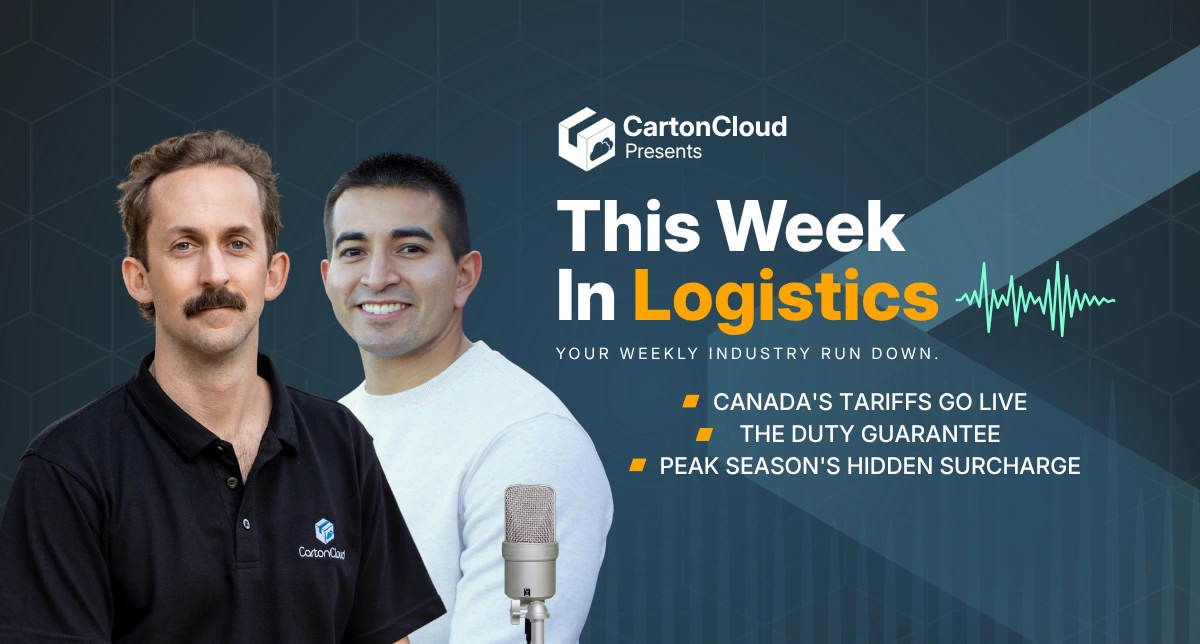
This Week in Logistics: A Cost Rule Peak — Canada's Tariffs Go Live, FedEx Guarantees Your Duties, and Peak Season Surcharges Land
What's the Best WMS for Small 3PLs That Need an Easy Setup?

CartonCloud vs Extensiv: Which Platform Delivers More for 3PLs?
Get a Free, Honest Read on Your Operation, in About Two Minutes

CartonCloud’s Commitment to Security: SOC 2 Type 2 Audit Complete

How to Implement a WMS in Your Small 3PL Business: A Practical Guide
.webp)
This Week in Logistics: Multiple Warehouses, Multiple States, One Standard — How HD Warehousing Does It, With Special Guest Chad Hildebrandt, Owner & COO
August 2026: New Feature Round-Up
Warehouse Software for Cold Storage, Food, and Temperature-Controlled Logistics
.webp)
How Do You Know You've Outgrown Basic Warehouse Systems? 7 Signs for Growing US 3PLs
.webp)
CartonCloud Named a 2026 "Great Supply Chain Partner" by SupplyChainBrain
.webp)
Dock Management: How We Built Visibility Into Every Delivery
.webp)
July 2026 — New Feature Round-up

What US 3PL Operators Really Say About Switching From Slow, Complex WMS Alternatives
CartonCloud vs Competitors: An Honest Comparison from an Implementation Specialist