This Week in Logistics: Multiple Warehouses, Multiple States, One Standard — How HD Warehousing Does It, With Special Guest Chad Hildebrandt, Owner & COO
Shaun Hagen, CEO of CartonCloud, talks with Chad Hildebrandt, Owner and COO of HD Warehousing, about scaling a 3PL from one Idaho Falls building into a five-state operation without losing client-by-client flexibility.
Published:
September 8, 2026
.webp)
TABLE OF CONTENTS
HD Warehousing is a 3PL co-founded by Chad Hildebrandt and Jen Dixon out of Idaho Falls, Idaho. In under two years, the business grew from one leased warehouse with no clients into a multi-client 3PL covering hazardous material storage, food grade, and e-commerce fulfillment, plus an additional five private warehousing sites across the country. Chad joins CartonCloud CEO Shaun Hagen on This Week in Logistics to walk through what that growth actually took: from client-specific SOPs, setting the service standard, and the discipline to say no to work that isn't the right fit.
TL;DR — The short version, 3PL success lessons from HD Warehousing
- Be an extension of your client. HD Warehousing builds around each client's product and process instead of asking clients to adapt to a standard offering.
- Build a specific SOP for every client, not a standard package. A separate process and a single dedicated account manager per client is what lets HD Warehousing onboard complex accounts in days.
- Lead with transparency when pricing gets competitive. HD Warehousing keeps its rate card simple and its service consistent, and clients have stayed even when underbid elsewhere because transparency beats the lowest rate.
- Know what isn't an operational fit, and say so. HD Warehousing refers five to ten leads a month to other 3PLs when the fit is wrong, treating operators as partners, not competitors.
- Build a genuine network of other operators. HD Warehousing asks other operators for advice without hesitation, and answers the call just as fast — the same openness that brought a warehouse owner from Argentina to their door.
- Scale your tools to what the business needs today, not what's trending. HD Warehousing's approach: dig into what a technology actually does, whether it's a genuine necessity, and whether it fits your team and your clients before adopting it.
I'm Shaun Hagen, CEO of CartonCloud and host of This Week in Logistics. This season, we're shedding light on what actually happens behind the scenes of the operators we work with, sharing the tips and tricks that helped spark their growth. Let's get into it.
From an underserved region to a multi-site 3PL
Let’s set the scene. Chad and his business partner, Jen Dixon, spent four years working together at a previous company before starting HD Warehousing. What they noticed: nobody in eastern Idaho offered a genuine multi-client 3PL service, and local businesses were routing freight through Salt Lake City, Boise, or Denver instead.
"There was no one in eastern Idaho that offered true commercial 3PL warehousing services... a lot of the companies here in eastern Idaho were having to outsource their 3PL services down to Salt Lake City, or to Boise, Idaho, or to Denver, Colorado." — Chad Hildebrandt, Owner and COO, HD Warehousing.
So, seeing this opportunity, they took a leap and leased a seventy-two-thousand-square-foot facility with no clients and no leads lined up. What they did have was a solid business approach to deliver great customer service, in their operational scope. No false promises, knowing what they offered, and never compromising on that quality. When one international client in oil and lubricants saw this approach and signed, they had their first real foothold, word of mouth did the rest.
For that first client, it was HD's service that sealed the deal.
"We've interviewed thirty other active, running 3PLs, and we choose you. We choose you because of you and Jen." — Chad Hildebrandt, Owner and COO, HD Warehousing.
When their service quality delivered growth the business plan did not predict
This is the kind of number that makes you do a double take.
"In the last year we've seen a little over 11,500% growth in our company. We're two years old in October of this year, so we're not even quite two years old yet." — Chad Hildebrandt, Owner and COO, HD Warehousing.
The figure is real: HD Warehousing now runs its Idaho Falls 3PL alongside five private warehousing sites spanning more than two million square feet, including facilities in Texas, with two more warehouses opened in recent weeks.
It blows my mind hearing that. What's behind it isn't luck: it's a set of deliberate strategies Chad and Jen have used to scale, not just an underserved market they happened to find first.
Here's what that actually looked like in practice.
Why every client gets their own SOP
Every client brings a different product, a different compliance need, and a different shipping profile — which makes a one-size-fits-all onboarding workflow reach its limits fast. HD Warehousing doesn't run one standard playbook across clients.
"We don't offer a box and tell our clients they have to fit into it. We sit down with our clients, we understand their product, we understand their process, we understand their clients... we're an extension of our client." — Chad Hildebrandt, Owner and COO, HD Warehousing.
Each client gets a specific SOP covering exactly how their product is picked, labelled, and shipped, plus a single dedicated account manager as their one point of contact.
"A single account manager for a single account, so they have a single point of contact for our company. Every client talks to one person, and that one person has access to everything." — Chad Hildebrandt, Owner and COO, HD Warehousing.
That structure is also what lets HD Warehousing bring complex accounts online fast.
"We just onboarded a client with over two thousand SKUs, trained their staff, and it took us two and a half, three days." — Chad Hildebrandt, Owner and COO, HD Warehousing.
I connect this to a broader shift I've been watching play out across the industry, as Amazon and FedEx expand into services that used to sit squarely with regional 3PLs. 3PLs running a standard, cookie-cutter service are the ones competing head-on with the largest players. The moment an operator can handle real variation, that's where the opportunity opens up for small-medium businesses and mid-market enterprises.
Transparent pricing keeps clients even when competitors underbid
Transparency is one of the things clients notice fastest, and pricing is usually where they notice it first. HD Warehousing's approach to pricing and service starts from the same place: keep it simple, and don't make clients guess what they're paying for.
"Our rate card is very short, very simple, in how we charge our clients... the basic services, where other 3PLs tend to charge a little bit more, that's a basic service that we feel for us is a standard, and that's what our clients like to see. It's very transparent." — Chad Hildebrandt, Owner and COO, HD Warehousing.
As competition in their core solar-energy vertical has increased, some clients have been offered lower rates elsewhere. Here's why they continue to stay.
"There are other people underbidding you, but we're still going with you because we like the service we get, we like the transparency we have." — Chad Hildebrandt, Owner and COO, HD Warehousing.
Chad points to the CartonCloud customer portal as part of that transparency, giving clients visibility into inventory across every warehouse from one login.
The operator takeaway: a simple, honest rate card and real visibility into your operation will do more for retention than matching a competitor's price.
Knowing where you aren't a good fit is a strong card for success
Knowing your niche, and where you actually stand in the market, is treated at HD Warehousing as a discipline in its own right. When Chad talks about advice for other 3PL operators, he starts with a caution against overreach.
"Understand you're not going to be the perfect fit for every client." — Chad Hildebrandt, Owner and COO, HD Warehousing.
That humility runs through how HD Warehousing operates. When a lead isn't the right geographic or service fit, the team refers it elsewhere rather than stretching to take it on.
"We probably push five to ten leads a month to other warehouses, because we're not the right fit for them... So we refer to others." — Chad Hildebrandt, Owner and COO, HD Warehousing.
It extends to HD's culture, too. Jen's standing phrase for the work they do take on is simple: "we do hard things" — the hazmat documentation, the food grade compliance, the jobs other providers pass on. That's HD's niche, and it frames the customers they take on: businesses whose hazmat and food grade needs most 3PLs aren't set up to handle.
I see the referral habit as a wider signal about how mid-market operators can thrive. There's enough logistics demand to go around for everyone, and the best outcomes come when logistics operators can genuinely collaborate.
Networking as a growth strategy
HD's approach to other operators stands out for how openly it treats them as a resource rather than competition.
"A lot of people look at other warehouses as competitors. We haven't really run into that ever in any of our conversations with other 3PL or warehousing providers, everybody's more than welcome to help and assist, just like we are." — Chad Hildebrandt, Owner and COO, HD Warehousing.
That openness runs in both directions, and this one comes with a little CartonCloud cameo: Santiago Zubillaga, Owner of Logistica Patagonia in Argentina, reached out to Chad to ask for advice on expanding into the United States.
"I got a call from a gentleman in Argentina earlier this week, he's actually a CartonCloud customer, and that's how he heard about us. He said, 'Hey, I want to open, I want to partner and open up an operation in the United States.' I said, great, let's do it. So he's going to come and see us." — Chad Hildebrandt, Owner and COO, HD Warehousing.
Chad's advice for anyone trying to break into a niche vertical follows the same logic: do the market research, find the demand signal, then go straight to the operators already doing it and ask.
"Reach out to somebody that's doing it, and don't reach out to just one, reach out to two or three, and take a little bit from each and build your own." — Chad Hildebrandt, Owner and COO, HD Warehousing.
Process discipline across different verticals
HD Warehousing runs services spanning hazardous material storage, food grade, e-commerce fulfillment, and heavy solar-energy warehousing, each with its own compliance and handling requirements. Running an operation with this much specialisation means having the right people in the right seats matters more than any single process. Chad's strategy is to delegate by category rather than trying to hold it all himself.
"I think the biggest thing for us is hiring the right people. We have some phenomenal account managers on our team who dig into each individual client they have and understand what that requirement is... We compartmentalize: what are the requirements for hazardous, and we assign it to one individual." — Chad Hildebrandt, Owner and COO, HD Warehousing.
Each compliance-heavy category, hazmat or food grade, gets an owner who is trained and trusted to take charge of it.
The operator takeaway here is a simple one: hire people you trust, then let them run. Having the right people around you is what frees you up to focus on the bigger picture, instead of getting pulled into every detail yourself.
Technology as an amplifier, not a fix
Knowing when to bring new, emerging technology into an operation is as much a judgement call as knowing which technology to bring in. Chad's approach to new technology, including AI, is to scale adoption to what the business actually needs today rather than what's trending in the industry.
"I think for us, the biggest thing for technology is understanding what's out there, really digging deep into what the capabilities of the technology are, and then scaling it to your business. What really fits, what is really a necessity at this point." — Chad Hildebrandt, Owner and COO, HD Warehousing.
It's a line I keep coming back to on the podcast: technology amplifies a good operation, it doesn't fix a bad one. For HD Warehousing, that has meant choosing tools scaled to where the business actually is today, not where the industry conversation is. I've seen the same gap between demo-floor hype and daily operations play out across the industry. Automation looks impressive at a trade show or in a YouTube video, but in practice, it's still not quite what I'd call Monday-morning ready.
The takeaway for operators: judge new technology against what it actually does for your operation this quarter, not how it looks on a trade show floor. If a tool doesn't fit the scale you're running at today, it isn't ready for you yet, however impressive the demo.
HD Warehousing has run on CartonCloud since close to day one, roughly the same two years the business has been open. In that time, Chad puts the company's growth at a little over 11,500%, alongside the jump from a single leased building to five additional public and private warehousing sites nationally.
What operators can take from this conversation
- Build the SOP around the client, not the other way around. A standard process for every account is easier to run, but a specific one is what wins and keeps major accounts.
- Transparency is a retention tool, not just a sales pitch. When clients can see what's happening across every site, price stops being the only reason they stay.
- Saying no, or referring the lead, is part of scaling well. HD Warehousing's growth came from taking on the right work, not all of it.
- Treat other operators as a network, not competition. HD Warehousing's newest partnership lead came directly from being genuinely open with other operators, including a warehousing owner from Argentina who reached out for advice.
- Match the technology to the operation you actually run, not the one you're planning for in three years.
If you're weighing up how to keep client-specific service consistent while scaling across multiple sites, book a free demo.
FAQ
Q: What is HD Warehousing?
A: HD Warehousing is a 3PL co-founded by Chad Hildebrandt and Jen Dixon and based in Idaho Falls, Idaho. It runs a multi-client public 3PL covering hazardous material storage, food grade, and e-commerce fulfillment, alongside private warehousing sites spanning more than two million square feet across the country.
Q: How did HD Warehousing grow so quickly?
A: HD Warehousing grew by identifying an underserved region for multi-client 3PL services, then building client-specific SOPs and a single-point-of-contact account manager model that let it take on complex accounts without the onboarding delays larger providers face. Its reputation for service and transparency did the rest, turning early clients into referrals.
Q: Why do clients stay with HD Warehousing even when competitors offer lower rates?
A: Clients stay because of the transparency and consistency HD Warehousing provides, including real-time visibility into inventory across warehouses and a simple, predictable rate card that clients understand upfront.
Q: How does HD Warehousing decide which clients or services to take on?
A: HD Warehousing evaluates new work against its actual capability and capacity, referring leads that aren't the right geographic or service fit to other warehouse operators instead of stretching to accommodate every opportunity.
Q: How does HD Warehousing decide when to adopt new technology?
A: HD Warehousing evaluates new technology by digging into what it actually does and whether it's genuinely necessary at the business's current scale, rather than adopting it because it's trending, and by checking it fits both the team's needs and what the client wants.
Shaun Hagen: Hi and welcome back to This Week in Logistics. My name is Shaun Hagen, CEO of CartonCloud, and today I'm joined by a special guest, Chad Hildebrandt from HD Warehousing. Welcome to the show today, Chad. Do you want to start by giving a little introduction to yourself and HD Warehousing?
Chad Hildebrandt: Sure, absolutely. Thank you for having me on. Like Shaun said, my name is Chad Hildebrandt. I'm one of the owners of HD Logistics and Warehousing Solutions. We're a company based out of Idaho Falls. We run a few different types of warehousing models. Here in Idaho Falls, we run a traditional multi-client public 3PL. We do hazardous material storage, we do food grade, e-commerce fulfillment, just your traditional 3PL services that we provide. We also have about five warehouses right now, and we're growing every month. We have five warehouses across the country for private clients, private warehousing, and we're just over two million square feet across those warehouses in Texas and other places across the country.
Shaun Hagen: Congratulations on the growth, Chad. We've been lucky enough to work together for a couple of years, and it's been incredible seeing the rate and scale of growth. As we kick off Season 2 of This Week in Logistics, what we wanted to do was really lean into some of the stories from operators we get the privilege of working with. Certainly in my time over here in North America, the HD Warehousing story is, if not my favourite, definitely one of my favourites, and I think it really comes from that operator-first growth. Maybe you can take us back to the decision to open the Idaho Falls facility, and what gap you saw that you were trying to fill. What was the first step that started the journey to where you are today?
Chad Hildebrandt: Sure. My business partner Jen and I had worked together for about four years at a previous company. One thing we started to notice was there was no one in eastern Idaho that offered true commercial 3PL warehousing services. There were some fulfillment providers, some 3PL companies in the region that focused on government services and stuff like that, but nobody that truly had a service open to multi-client work. Another thing we saw was a lot of the companies here in eastern Idaho were having to outsource their 3PL services down to Salt Lake City, or to Boise, Idaho, or to Denver, Colorado. So Jen and I did some market research. We talked with a lot of the local business leaders in the area, and it seemed like there was a huge market for a commercial 3PL. We built out our business plan, we had a great idea of what our company was going to be and who our clients were going to be and how we were going to service them. We went and leased a seventy-two-thousand-square-foot facility. We had no clients, we had really no leads at that point. We jumped in both feet and went at it. For the first five months we struggled. We had one client after about a month, then struggled a little bit, and then our reputation got out. We picked up a great international client from Canada that we do oil and lubricants and hazardous material for, and word of mouth is really what helped us grow from there.
Since then it's been a roller coaster, and a lot of times we're having to hold on to the reins. In the last year we've seen a little over eleven thousand five hundred percent growth in our company. We're two years old in October of this year, so we're not even quite two years old yet. We're doing great, but a lot of it, again, comes down to who you partner with and who supports you. We have great partners, and our warehousing partners, but we also spent two and a half months researching our WMS system and we settled on CartonCloud for a multitude of reasons. Without CartonCloud, and especially the customer portal and the transparency we're able to sell to our clients, I don't think we would have seen the growth that we have, and we continue to grow. We just opened two new warehouses in the last two weeks, and in September we're going to be out doing some more. So yeah, we're doing great.
Shaun Hagen: It's amazing. I don't know that eleven thousand five hundred percent is the real stat, but it blows my mind hearing that. I think it's also such a testament to yourself and Jen, to know that you've been excellent operators, because what started as a geographic opportunity has obviously expanded you across the country. So it's not just about an underserved part of the country, it's also something that you guys are doing. Before we get into the local agility and accuracy piece, I'm keen to hear: what's been the hardest part about scaling? The headline growth number doesn't quite capture what's been the biggest challenge through that first couple of years.
Chad Hildebrandt: I think for me, and I don't know if Jen would echo the same, it's that we'll go through weeks of famine. No phone calls, very limited growth, just the redundant day-to-day. And then we'll go through weeks of absolute chaos, six or seven requests coming in a day. One of the big things we've seen is that we pride ourselves here at HD Logistics on not being a traditional 3PL. We don't offer a box and tell our clients they have to fit into it. We sit down with our clients, we understand their product, we understand their process, we understand their clients, and for us, what helps with growth is that we're an extension of our client. So we may have a broad SOP for our warehousing operations and how we do things, but for each individual client we have a separate SOP for just that client. How do we pull their product? How do we make sure their product is pristine when it leaves our warehouse? How do we label their product? Each account has a single account manager, so a single point of contact for our company. Every client talks to one person, and that one person has access to everything.
The ease of having multiple warehouses on one platform has made it extremely convenient for us. The ease of operations. I hear some of our warehousing partners tell us it takes a month, two months, three months to onboard a client. We just onboarded a client with over two thousand SKUs, trained their staff, and it took us two and a half, three days. So it's super simple.
Shaun Hagen: With Amazon expanding their offering outside of traditional e-commerce, and even FedEx's LTL services getting spun out, it's something we've been talking about since the first season, and something we see in the industry, both with clients and at industry events. I don't know for certain if the industry is consolidating or fragmenting, but I do know that the good operators are standing out from the crowd. I think it comes down to that mentality of being an extension of the customer's business. If you fit into the cookie-cutter, sausage-factory mould, then it might make sense to go to the larger players. But as soon as you have any variation, that's where the opportunity is for small-medium businesses, mid-market enterprises, the players outside of the largest players in the industry. It's fantastic to see that growth story where it started as a geographic need, but customers genuinely need that extension of their business, that partnership, and that ability to be flexible.
On the agility piece, getting customers onboarded and up and running in a couple of days is something other players can't match. What does that actually look like from your side when something changes at short notice? What does it mean for you and your team? And what would be your advice to other owner-operated 3PLs on what they can do for clients that might be bigger than their traditional portfolio, and how to take advantage of that opportunity?
Chad Hildebrandt: I think for us, we've seen some great success over the first couple of years and we're continuing to see it. We get leads on a daily, weekly basis. The biggest thing for us, and the biggest advice I can give to somebody else starting a 3PL, is understand you're not going to be the perfect fit for every client. You mentioned Amazon earlier: there are some clients that don't care if they're just another number, they want to push as much freight through as possible, and Amazon works for them, great. There are some clients that want that personal touch. Don't overcharge and don't nickel and dime.
One of the things we saw when we first started is that Jen has a very high-level standard of service. So what we include in our rates, you'll see other 3PLs will nickel and dime. Our rate card is very short and simple in how we charge our clients. Where other providers will charge you fifty cents for an envelope to put your packing list in, a dollar for a band or wrap around it, every little thing is charged. We have value-added services as well that we offer, but the basic services, where other 3PLs tend to charge a little bit more, that's a standard for us, and that's what our clients like to see. It's very transparent.
When we go into a new client conversation, I'm not looking for a short-term buck. I'm looking for long-term profitability and long-term partnership. And if that means I have to adjust my margins down to keep that client for the long term, and I have a client that's going to be with me for three years, five years, ten years, twenty years, then that's what I'm going to do. Jen and I were talking about it just this morning: we've seen the market change in the last six months. Real estate costs have gone up. One of the big things HD Logistics does is we're heavy in the solar energy community, so we do a lot of warehousing for the solar energy community. There's a significant amount more people getting involved in that, so where we used to be able to charge a certain rate and didn't have a lot of competition, now there's a lot of competition out there. One of the advantages we have is we've always given our clients top-notch service, and they've come back to us and said, "There are other people underbidding you, but we're still going with you because we like the service we get, we like the transparency we have." And again, I'll go back to it: CartonCloud provides us with that transparency, where a single client can go in and look at all of their warehouses in five different states on one platform and see what their inventories are.
Again, it's about how you can be an extension of the company. As a 3PL, I'm not the one you need to be grateful is your partner. I need to be grateful that you're coming to me and trusting me with your product, and trusting me with your sales and your clients. That's our big thing: it's focused heavily on customer service and how we can be that extension of somebody else.
Shaun Hagen: This is a little bit off topic, but what you said really resonates, because as the CEO of a software company working in logistics, it's actually been one of my favourite things about this industry and this segment: we have a very similar relationship with our clients and customers as our customers do with theirs, where everyone's happy if it works for the long run. That's the fundamental premise of SaaS, it's better for us the longer the customer stays, and the same for our customers and their clients. I think that's a beautiful way of summarising why we prioritise flexibility, both for our customers and giving our customers the tools to provide that agility to their customers.
We look to be the same thing for our customers. We appreciate that they trust us to run their operations from a software perspective. I think that's been a big trend over the last six to twelve months: what you can do for their operation is almost table stakes now, and there's a lot more emphasis on what we can do for our customers to help their customers get more transparency, more integration, more flexibility, more customisation. It's great to hear that's how it plays out in the marketplace, whether that's with CartonCloud or another software provider, and those are the things that help mid-market 3PLs differentiate from the Amazons of the world.
Something we've all been through is that evolution of what is a good customer fit. How did that journey play out, from the Idaho Falls start to now, with the range of scope you offer your clients? How have you tackled that learning curve of what is a good fit for you and what's not? Without naming names, do you have any examples, maybe where being small and local was right, or where there was a trade-off and you had to say, actually this isn't the right business for us?
Chad Hildebrandt: We have a couple of instances of that. I think for Jen and I, the biggest thing was having humility. When we set out, we didn't set out to be the biggest, we set out to be the best that we can be, and we expect the best from our team and our culture.
We've been approached by some opportunities that we thought we were capable of, but the more we dug into it and learned from the client, we realised, yep, that's a little bit above our capability. The one thing we do differently to some other folks: I may not be able to provide this service for you, but I've got a great network of warehouses and I know just the people who can help you out, and I'm going to send them your way. And that builds our name up too.
I'll go into a quick story. We have a business mentor, he's a senior vice president of global operations for a company called Melaleuca, a two-billion-dollar-a-year company. They were integral in our start, they've been huge in our growth, and he's been huge in our development as a company. He was at a conference in Los Angeles with Noatum Logistics, which is one of the largest logistics companies in the world, about six months ago. The keynote speaker was standing on stage and said, "Has anybody heard about this little company in Idaho called HD Logistics? They're expanding all over the country, they're growing, how are they doing it?" And he raised his hand and said, "I actually do, I know the owners, I help them." It was amazing that our little company was spoken of in such a huge forum.
We look at jobs a little more carefully now, we dig in with clients a little bit more, we understand whether it's within our capability, and we push ourselves. Jen always uses the phrase, we do hard things. We do the hard things that other people don't want to do, and I think that's where we've cut our teeth and made our niche in this market: the hazmat, the extreme amount of documentation and safety protocols and insurance and training we have to do to store some of the hazardous material we handle. The food grade products we store. We do the things other people don't want to do because it's too difficult, too hard, or too time-consuming. Jen has set that standard, that we will go do these things, we will push ourselves to do these things, and that's a big part of what we do and who we are.
Shaun Hagen: Given you have so many different parts of your business, as you've nicely outlined: food grade, hazmat, e-com, multiple sites. What does process discipline look like in practice? You've got an ever-expanding team, and there are some very different requirements and workflows for those different customer profiles. How do you manage that tension between staying nimble while needing structure, especially since some of those categories have serious requirements around them?
Chad Hildebrandt: I think the biggest thing for us is hiring the right people. We have some phenomenal account managers on our team who dig into each individual client and understand what that requirement is. Our warehouse lead is amazing, a very intellectual individual who keeps on track, and actually leans so far forward that when we come to him and ask how we're doing something, he's already done it. He's taken that second, third, fourth order of effect and taken those steps. We compartmentalize: what are the requirements for hazardous, and we assign it to one individual.
Giving people the reins and the ownership is really what it is. Then we delegate: you're in charge of food grade, you're in charge of hazmat, you're in charge of this, letting them go out and run it, and understanding people make mistakes. I'm not going to terminate you because you make a mistake. We're going to sit down, analyse it, figure out why it happened, and learn from it. Today we've been on the phone with Ryan and Javier from your team all day, fixing a mistake that happened six months ago, and it just came to light today. We've been on it all day fixing it, but that's part of the business. It's having that mindset that mistakes happen, use it as an opportunity for growth. And when we have those strict requirements or compliance issues, find somebody who wants to own that, train them, and let them own it. Don't overshadow them, let them run with it, and let them trust that they can come to you if they have a problem.
Shaun Hagen: Absolutely. If everything went according to plan, all our lives would be a lot less eventful in logistics, but that's such a great enabler for growth, having the right people you can trust, and it also means you're freed up to work on whatever the most important or pressing thing is. That's one of the things you guys should be most proud of in terms of what you've built: that incredible culture.
This is very much not a CartonCloud sales pitch, but I appreciate you always give us some kind words. For other operators, what role has technology played in that scaling, and in the ability to adapt and manage so many different customer profiles? It's something that resonates with a lot of operators: having to pick and choose systems or processes that are more aligned with some of those verticals. What role has technology, CartonCloud and beyond, played in keeping that together, given that transparency and accuracy is fundamental to the customer trust you've built?
Chad Hildebrandt: For us, it's going to be different than others. We're not as big as some 3PLs out there. I know AI is the big push right now, and a lot of our owners' meetings for some of the warehousing groups have been AI, AI, AI, everybody's pushing for AI, and automation as well. Automation is something a lot of folks have looked into. For us, it's the simplicity of technology. The scanning capabilities, the phone capabilities, the new docking system that was just implemented, we're reviewing that with the team right now to see how that would fit.
I think for us, the biggest thing for technology is understanding what's out there, digging deep into the capabilities of the technology, and then scaling it to your business. What really fits, what is really a necessity at this point. And figuring out what best fits not only our needs and what our team wants, but what our client wants too. What kind of transparency or technology does our client want. That feeds into it as well. We're preparing for a fairly large bid in a couple of years, on a product where automation and technology will play a bigger role, but it's just not something we're at right now.
Shaun Hagen: I appreciate you've already said some wonderful things about CartonCloud, but something we genuinely believe on the show is that technology amplifies a good operation, it doesn't fix a bad one. We, and the other technology providers in our space, are here to support and enable our customers to go and do the things they want to do. It's interesting to hear that experience with technology outside of software too, things like AI and automation. AI sits in a slightly different category, but a lot of that automation looks so cool at a trade show, or in a YouTube video, and when you get the right set of circumstances they can be transformative. But it's a theme we've discussed before on the show: they're still not quite what we'd call Monday-morning ready. They're still not quite there to come in and impact an operation.
We're nearly at time, but Chad, I want to finish with one more thing: for someone running a warehouse who's looking to get into compliance and specialised storage as a differentiator, whether that's food grade, hazmat, or coming from dry goods and a bit of e-commerce, what would you tell that person? What should they know about running that operation before they jump into it? What are the opportunities? What would be your advice to someone considering making that jump?
Chad Hildebrandt: I would call and talk to somebody that operates. When we first started, our original business plan was just to be local warehousing for local businesses and local distribution, and that quickly changed. Our first major client that walked in the door was our international client, and we're their sole US distributor for hazardous material. The owner of the company and their CEO flew down from Canada to see us. They walked into a building and said, "We're here to see your operations." We didn't have any yet. So they walked through an empty warehouse with us, and we started talking about how we would run the operation. Then they sat down and said, "We've interviewed thirty other active, running 3PLs, and we choose you. We choose you because of you and Jen."
What we had done prior to that is call other warehouse operators within our warehousing group and ask them questions: what do we need to look at for insurance, what are the compliance issues, what are the training requirements, how do you handle this type of hazardous material, how do you handle that type, what level of food grade do we need. It's really about digging in and understanding. A lot of people look at other warehouses as competitors. We haven't really run into that in any of our conversations with other 3PL or warehousing providers, everybody's more than welcome to help and assist, just like we are. I got a call from a gentleman in Argentina earlier this week, actually a CartonCloud customer, and that's how he heard about us. He said, "I want to partner and open up an operation in the United States." I said, great, let's do it. So he's going to come and see us.
Shaun Hagen: Fantastic. I can personally say I think that's Santiago, he's a wonderful guy, and I'm glad you two are connected.
Chad Hildebrandt: Santiago, yes. He's a great guy.
Shaun Hagen: I don't have favourites, but they're two wonderful clients, so I'm excited you guys have connected.
Chad Hildebrandt: That's my biggest advice to somebody that wants to break into a niche market: first, do your market research in your area. If you're in a specific geographical area, find out what services are provided and what aren't, so you can see where the demand signal is. Once you know that, say it's hazardous material, and we do class two, class three, class eight, and class nine here, find a provider that provides that service and start asking them questions. Be transparent, be open, be honest about it: "I'm looking at opening up over here." There's enough work out there for all of us, we don't need to be competitors and cutthroat, we need to be partners with one another.
We probably push five to ten leads a month to other warehouses, because we're not the right fit for them, we don't provide the right level of service, or we're not in the right geographical area, or for some reason it's not a fit. So we refer them to others. And what do we get for that referral? I don't want anything other than a handshake, a virtual handshake, and "best of luck to you." So that's my biggest advice for anybody who wants to grow into a vertical they're not in right now: reach out to somebody that's doing it, and don't reach out to just one, reach out to two or three, and take a little bit from each and build your own.
Shaun Hagen: I love that, that's such great advice, and I love that dynamic too. There's enough logistics demand to go around, and no one's going to lose any sleep about taking a bit of work from the larger players in the industry. If the mid-market can really collaborate and work together where it makes sense, there will still be times you compete, but that's where the best operators stand out, and I think that's such a fantastic message.
Chad, it's always a pleasure to talk to you. I really appreciate you coming on the show today, thank you very much for the time. Everyone else, thank you very much for listening, we'll be out with some more episodes next week. Thank you very much, Chad, and we'll chat soon.
Chad Hildebrandt: Thanks a lot, Shaun. Appreciate it. Have a great day.
Explore the resource hub
Tips, tools, downloadable guides and stories from logistics teams who are working smarter.
How to Automate Warehouse Invoicing, Rate Cards, and Reporting
WMS vs TMS: What Growing 3PLs Actually Need
5 Signs Your 3PL Needs a Warehouse Management System
This Week In Logistics: When the System Says Forty and the Shelf Says Twelve — How to Close the Inventory Gap, With Special Guest Gaubrielle Pritchard, Director of Product and Customer Marketing, Cin7
.webp)
The CartonCloud Logistics Index 2026: See where your operation stands

Running WMS and TMS Across Multiple Sites in Australia: The Questions We Answered at MegaTrans 2026
CartonCloud Feature Spotlight: July–September 2026
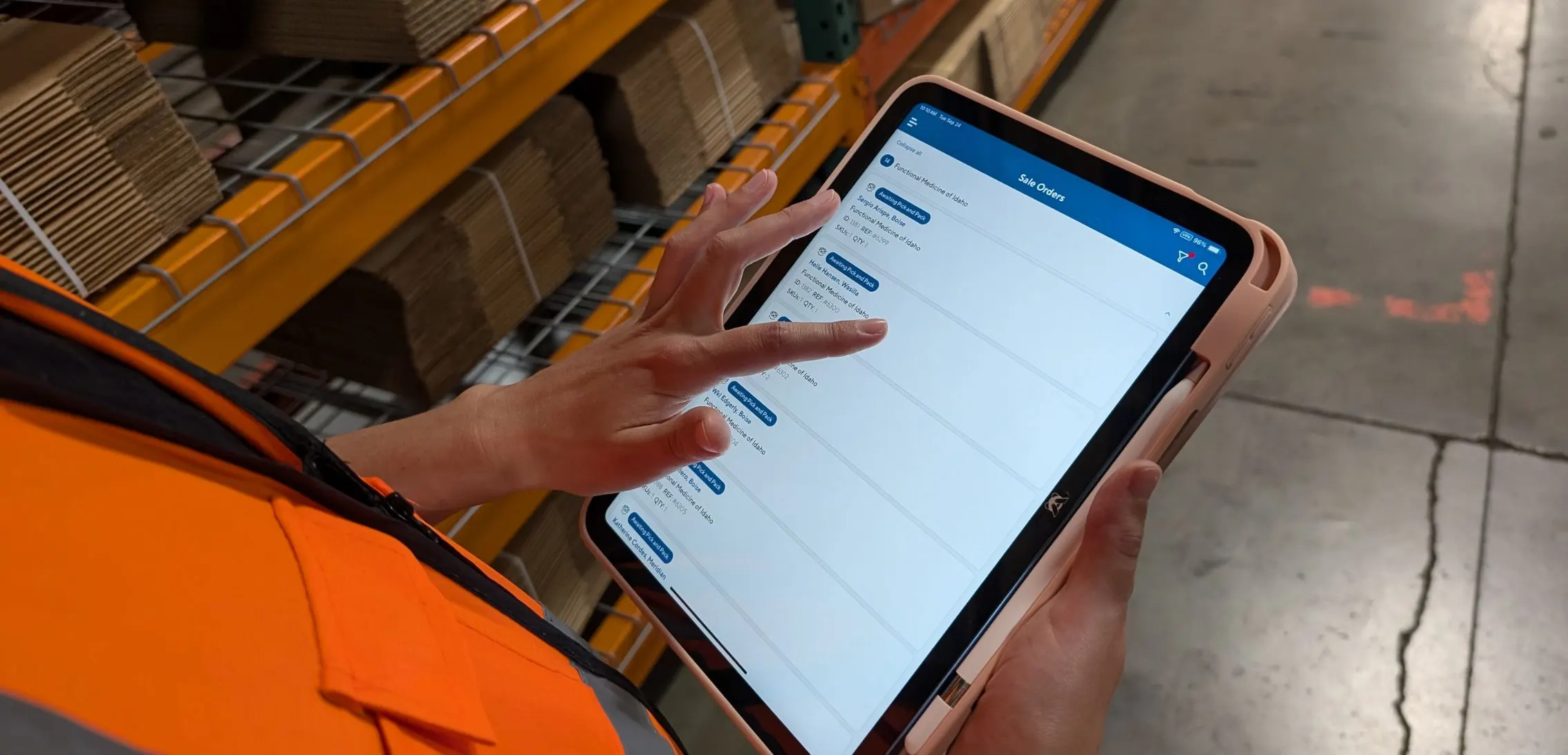
Deposco Alternatives: What Growing 3PLs Should Consider
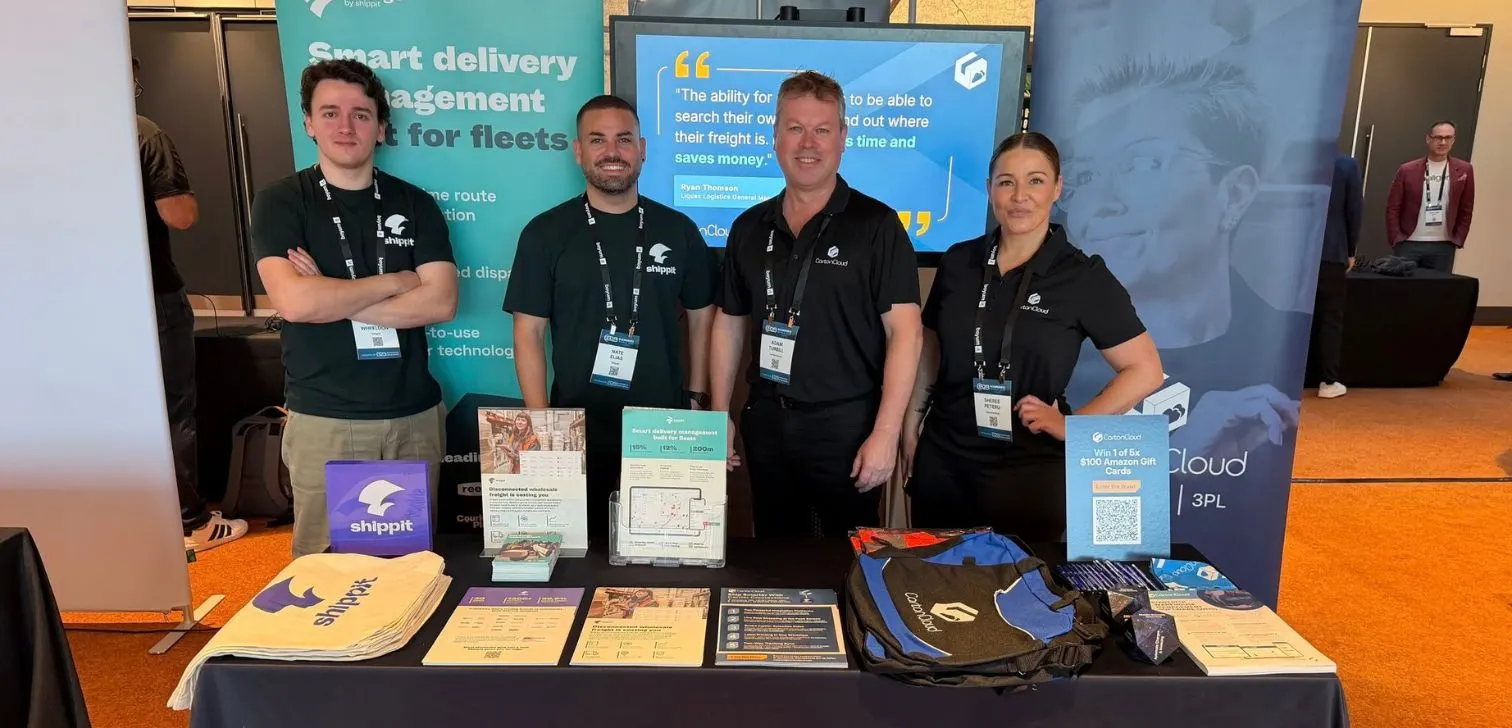
What We Heard at B2B World APAC: Large Brands Want Delivery Visibility, Not Just Warehouse Visibility
The Fastest WMS to Implement for E-Commerce Fulfillment 3PLs in the USA
This Week in Logistics: A Cost Rule Peak — Canada's Tariffs Go Live, FedEx Guarantees Your Duties, and Peak Season Surcharges Land
What's the Best WMS for Small 3PLs That Need an Easy Setup?

CartonCloud vs Extensiv: Which Platform Delivers More for 3PLs?
Get a Free, Honest Read on Your Operation, in About Two Minutes

CartonCloud’s Commitment to Security: SOC 2 Type 2 Audit Complete
How to Implement a WMS in Your Small 3PL Business: A Practical Guide
August 2026: New Feature Round-Up
Warehouse Software for Cold Storage, Food, and Temperature-Controlled Logistics
This Week in Logistics: Season 2 Returns — US-Canada Tariffs, Oil Volatility, and Panama Canal Cuts All at Once
.webp)
How Do You Know You've Outgrown Basic Warehouse Systems? 7 Signs for Growing US 3PLs