Through the Fuel Crisis: The Operator Playbook for 3PLs and Transport Companies
The Strait of Hormuz crisis put fuel costs under sustained pressure all year. Now there's a deal signal — and a reminder that hope isn't a plan. Here's the three-move playbook 3PL and transport operators are running right now to protect margin, whichever way the market moves next.
Published:
June 2, 2026

TABLE OF CONTENTS
There's a deal signal coming out of Iran — and a reminder from Aramco that even if the strait reopens today, normalisation takes years. Here's what 3PL and transport operators are doing about it, regardless of which way the market moves next.
Author intro: Shaun Hagen has spent the last eight years inside the engine room of logistics technology — first as COO and now as CEO at CartonCloud, leading a platform used by hundreds of 3PL and transport operators across Australia, New Zealand, North America and beyond. Before software, he came up through the operations side. He hosts This Week in Logistics, CartonCloud's weekly briefing for operators trying to make sense of what's actually moving the market. This piece pulls together what he's seen across the customer base over the last few weeks — and what he and VP of Operations Scott Murray are telling operators to do about it.
There's a deal signal. There's also a reminder that hope isn't a plan.
For most of this year, fuel has been a one-way story. Conflict in the Persian Gulf put the Strait of Hormuz — the bottleneck for roughly a fifth of the world's oil — under sustained pressure. Tanker traffic dropped. Supply tightened. The IEA's May 2026 Oil Market Report called the cumulative supply loss from Gulf producers the largest in its history. Brent crude (the global benchmark for pricing crude oil) swung $18 in a single week.
That story has now changed shape.
President Trump announced a deal with Iran is "largely negotiated" and oil markets reacted immediately — Brent crude dropped below $100 for the first time in months. But Iran's state media pushed back almost as quickly, and Aramco's CEO has been clear: even if the strait reopens today, the physical logistics of getting things back to normal — mine clearance, insurance rewrites, repositioning hundreds of stranded ships — takes until 2027.
So we're at a genuine crossroads. There's the first credible signal of hope since the crisis began. There's also a reminder that hope is not a plan.
For operators trying to price next month's contracts, that's a hard place to stand. If you assume the deal lands and unwind your fuel surcharge, you're exposed if talks break down — Brent could be back above $110 within days. If you keep pricing as if fuel stays high permanently, you're going to have a customer base that reads the same headlines you did, sees their cost of goods coming down everywhere except in your invoice, and starts asking why.
The operators getting through this aren't betting on either outcome. They're building for both. Three moves to protect your margin, in the order an operator should actually do them: know what each lane costs you, lead the customer conversation, then adjust the rates.
Where the crisis stands today
Five things to anchor your read of the market right now:
1. The deal signal is real — but partial. Trump's announcement appears to be a memorandum of understanding as a first phase, with broader negotiations to follow over the next month or two. Key issues around Iran's nuclear program remain unresolved. (We unpacked the implications in detail in TWIL Ep 13.)
2. Even a good deal is slow-moving good news. Aramco's CEO and Chevron's CEO have echoed the same timeline: in the best case, fuel costs come down gradually over the next six to twelve months — not overnight. Worst case, talks break down and Brent rebounds within days.
3. The cost stack is doing the work, not the headline rate. Volatility has been transmitted entirely through surcharges and accessorials, not base rates. FedEx and UPS ground fuel surcharges in Q1 2026 were 26.7% higher than the prior year. The market may look stable on rate cards while margin bleeds through the surcharge stack.
4. ANZ has a fortnightly compliance reality regardless of the deal. Australia's Fair Work Commission activated an Emergency Road Transport Contractual Chain Order (the RTCCO) on 21 April, requiring businesses at the top of supply chains to update transport rates fortnightly. The Commission's review hearing this week has only sharpened expectations. The fortnightly cadence this order created may well outlast the crisis that triggered it.
5. Structural shifts are continuing regardless. FedEx Freight goes independent on 1 June. Intermodal volumes are up over 7% year-on-year with pricing still lagging trucking. Early peak season is arriving on ocean trades. These aren't fuel-crisis stories — they're the competitive landscape that will exist whenever the fuel crisis eases.
What does this feel like inside an operation? In TWIL Ep 9, Scott Murray, VP of Operations at CartonCloud, summed up what he's been hearing from operators across ANZ and North America:
"It's been relentless for our customer base. It's much less forgiving — it's found gaps in the operation and left people a little bit exposed." — Scott Murray, VP of Operations, CartonCloud
And from Shaun, on what to do about it, on TWIL Ep 13:
"Hope is not a plan. Prepare for both outcomes — because you might need either one by next Tuesday." — Shaun Hagen, CEO, CartonCloud
That's the operating environment. Now the playbook.
The three moves: know your numbers, lead the conversation, adjust the rates
01. Know what each lane costs you
Capacity isn't the constraint right now. Profitability is. Carriers and 3PLs are turning down work they used to fight for because, on today's fuel cost, the lane no longer pays. This is the foundation under everything else — until you know what each customer and lane is costing you, the commercial calls you make next are guesses.
This is what process discipline looks like in practice: clean billing data, fuel surcharges tied to live activity, no gap between what sales is quoting and what ops is delivering, an honest view of cost-to-serve by customer.
"Right now it's all process discipline. Technology amplifies a good operation. It doesn't fix a broken one. Take a really good hard look at your customer base and what the actual costs are to serve them — sometimes people become shocked at what that actually is." — Scott Murray, VP of Operations, CartonCloud (TWIL Ep 9)
If you're a mid-market operator, audit your billing data this fortnight. Are fuel surcharges tied to actual trips, or back-dated estimates? If a customer disputes a surcharge today, can you produce the work in five minutes?
If you're a smaller operator, find one thing in your invoicing or billing reconciliation that costs you time every week and fix it now. The compounding cost of admin friction is hiding the real number.
For operators already running CartonCloud's TMS, this is what the Fuel Levy feature and automated invoicing were built for: configurable fuel surcharges, transparent invoice line items, and an audit trail tying every charge back to timestamped activity.
02. Lead the customer conversation
Now you've got the numbers, the next job is the conversation — and it's about to get harder than it's been all year.
Here's why: there's a growing gap between what your customers are hearing and what you're experiencing. They're seeing headlines about a deal closing and expecting cost relief immediately. You're still carrying elevated fuel, labour and compliance costs that won't come down overnight, even in the best case. That expectation gap is commercially dangerous — and you close it by talking to customers first.
Explain what's actually improved. Explain what hasn't. Explain what they can do on their end to reduce cost. The operators keeping their margins through this period are the ones picking up the phone first, not waiting until the customer is reading their invoice and wondering why the bill didn't drop in step with the Brent price.
Transparency is doing the heavy lifting that flat rates used to do. The absence of it is what's getting carriers in trouble — both publicly and with their customer base.
The reality is that carriers across the market are using fundamentally different methodologies to calculate the same surcharges. That inconsistency creates confusion and erodes trust — especially when customers see wildly different numbers from different providers with no explanation of why.
The operators who can explain their methodology, calmly and in plain language, are the ones their customers will keep talking to.
"The best operators right now are doubling down on what they're good at and being a bit more picky. They're talking to people early — not waiting until they're raising the invoice and letting their customers get a surprise." — Scott Murray, VP of Operations, CartonCloud (TWIL Ep 9)
If you're a mid-market operator, group your account base by fuel exposure and run the conversations in priority order. Don't send the email — make the call. A generic comms note lands as spam in a moment where the customer is already drowning in deal-news takes.
If you're a smaller operator, fifteen minutes each with your top five customers this fortnight. Same job — close the expectation gap before they bring it to you.
03. Protect your margin — both ways
With the data and the conversations in hand, you can adjust rates with confidence. This is where the dual-scenario reality matters most.
Do not unwind your fuel surcharge on hope. If you've been running on the assumption that fuel stays high permanently, don't immediately reverse course because one headline says relief is coming. And if you've been running on the assumption that fuel normalises soon, don't bet your margins on a deal that isn't yet finalised. The operators doing this well have pricing that adjusts in both directions — they can recover costs quickly when fuel climbs, and respond to customers when it drops.
This shows up most painfully where operators built a "flat rates, no fuel surcharge" value proposition during the calmer 2024-25 period. That positioning was incredibly attractive then. It's a liability now.
"There are those who had their whole value proposition built around easy flat rates and no fuel surcharges. A few months ago, that was incredibly attractive — it's left them relatively exposed now." — Scott Murray, VP of Operations, CartonCloud (TWIL Ep 9)
Run your numbers at both ends of the band. Stress-test margins at a sustained $120 Brent and at a $85 ceasefire scenario. If the business doesn't work in both, fix the cost side before the revenue side changes on you.
For ANZ operators, the Fair Work Commission's fortnightly adjustment order makes this a compliance issue, not just a margin one. If your contracts review every 30 days and your costs pass through every 14, you're funding your customer's freight from your own cash flow. (See CartonCloud's Fuel Levy feature for how operators are automating the cadence.)
For US and Canada operators, the legal mandate isn't there yet — but the commercial mandate is identical.
"Build pricing that adjusts in both directions. When fuel drops, you respond to customers. When it climbs, you recover costs. You're not waiting for permission from the market — you're built for the range." — Shaun Hagen, CEO, CartonCloud (TWIL Ep 13)
Your action checklist
Take this to your ops and sales leads. Tick what's done, and work the rest this fortnight.
Operations (know your numbers first)
- ✓ Work out what each customer actually costs you to serve. If you can't, that's job one.
- ✓ Run your numbers at $85 Brent and $120 Brent. Don't unwind your surcharge on a headline.
- ✓ Check sales is quoting on this month's fuel cost — not last month's.
Customer comms (close the expectation gap before they bring it to you)
- ✓ Call your top 10 customers about fuel before they read the deal headlines.
- ✓ Show fuel surcharge as its own line on quotes, with a short explainer of how it's calculated.
Pricing (adjust in both directions)
- ✓ List the customers or lanes that aren't paying on today's fuel. Pick three to renegotiate this month.
Forward view
- ✓ Find one alternative you can offer customers under pressure — rail, intermodal, or consolidated freight.
- ✓ Check your fuel surcharge updates fortnightly. (ANZ: it has to.
Get the full operator playbook
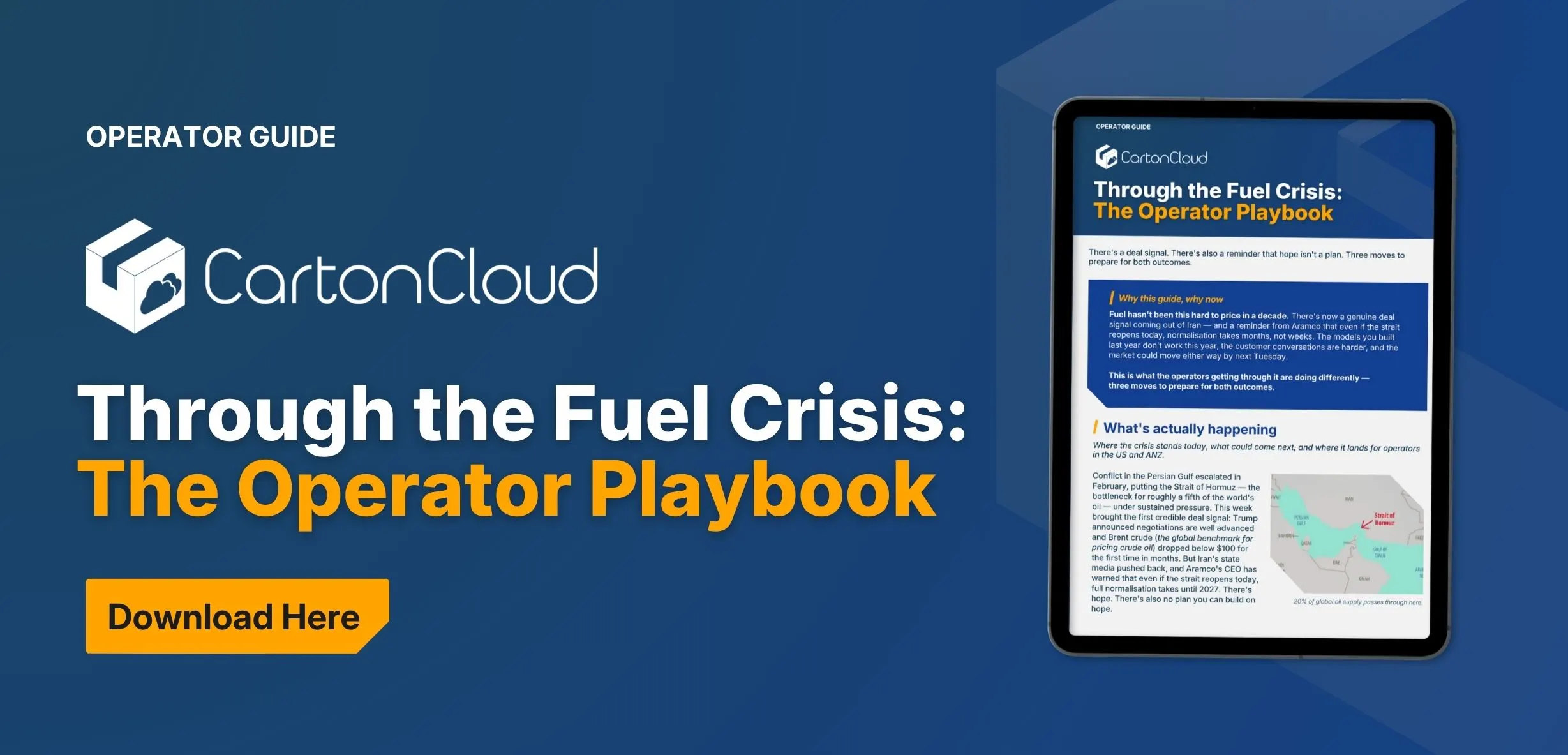
This blog covers the essentials. The full Through the Fuel Crisis: The Operator Playbook is a four-page PDF you can print, share with your team, or take into your next leadership meeting — same playbook, in a format built to be passed around.
Download the Operator Playbook →
Keep going
- This Week in Logistics — Ten minutes a week. The headlines, why they matter, and what to do next. Hosted by Shaun Hagen.
- TWIL Ep 13 — Hope Is Not a Plan: What the Iran Deal Means for Your Fuel Model — The most recent take, and the one that reshaped this piece.
- TWIL Ep 12 — Aramco Says Oil Won't Normalize Until 2027 — And Two Other Shifts That Moved the Ground This Week — The dust is settling, but the ground has shifted underneath operators' planning assumptions.
- TWIL Ep 11 — Volatility Is the Operating Environment — Plan for the range. Communicate early. Know your number.
- TWIL Ep 10 — The Hormuz Fuel Crisis, Freight Upcycle + Amazon Supply Chain Update — The structural reset.
- TWIL Ep 9 — What's Actually Happening in Logistics Right Now (with Scott Murray) — Scott on the operator experience.
- TWIL Ep 8 — Hidden Costs, Pricing Pressure & the New Service Baseline — How volatility moves through the surcharge stack.
- CartonCloud's Fuel Levy feature — How operators automate fuel surcharge calculation and protect margin at the invoice.
- CartonCloud Billing & Invoicing — Transparent, automated invoicing with full audit trail.
Frequently asked questions about managing fuel volatility as a 3PL or transport operator
Q: How often should I update my fuel surcharge in 2026?
A: Match your update cadence to your cost pass-through cadence. In Australia, the Fair Work Commission's Emergency Road Transport Contractual Chain Order (effective 21 April 2026) legally requires fortnightly updates at the top of the supply chain. Outside ANZ, fortnightly is now the commercial baseline — monthly cycles are leaving operators carrying carrier rate increases for two weeks at their own cost.
Q: What's the difference between a fuel levy and a fuel surcharge?
A: The terms are used interchangeably. Both refer to a variable charge applied on top of the base transport rate to recover fluctuating fuel costs. CartonCloud's Fuel Levy feature lets operators configure either a default rate or customer-specific rates, automate the calculation, and show the surcharge as a transparent line on each invoice.
Q: Should I unwind my fuel surcharge now that an Iran deal looks close?
A: Not yet. The deal appears to be a memorandum of understanding as a first phase, with key issues unresolved. Even if it's signed, Aramco's CEO has been clear: physical normalisation of oil flows through Hormuz takes months to years, not weeks. The operators getting through this period have pricing that adjusts in both directions — recover quickly when fuel climbs, respond to customers when it drops. Don't unwind on hope.
Q: What does "cost-to-serve" actually mean for a 3PL?
A: Cost-to-serve is the full cost of supporting a specific customer — labour, fuel, fleet utilisation, admin overhead, returns handling, billing complexity — measured against the revenue that customer generates. In a volatile fuel environment, operators who can't see this number at the customer level can't make sharp commercial decisions. Operators who can are choosing where to invest, where to renegotiate, and where to walk.
Q: Is now the right time to invest in new software during a crisis?
A: Probably not — unless the current software is the bottleneck. The operators winning right now are doing it through process discipline, not new tech. As Scott Murray puts it in TWIL Ep 9: "Technology amplifies a good operation. It doesn't fix a broken one." The right software investment is the one that closes a specific friction point you've already identified — not a wholesale replacement programme during the most volatile market in a decade.
CartonCloud is the warehouse and transport management platform built by logistics people, for logistics people. Used by hundreds of 3PL, warehouse and transport operators across Australia, New Zealand, North America and beyond. See how it works →
Explore the resource hub
Tips, tools, downloadable guides and stories from logistics teams who are working smarter.

How to Automate Warehouse Invoicing, Rate Cards, and Reporting
WMS vs TMS: What Growing 3PLs Actually Need

5 Signs Your 3PL Needs a Warehouse Management System
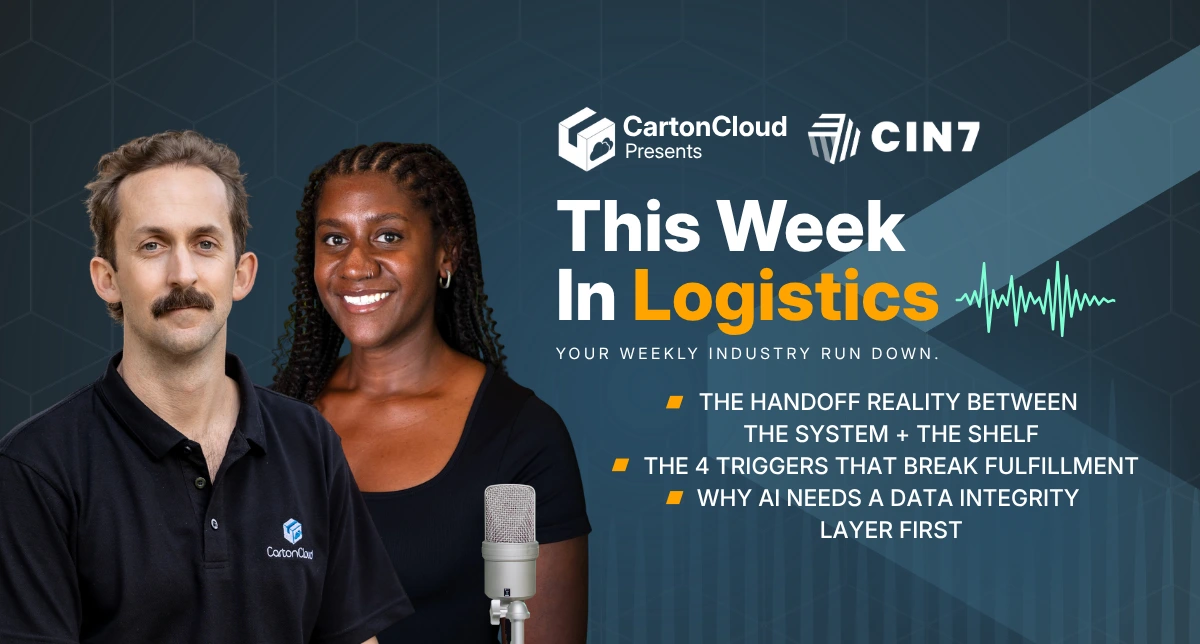
This Week In Logistics: When the System Says Forty and the Shelf Says Twelve — How to Close the Inventory Gap, With Special Guest Gaubrielle Pritchard, Director of Product and Customer Marketing, Cin7
.webp)
The CartonCloud Logistics Index 2026: See where your operation stands

Running WMS and TMS Across Multiple Sites in Australia: The Questions We Answered at MegaTrans 2026
CartonCloud Feature Spotlight: July–September 2026
Deposco Alternatives: What Growing 3PLs Should Consider
What We Heard at B2B World APAC: Large Brands Want Delivery Visibility, Not Just Warehouse Visibility
The Fastest WMS to Implement for E-Commerce Fulfillment 3PLs in the USA
This Week in Logistics: A Cost Rule Peak — Canada's Tariffs Go Live, FedEx Guarantees Your Duties, and Peak Season Surcharges Land
What's the Best WMS for Small 3PLs That Need an Easy Setup?

CartonCloud vs Extensiv: Which Platform Delivers More for 3PLs?

Get a Free, Honest Read on Your Operation, in About Two Minutes

CartonCloud’s Commitment to Security: SOC 2 Type 2 Audit Complete

How to Implement a WMS in Your Small 3PL Business: A Practical Guide
.webp)
This Week in Logistics: Multiple Warehouses, Multiple States, One Standard — How HD Warehousing Does It, With Special Guest Chad Hildebrandt, Owner & COO
August 2026: New Feature Round-Up
Warehouse Software for Cold Storage, Food, and Temperature-Controlled Logistics
This Week in Logistics: Season 2 Returns — US-Canada Tariffs, Oil Volatility, and Panama Canal Cuts All at Once