001 Tonys Tips // Runsheet Timing
Hello. Tony here with Tony's Tips on Carton Cloud. I just wanted to run through a real handy little feature we have on the mobile app in regards to timing run sheets.
Author:
CartonCloud
Published:
March 14, 2019
TABLE OF CONTENTS
Video Transcription
Hello. Tony here with Tony's Tips on Carton Cloud. I just wanted to run through a real handy little feature we have on the mobile app in regards to timing run sheets. Now the reason timing run sheets can be really important is you might have a customer where you actually deliver a whole heap of consignments and it's virtually based on an hourly charge so it's from the time the driver leaves the depot to the time the driver gets the last consignment off of his truck.
Now what we've tried to do is we've tried to make it really easy and simple for the driver to use. So here on the mobile app, you can see if I go up here into this little filter button up at the top, a little funnel, and I tap on that, I can actually sort my view by run sheets. So if I click over here on the run sheet and I go down to the bottom and hit, "Apply", what you can actually see is I've got a whole heap of run sheets here in the run sheet view and on the right hand side, you can see that there's this dollar symbol and there's this little plus symbol.
Now what I've done is I actually have my Metro AM 107 run sheet linked to a customer. So if I actually tap on the dollar symbol, what I actually get is I've got two ad hoc charges which I've set up in the web app. One of them is billable hours. And the other one is drivers timed minutes. Now what we can do is if you say to the driver, "Okay, how long did that take" and they're driving and, "Oh, I don't know. About an hour." Well, we're getting rid of that and we're sort of taking the guesswork out of it. So here, on the driver's timed minutes, you've got this little "start" symbol. Now I've just put it in there as 45 minutes as I've been going but if we were to hit that "start" symbol, away goes the timer.
Now, the driver can hit "done", don't submit the charges because he wants to keep going with his run. Then he can tap into the run, see the consignments, go through, do his PODs, deliver the 15 consignments or whatever it may be, and as you can see here on the right hand side, we've got the little clock symbol stating that there's a timer running on this run sheet. So the driver can then go back in and if the driver hits the "Stop" button ... And as you can see there, we've got like 45 minutes and 31 seconds.
So the driver knows and says, "Okay." Up here in the billable hours, we're charging per hour or part thereof so the driver says, "Yes, it's going to be one hour." We tap off to the side and then we go down to the bottom and hit the "Done" button. What this will ask us is, "Do you want to submit the charges?" And yes, we want to submit charges. So straight away now, what's happened is that's gone through and it's updated the web app. Now if we were to go over into the web app, here's the run sheet view.
Now, you can see that I've got this same run sheet, 107, and if I go into this run sheet ... If I go to the second tab along and I get the "Charges" tab. Now, here you can actually see who we're invoicing this. So I've got this connected up to one of my test customers. Now, over here on the right hand side, you can see the billable hours and it's one hour which is what the driver submitted and I've set it up as $60 per hour. And you can also see the driver timed minutes has come through and as you know, we actually had it at 45 and a half minutes so it's come through at 46 minutes.
Now, why we set that up is if we go up into the search for anything and we go to type in "ad hoc charges" and we get these ad hoc charges. So we can set up ad hoc charges against sales orders, purchase orders, consignments but the one we're looking at is these run sheets. So what I've done is we've got two which we've set up in here which you saw on the mobile app. One of them is the hourly rate and it's set up as $60 an hour. But if we go into this second one, the driver timed minutes, you can actually see that the type of ad hoc charge is actually a timer. So really simple set up. We can go through, we can add this in, we can take the power away from the driver, or we can make it so that it's nice and simple for the driver to use. Easy to use.
When it's easy to use, drivers are happy, the charges work, we're happy. We understand. Alright, thanks guys. Thanks for your time. And I'll see you with another one of Tony's Tips. Cheers.
Explore the resource hub
Tips, tools, downloadable guides and stories from logistics teams who are working smarter.

CartonCloud Unboxed Webinar: CartonCloud Connects to 150+ Carriers
Why FREE Warehouse Management Software Can Cost You Thousands

CartonCloud WMS top user rated by Software Advice

This Week in Logistics: The Breakthrough Arrived — But the Network's Flexibility Hasn't Come Back With It
This Week in Logistics: The Structural Pieces Are Clicking Into Place: FedEx Freight, Humanoid Robots, + What Oil Settling Actually Means
How to Deliver an Amazon-Like Experience When You're Not Amazon
.webp)
CartonCloud Reviews, Pricing, and Alternatives: What 3PLs Actually Want to Know

This Week in Logistics: How Do You Deliver an Amazon-Like Experience as a Non-Amazon Retailer? In Conversation with Shippit
.webp)
What is the best warehouse management software and why?

Through the Fuel Crisis: The Operator Playbook for 3PLs and Transport Companies
.webp)
Through the Fuel Crisis: The Operator Playbook

Big News: CartonCloud Connects to 150+ Carriers
May 2026 — New Feature Round-up

Every Missed Scan Creates Problems You Can’t See (Until it’s Too Late)
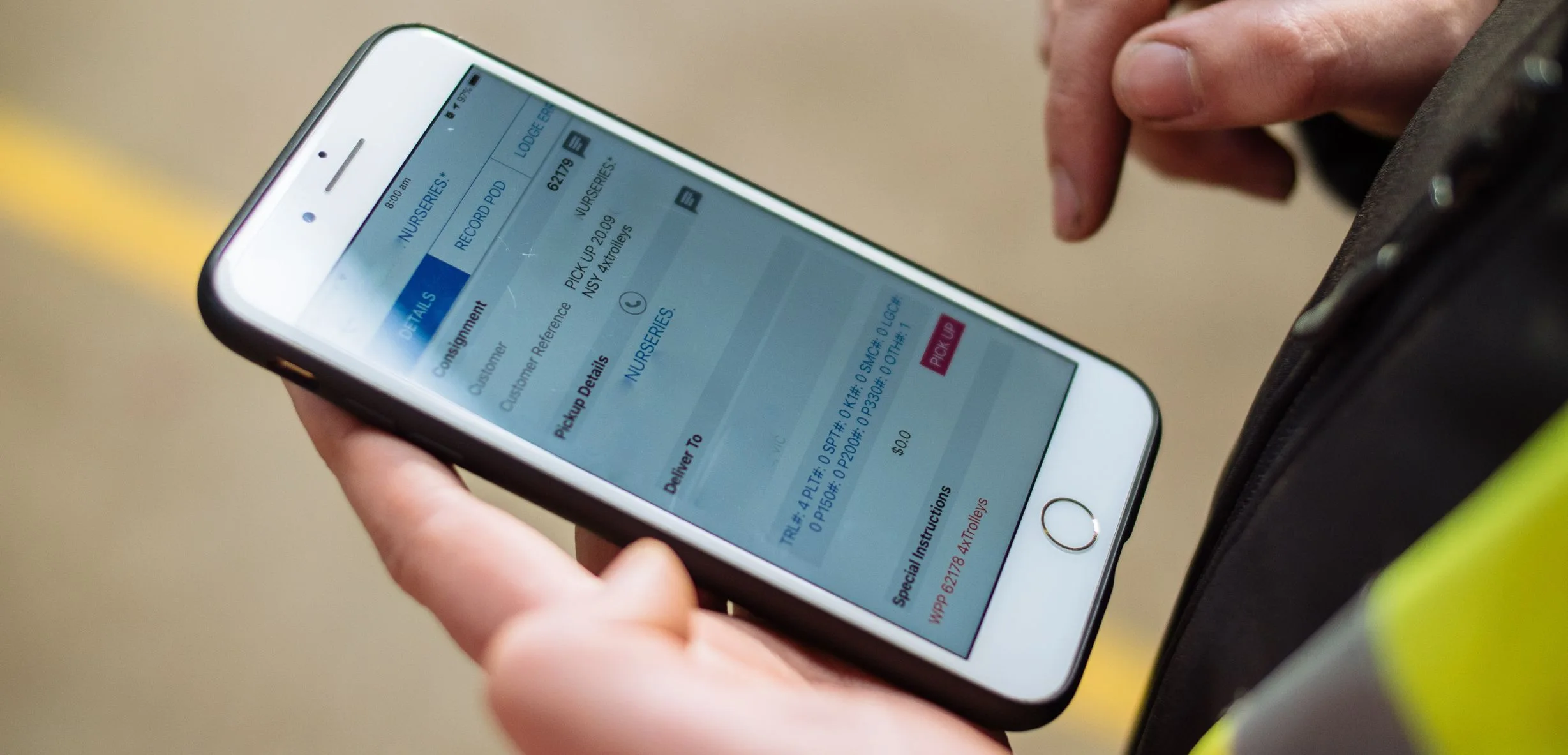
Finding the best Warehouse Management System (WMS) software for small businesses

This Week in Logistics: Hope Is Not a Plan: What the Iran Deal, FedEx Freight's Independence, + the RTCCO Review Mean for Logistics Operators This Week
.webp)
How to Reduce Admin in a 3PL Operation

Best 3PL Software Alternatives: 2026 Comparison Guide
This Week in Logistics: Aramco Says Oil Won't Normalise Until 2027 — and Two Other Shifts That Moved the Ground This Week

CartonCloud vs Da Vinci Comparison Guide for 3PLs