This Week in Logistics: Inside the 2026 CartonCloud Logistics Index
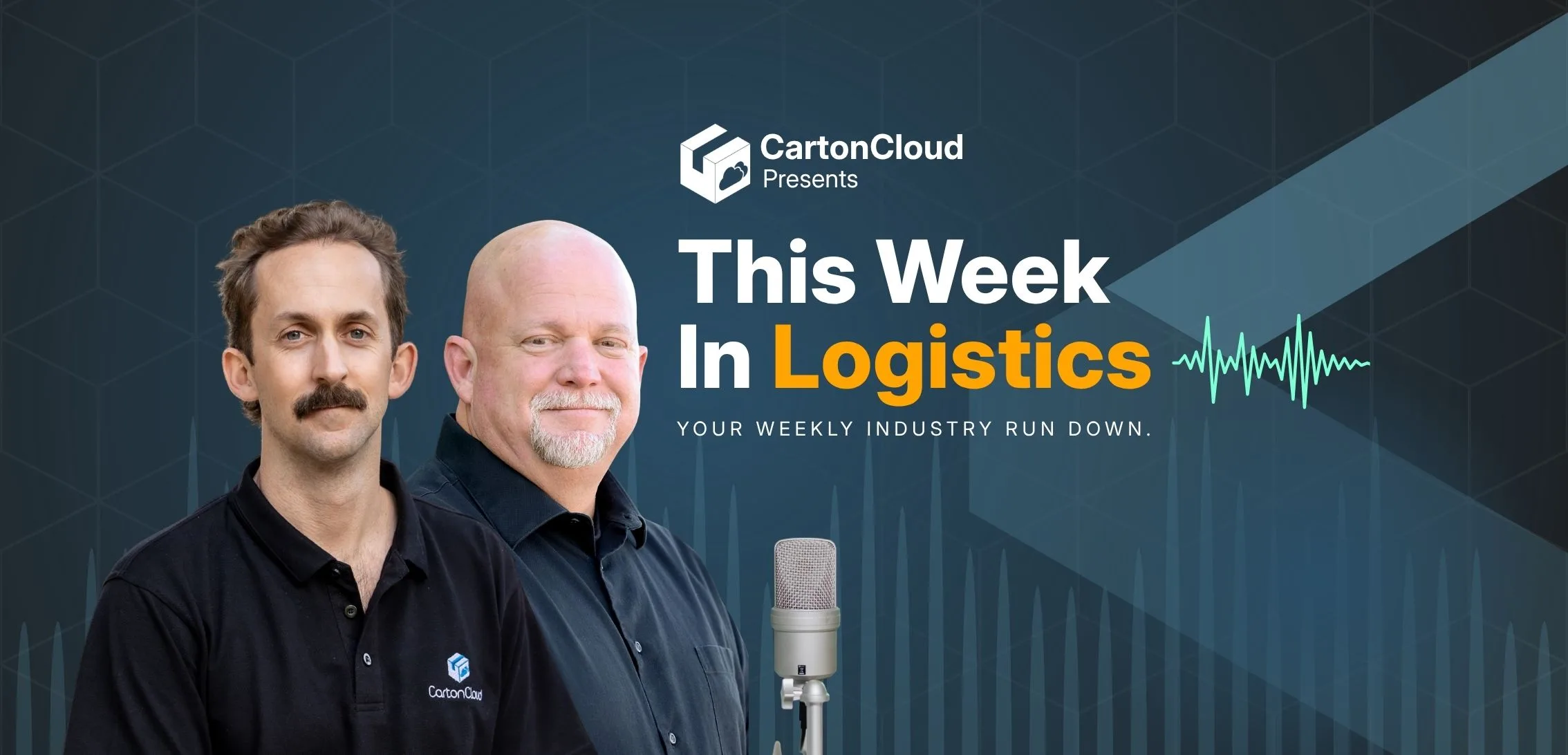
This Week In Logistics, hosts CartonCloud CEO Shaun Hagen and Account Executive Javier Hernandez put down the news desk for a week to unpack the 2026 CartonCloud Logistics Index — 393 operators surveyed on costs, rates, capacity and AI, and what the data actually means for your operation.
Published:
October 27, 2026
TABLE OF CONTENTS
If we had to sum up this year's CartonCloud Logistics Index in a single line, it's this: costs kept climbing almost across the board, but operators still remained positive.
The CartonCloud Logistics Index (CCLI) is our check-in with warehouse and transport operators to see how the industry is feeling from the inside. For our tenth edition, we partnered with independent research firm Insights Exchange to run our biggest survey yet, gathering insights from 393 operators across Australia, New Zealand, and North America. The overall sentiment landed positive with a score of 165 out of 200.
When you break that number down by business size, things get really interesting: while smaller operators are still feeling optimistic about the road ahead, they're a bit more cautious than the larger players. In this special deep dive, we break down what these findings mean for your operation and what you can do next to stay ahead.
TL;DR — The short version
- Costs are rising everywhere, but the pressure hits differently depending on the region. Most operators have passed along price increases to offset rising costs. Before adjusting your own pricing strategy, it's worth taking a look at the cost drivers affecting your region.
- Taking action on your rates beats standing still every single time. Whether you use a scheduled rate card, reactive check-ins, or case-by-case negotiations, operators taking a proactive approach reported similarly strong positive outlooks vs those who simply absorbed their costs.
- Extra capacity doesn't equal extra confidence. Smaller operators hold the most spare space yet feel the least confident, making it essential to determine if your capacity is an intentional buffer or costly overhead.
- Clients want speed + visibility, not just cheaper rates. While pricing remains top-of-mind for customers, real-time tracking, faster turnarounds, and system integrations are equally critical when prioritising tech investments.
- AI adoption is officially here, but most are still testing the waters. Adopters who've built AI into daily operations feel notably more confident than those still trialling. Pick one use case and take it all the way in before adding another into your operation.
I'm Shaun Hagen, CEO of CartonCloud and host of our podcast This Week In Logistics (TWIL). This week's episode is a bit different. Instead of the usual news rundown, co-host Account Executive Javier Hernandez and I are unpacking the CartonCloud Logistics Index and what the top findings mean for your operation.
In this episode, we walk through five things the data actually showed us:
- Cost + pricing pressures, and how they vary depending on where you're based
- Rate review habits and how they directly impact operator confidence
- Spare capacity, and why businesses with the most extra space often feel the least confident about what's ahead
- Customer expectations and what clients are actually asking for beyond a cheaper rate
- AI adoption and where it genuinely sits across the industry today
Why this matters for operators: day-to-day decisions, like when to update your rate cards, where to spend your next tech dollar, or whether spare capacity is actually helping your bottom line, often come down to gut feel. This benchmark draws on nearly 400 logistics businesses across ANZ and North America, giving you real numbers to weigh your next move against.
Operator playbook
- Have a rate approach and stick to it. Choose a review cadence, whether that's quarterly or twice a year, and run it on a schedule.
- Spend your tech money where your customers are asking. Before you lock in your next investment, check it against what your clients are asking for.
- Pick one AI use case and take it all the way. Start with a lower-risk area like data analysis or customer service, prove it works, then implement it across your operation.
What the 2026 CCLI actually found
The cost squeeze looks different depending on your region
Almost every operator felt costs rise this year. What's more telling is what they did about it. 89% said operating costs rose in the past 12 months, and 75% have already raised prices to their own customers in response.
Now, when you split the data by region, what's actually driving those rising costs looks a little different.
- In North America, fuel and freight volatility is the clear number one driver, ahead of general cost increases, with tariffs and trade policy close behind.
- In Australia and New Zealand, general rising costs are the main driver, with fuel and freight costs following behind.
This difference matters most when it comes to actually raising prices with customers. If your costs are predictably climbing, you can plan a price increase around that trend and hand a customer a number that will still hold next quarter. If your costs are jumping around month to month, as many North American operators are describing, raising prices becomes a moving target.
"Uncertainty and unpredictability is a little bit harder to deal with… looking at the degree of uncertainty that some of those North American operators are dealing with. If costs are going up, you can plan for it. If they're jumping around, it's much harder to go to a customer and put a number on it." — Shaun Hagen, CEO, CartonCloud.
Operator Takeaway: Know what's actually driving your cost rise before you price against it.
Doing something with your rates beats doing nothing
Here's one of the most compelling findings in the whole report: it doesn't matter nearly as much which rate review strategy you use, whether it's structured, reactive, or case-by-case, as long as you have one in place.
When we asked operators how they manage pricing:
- 49% run structured rate cards on a set schedule
- 42% adjust reactively when costs move
- 41% negotiate case-by-case
- Roughly a third simply absorb fuel increases (respondents could select more than one, which explains the overlap)
Break that same outlook down by rate approach, and three of those four groups report an almost identical positive outlook for the next six months compared to operators who simply absorbed their fuel costs:
- Any active rate review (scheduled, reactive, case-by-case): 85-88% positive outlook.
- No rate review, absorbing costs instead: 78% positive outlook.
"Have a rate approach and stick to it. The data clearly showed that any approach beats absorbing the costs. And if it's on a schedule, you're not waiting for costs to force that conversation." — Shaun Hagen, CEO, CartonCloud.
Operator Takeaway: Get a rate review approach in place, and bring up the price conversation before your customer spots it on an invoice.
The capacity-to-confidence gap
Just as we saw with rate reviews, another surprising thread runs through this year's data: spare capacity doesn't always equal more confidence.
The CCLI report found that average utilisation across the survey sits at 77%, meaning roughly a quarter of shelves, trucks, and staffing capacity sits spare across the industry. Break that down by operator size, and confidence varies.
- Smaller operators run at 73% utilisation, the most spare capacity in the survey, but only 71% feel positive about the next six months.
- Larger operators run at 81% utilisation, the least spare capacity, yet 90% feel positive about the next six months.
In my opinion, here's what's actually behind that capacity-to-confidence gap:
"Small operators [keep] more [of a] buffer, maybe through less stability to plan, or leaving something just in case, which can also leave them a little bit more exposed when the market moves. Whereas bigger operators may have a better handle on their utilisation, they're tighter on things like rate reviews and capacity reviews, and that probably helps drive that correlation." — Shaun Hagen, CEO, CartonCloud.
Operator Takeaway: If you're carrying spare capacity, be sure to work out whether it's a deliberate buffer for future opportunities or just unfilled demand.
What's shifting in customer expectations
The report also dug into what customers actually want from their 3PL or transport provider, and price isn't the whole story.
While lower rates still led at 39%, real-time tracking (32%), faster turnaround (28%) and direct system integrations (26%) came close behind.
The real-time tracking expectation has largely been shaped by the delivery standard set by food delivery apps like Uber Eats, something we dug into back in TWIL S1 E14, with Shippit's Rob Hango-Zada.
"The tracking one is the food delivery effect, like DoorDash, Uber Eats, so you can watch your dinner come down the street. It really sets those expectations real high, and it's starting to trickle down into B2B." — Javier Hernandez, Account Executive, CartonCloud.
Customer expectations is directly in line with what operators are planning to invest in to win new business:
- 39% of operators are investing in AI and automation
- 36% are investing in fleet expansion
- 30% are investing in new/upgraded WMS or TMS systems
"People are still buying trucks and racking, and just a little bit less, also still buying some software. That investment piece probably goes hand in hand with slightly higher customer expectations, and I do genuinely think that gap is narrowing." — Shaun Hagen, CEO, CartonCloud.
Operator Takeaway: Before locking in your next tech spend, weigh it against what clients are looking for in a logistics partner.
AI adoption is real, but most operators are still testing it
AI is a topic we keep coming back to on the show, and this year's data shows why:
- Roughly three in four operators now use AI in some form, well up on previous years, but most are early in how far they've taken it.
- Half are "trialists," using AI tools for everyday tasks.
- 21% are "adopters," with AI built into how they run the operation, and a small 2% are building their own tools.
- The rest are curious but not using it yet, or not interested at all.
- Where it's used, data analysis leads at 61%, followed by customer service, forecasting, admin, and sales and marketing.
Now, what's interesting here is that trialists and adopters aren't just at different stages, they're feeling different about what's ahead too. 92% of adopters feel positive about the next six months, against 77% of trialists.
It's worth mentioning that this lines up with a pattern we've seen throughout the report: bigger operators tend to feel more confident generally, and they're also more likely to be the adopters here.
"There's a little bit of a bias, because adopters do tend to be bigger operators, and bigger operators are more confident anyway." — Shaun Hagen, CEO, CartonCloud.
Even accounting for that bias, the real question is how you get from trialist to adopter, and most operators don't think they'll get there alone. 32% would rather their existing software provider build or embed AI for them than go looking for something separate.
Operator Takeaway: Pick a low risk AI use case to trial in your operation such as data analysis, and prove it works before you adopt it across your entire business.
Run your operation against the benchmark
Alongside our report, we've put together a benchmarking tool that lets you filter by region, business size and operation type, then compare your own numbers against operators exactly like yours, rather than the survey-wide average. Try it out today to see where you stand.
FAQ
Q: What is the CartonCloud Logistics Index (CCLI)?
A: The CartonCloud Logistics Index is an annual survey of warehouse and transport operators run by CartonCloud, now in its tenth year. The 2026 edition surveyed 393 operators across Australia, New Zealand and North America and was run by an independent research firm, Insights Exchange.
Q: What does the CCLI's overall sentiment score of 165 mean?
A: The CCLI sentiment score runs out of 200, with 100 as neutral. A score of 165 means operators are feeling meaningfully more positive than negative, consistent with prior years and above 2021 levels, though below the 2022 post-lockdown peak.
Q: Why are smaller logistics operators less confident than larger ones?
A: Smaller operators reported lower confidence across almost every measure in the report, including economic outlook, rate review practices and AI adoption. The report links this partly to less stability to plan against and fewer structured processes, such as scheduled rate reviews, rather than confidence in their own business specifically.
Q: What do logistics customers want most from their 3PL or transport provider?
A: Lower rates remain the top priority at 39%, but real-time tracking (32%), faster turnaround (28%) and direct system integrations (26%) are close behind. The report links rising demand for visibility to expectations set by consumer delivery apps carrying over into B2B logistics.
Q: How can I compare my business to the CCLI benchmark?
A: CartonCloud's benchmark tool at benchmark.cartoncloud.com lets operators filter by region, business size and operation type to compare their own numbers against the CCLI data set.
Post by Shaun Hagen, CEO CartonCloud.
Explore the resource hub
Tips, tools, downloadable guides and stories from logistics teams who are working smarter.
What Is Directed Putaway (and Does Your Warehouse Need It)?

How to Automate Warehouse Invoicing, Rate Cards, and Reporting
WMS vs TMS: What Growing 3PLs Actually Need

5 Signs Your 3PL Needs a Warehouse Management System
This Week In Logistics: When the System Says Forty and the Shelf Says Twelve — How to Close the Inventory Gap, With Special Guest Gaubrielle Pritchard, Director of Product and Customer Marketing, Cin7
The CartonCloud Logistics Index 2026: See where your operation stands

Running WMS and TMS Across Multiple Sites in Australia: The Questions We Answered at MegaTrans 2026
CartonCloud Feature Spotlight: July–September 2026
Deposco Alternatives: What Growing 3PLs Should Consider
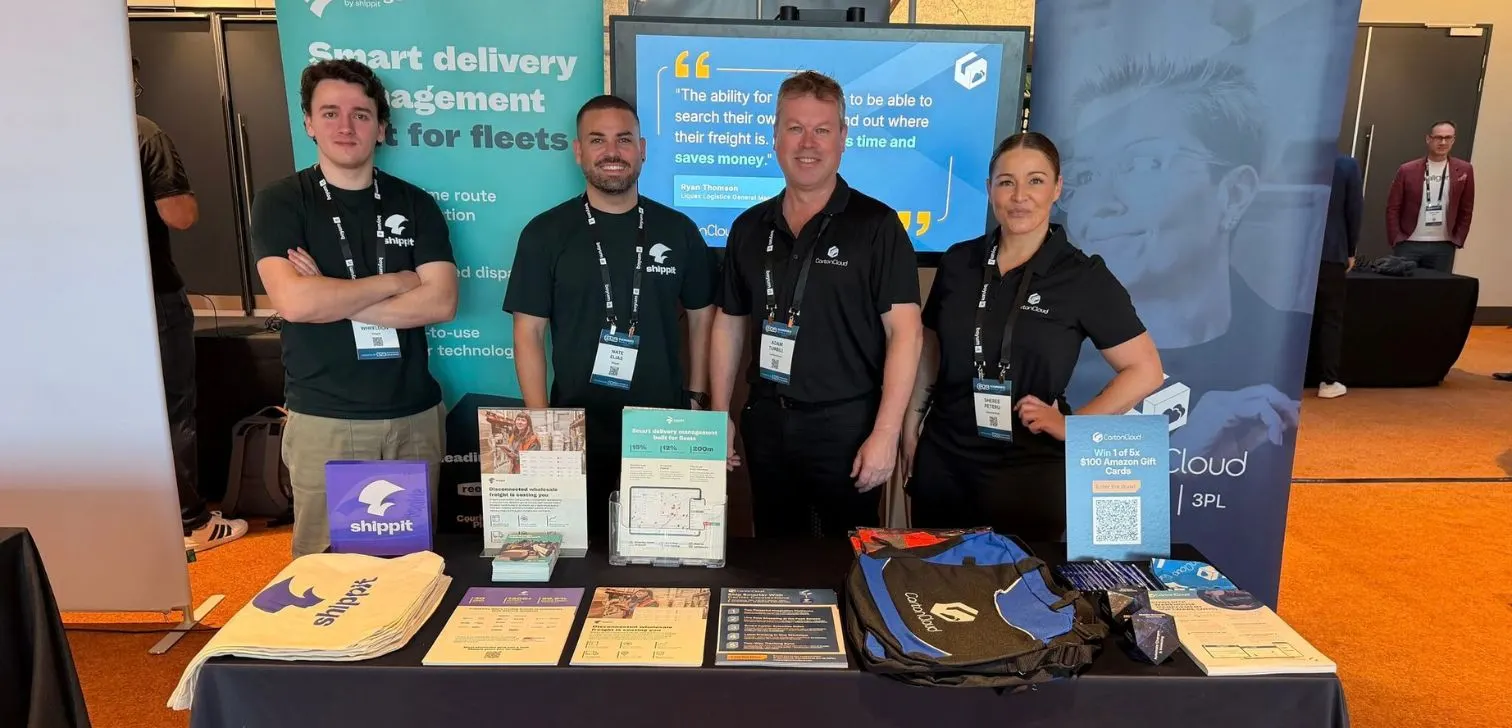
What We Heard at B2B World APAC: Large Brands Want Delivery Visibility, Not Just Warehouse Visibility
The Fastest WMS to Implement for E-Commerce Fulfillment 3PLs in the USA

This Week in Logistics: A Cost Rule Peak — Canada's Tariffs Go Live, FedEx Guarantees Your Duties, and Peak Season Surcharges Land
What's the Best WMS for Small 3PLs That Need an Easy Setup?

CartonCloud vs Extensiv: Which Platform Delivers More for 3PLs?

Get a Free, Honest Read on Your Operation, in About Two Minutes

CartonCloud’s Commitment to Security: SOC 2 Type 2 Audit Complete

How to Implement a WMS in Your Small 3PL Business: A Practical Guide
This Week in Logistics: Multiple Warehouses, Multiple States, One Standard — How HD Warehousing Does It, With Special Guest Chad Hildebrandt, Owner & COO
August 2026: New Feature Round-Up
Warehouse Software for Cold Storage, Food, and Temperature-Controlled Logistics